1996-P Jefferson Nickel Value: How Much Is Yours Worth?

Your Old Coin Could Be Valuable!
Identify It & Know Its Real Value — Free Download


The 1996-P Jefferson Nickel is worth anywhere from its $0.05 face value in worn condition to over $1,200 for rare “Full Steps” specimens in high grades. While most of these coins found in pocket change are only worth five cents, certain high-quality strikes and errors can fetch impressive sums from dedicated collectors.
| Condition / Grade | Estimated Value (USD) |
|---|---|
| Circulated (Average Wear) | $0.05 – $0.15 |
| Uncirculated (MS60-MS63) | $0.50 – $2.00 |
| Choice Uncirculated (MS65) | $5.00 – $12.00 |
| Gem Mint (MS67+) | $35.00 – $150.00 |
| MS67 Full Steps (FS) | $500.00+ |
Understanding the 1996-P Jefferson Nickel Value
If you’ve recently looked through your spare change and spotted a nickel from 1996 with a small “P” next to the date, you might be wondering if you’ve struck gold—or at least a few extra dollars. To get a definitive answer, many collectors use a top coin identifier and value app to scan their finds instantly. The 1996-P nickel was minted in Philadelphia, a facility known for producing hundreds of millions of coins for daily commerce. Because so many were made, the vast majority of these nickels are common.
However, “common” doesn’t mean “worthless.” In the world of numismatics, the value of a 1996-P Jefferson Nickel is determined primarily by its state of preservation. A coin that has been bouncing around in purses and vending machines for nearly 30 years will likely only be worth its face value. On the other hand, a coin that was tucked away in a collection immediately after being minted can be worth much more.
Professional grading services like PCGS or NGC use a 70-point scale to determine quality. For the 1996-P, coins that reach the “Mint State” (MS) level begin to see a rise in price. If you aren’t sure where your coin sits on this scale, using the CoinKnow app can provide you with a visual guide to help identify wear and tear that might lower the value of your 1996 nickel.
Your Old Coin Could Be Valuable!
Identify It & Know Its Real Value — Free Download
Factors That Influence 1996-P Jefferson Nickel Prices
Several factors dictate why one 1996-P nickel sells for $0.05 while another sells for $1,000. The most significant factor is the “Full Steps” (FS) designation. On the reverse of the nickel, there is an image of Monticello, Thomas Jefferson’s home. If you can see five or six crisp, uninterrupted steps leading up to the building, the coin is considered a Full Steps strike.
Because the dies used to strike nickels in the mid-90s often wore down quickly, finding a perfectly sharp strike with all steps visible is incredibly rare. Collectors are willing to pay a massive premium for these rare strikes. You can find more detailed 1996-P Jefferson Nickel price data by looking at recent auction archives where Full Steps examples were sold.
Your Old Coin Could Be Valuable!
Identify It & Know Its Real Value — Free Download
Another factor is the “eye appeal.” This refers to how the coin looks to the naked eye. Does it have a beautiful luster? Is there any “toning” (natural discoloration that can sometimes be attractive)? If a coin has a milky white appearance or dark spots, its value will decrease, even if it has never been spent. CoinKnow allows users to compare their coins against high-resolution images of top-tier grades to see how their specimen measures up.
| Grade Designation | Regular Strike Value | Full Steps (FS) Value |
|---|---|---|
| MS64 | $2 – $4 | $15 – $25 |
| MS65 | $8 – $12 | $40 – $60 |
| MS66 | $15 – $25 | $120 – $200 |
| MS67 | $50 – $100 | $800+ |
How to Identify a 1996-P Nickel and Its Mint Mark
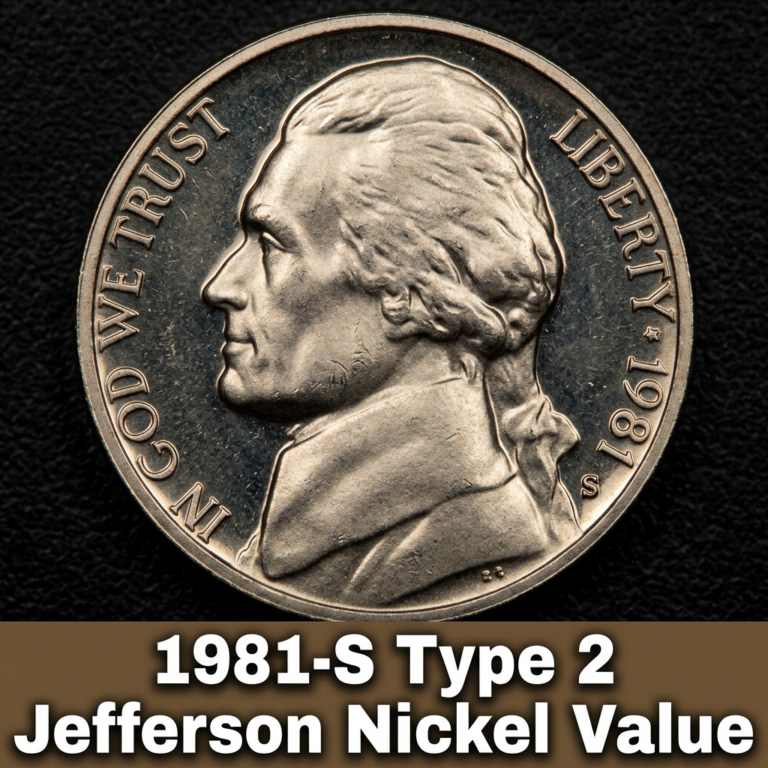
Identifying a 1996 nickel from the Philadelphia mint is straightforward. Look at the “obverse” (the front side with Jefferson’s portrait). To the right of Jefferson’s ponytail and just below the date “1996,” you will see a small letter “P.” This indicates the coin was produced at the Philadelphia Mint. During this era, Philadelphia was the primary producer of circulating coinage for the Eastern United States.
In 1996, there were also nickels produced in Denver, which bear a “D” mint mark. While the values are often similar between the two mints, the Philadelphia versions are sometimes harder to find in perfect “Full Steps” condition compared to their Denver counterparts. This makes the 1996-P specifically interesting for collectors who focus on registry sets.
Your Old Coin Could Be Valuable!
Identify It & Know Its Real Value — Free Download
If you find a 1996 nickel without any letter at all, it’s actually not a standard circulating coin. In certain years, coins from the West Point or San Francisco mints might have different characteristics, but for 1996, the “P” and “D” are the standard. You can verify the specifics and find more 1996 Jefferson nickel value information to ensure you aren’t overlooking a rare minting variation. Using tools like CoinKnow can help you zoom in on these small mint marks to ensure you’re identifying your coin correctly.
Common 1996-P Nickel Errors to Watch For
While most 1996-P nickels are worth face value, error coins are the exception that can lead to a big payday. Errors happen when something goes wrong during the minting process, creating a unique and rare piece. For the 1996-P series, there are several known errors that collectors actively hunt for in their change.
One common error is the “Off-Center Strike.” This happens when the blank coin (planchet) is not properly aligned with the dies. If the design is shifted by 10% or more, the value can rise to $20-$50. If 50% of the design is missing but the date remains visible, the coin could be worth over $100.
Your Old Coin Could Be Valuable!
Identify It & Know Its Real Value — Free Download
Another error is the “Die Crack” or “Cud.” As the heavy steel dies strike millions of coins, they eventually crack. These cracks appear as raised lines of metal on the coin’s surface. A “Cud” is a larger break at the edge of the die that results in a smooth blob of metal on the coin. These unique features make a standard 1996-P worth much more than five cents to the right buyer.
| Error Type | Description | Estimated Value |
|---|---|---|
| Off-Center (10-20%) | Design is shifted to one side. | $15 – $30 |
| Broadstruck | Coin is flatter and wider than usual. | $10 – $25 |
| Double Die | Doubling visible in letters or date. | $20 – $100+ |
| Die Crack | Raised lines across the design. | $5 – $15 |
Is It Worth Getting a 1996-P Nickel Graded?
For most people, the answer is no. Grading a coin costs between $20 and $50 per coin when you factor in shipping and insurance. Since a standard 1996-P nickel in uncirculated condition might only be worth $5, you would lose money by having it professionally graded. Grading should only be reserved for coins that have a high probability of being “Full Steps” or reaching a grade of MS67 or higher.
Before sending a coin to PCGS or NGC, it is highly recommended to do your own preliminary inspection. Use a jeweler’s loupe to look for scratches, even tiny ones. If the coin looks absolutely perfect and the steps on the back are sharp enough to count individually, then it might be worth the investment.
Modern nickels from the 90s are often ignored by casual hobbyists, but high-end collectors who want to complete “registry sets” need the finest known examples. This creates a niche market where a seemingly ordinary nickel becomes a high-value asset. If you think you’ve found a winner, use an app like CoinKnow to get a second opinion before spending money on formal certification.
Your Old Coin Could Be Valuable!
Identify It & Know Its Real Value — Free Download
Comparing the 1996-P to Other Years
The 1990s were a decade of high production for the US Mint. For example, while the 1996-P had a mintage of over 800 million, the 1994 and 1995 mintages were similarly high. This means that for a nickel from this era to be valuable, it must be exceptional. It doesn’t have the “scarcity by age” that a Buffalo Nickel or a War Nickel (1942-1945) has.
However, the 1996-P holds its own against other coins of the decade because of the difficulty in finding “Full Steps” versions. Many of the Philadelphia strikes from this year were slightly mushy or weak, making the clear versions even more desirable. Comparing yours to a 1996-D (Denver) can also be helpful, as the Denver mint tended to have slightly better quality control during this specific year.
Ultimately, the 1996-P Jefferson Nickel is a great starting point for new collectors. It teaches you what to look for—mint marks, strike quality, and condition—without requiring a massive financial investment. While you probably won’t retire on a 1996 nickel, finding a high-grade specimen is a thrill that every “pocket change” hunter understands.
FAQ
Q: Where is the mint mark on a 1996-P nickel?
A: The mint mark is located on the obverse (front) of the coin. Look directly to the right of Thomas Jefferson’s ponytail and just below the date “1996.” The “P” stands for the Philadelphia Mint.
Your Old Coin Could Be Valuable!
Identify It & Know Its Real Value — Free Download
Q: What are “Full Steps” on a Jefferson Nickel?
A: “Full Steps” refers to the staircase on the reverse of the coin, leading up to the Monticello building. If you can see 5 or 6 clear, distinct lines without any interruptions or smears, the coin is designated as “Full Steps” and is worth significantly more.
Q: Can I find a 1996-P nickel in my pocket change worth $100?
A: It is very unlikely, but possible. Most coins in change are “circulated” and worth only five cents. To be worth $100, the coin would need to be in nearly perfect condition with no scratches and visible “Full Steps” on the back.
Q: Is there a 1996 silver nickel?
A: No, the 1996-P Jefferson Nickel is made of a cupro-nickel alloy (75% copper and 25% nickel). The US Mint stopped making silver nickels in 1945. Any 1996 nickel that appears silver is simply the standard nickel-colored alloy.