1968-D Lincoln Penny Value: What Your Coin Is Worth Today

Your Old Coin Could Be Valuable!
Identify It & Know Its Real Value — Free Download


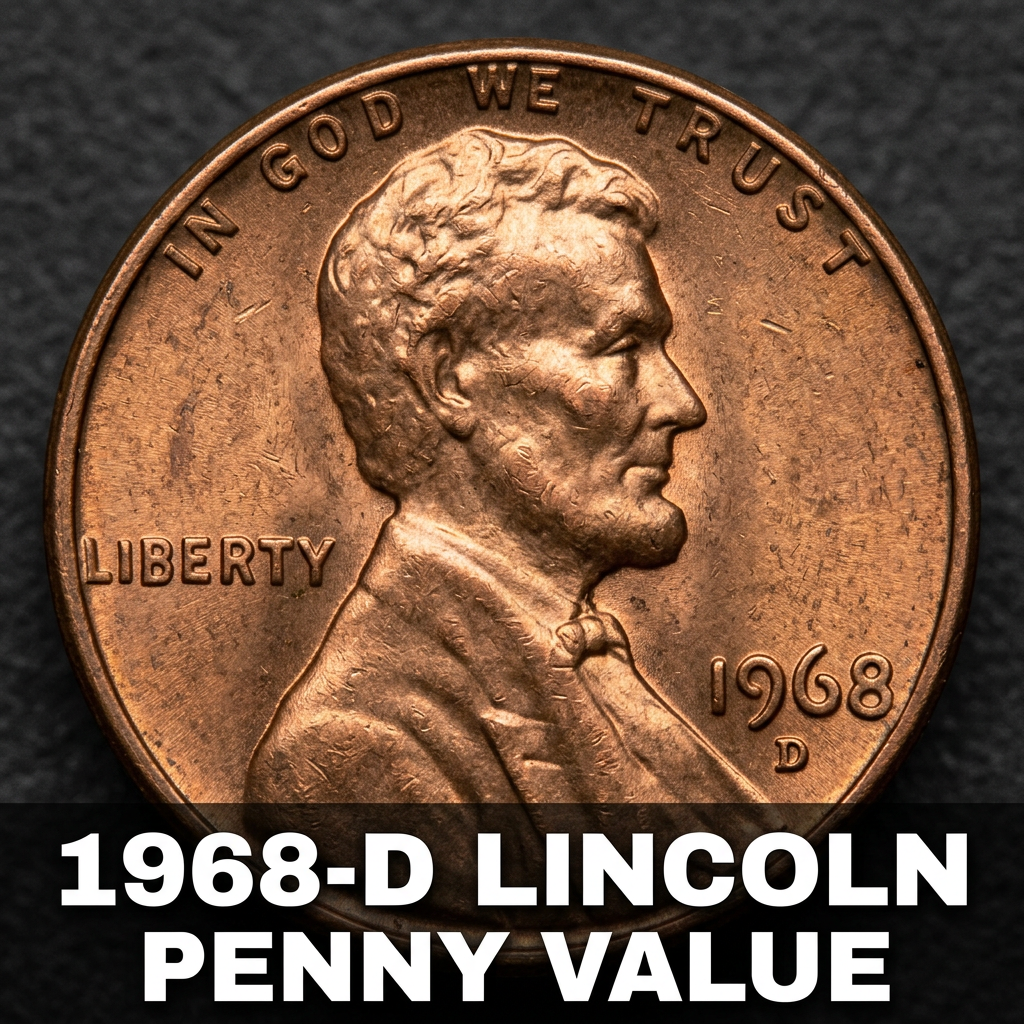
The 1968-D Lincoln Penny is worth anywhere from a few cents in heavily worn condition to over $15 or more in pristine, uncirculated grades — and certain high-grade examples have sold for well over $100 at auction. If you recently dug one out of a coin jar or found it tucked inside an old wallet, you’re in the right place to figure out exactly what you’ve got.
A Quick Look at the 1968-D Lincoln Penny
The 1968-D Lincoln cent was struck at the Denver Mint, which is why you’ll see a small “D” mint mark just below the date on the obverse side of the coin. Denver produced an impressive 2,886,269,600 pennies that year — nearly 3 billion — which tells you right away that this is not a rare coin by any stretch of the imagination.
That said, high mintage doesn’t mean your coin is worthless. Condition plays a massive role in value. A penny that has been sitting in circulation for decades, passing through thousands of hands, will look very different from one that was saved the day it was minted. The difference in dollar value between the two can be surprising.
If you want a quick way to assess your coin without any guesswork, try using a coin identifier and value app — you can snap a photo of your penny and get an instant grade estimate right from your phone.
Your Old Coin Could Be Valuable!
Identify It & Know Its Real Value — Free Download
1968-D Lincoln Penny Value by Grade
Coin value is almost entirely tied to condition, which collectors call “grade.” Here’s a simple breakdown of what the 1968-D penny is generally worth across different grades:
Your Old Coin Could Be Valuable!
Identify It & Know Its Real Value — Free Download
| Grade / Condition | Description | Estimated Value |
|---|---|---|
| Good (G-4) | Heavy wear, flat details | $0.01 – $0.05 |
| Fine (F-12) | Moderate wear, some detail visible | $0.05 – $0.15 |
| Extremely Fine (EF-40) | Light wear on high points | $0.25 – $0.50 |
| Uncirculated (MS-63) | No wear, some contact marks | $1 – $5 |
| Gem Uncirculated (MS-65 RD) | Full original red luster, sharp strike | $10 – $20+ |
| Superb Gem (MS-67 RD) | Near perfect, top-tier eye appeal | $100 – $300+ |
For the most up-to-date certified coin sales, you can check recent 1968-D Lincoln Penny MS-RD auction prices and certified values to see what real buyers are paying right now.
What Makes a 1968-D Penny More Valuable
While most 1968-D pennies are common, a few factors can push the value significantly higher. The most important is color designation. Lincoln cents in mint state are graded as Red (RD), Red-Brown (RB), or Brown (BN). Red coins — those that have retained their original copper luster — are the most desirable and command the biggest premiums.
Your Old Coin Could Be Valuable!
Identify It & Know Its Real Value — Free Download
Strike quality also matters. Some 1968-D pennies came off the dies with weak strikes, making details like Lincoln’s hair and the lettering on the reverse look soft or mushy.
A sharply struck coin with full, crisp details is a better coin in the eyes of collectors. Additionally, coins that have been professionally graded and encapsulated by services like PCGS or NGC will typically sell for more than raw, ungraded examples, simply because buyers trust the independent assessment.
Your Old Coin Could Be Valuable!
Identify It & Know Its Real Value — Free Download
Are There Any Rare 1968-D Penny Errors Worth Looking For?
Error coins are where everyday finds can sometimes turn into real surprises. The 1968-D Lincoln cent has a few known errors that collectors actively search for. Doubled die varieties — where design elements appear slightly doubled due to a misalignment during the hubbing process — exist for this date, though they are not as dramatic or valuable as the famous 1955 doubled die.
Look closely at the lettering, the date, and Lincoln’s eye and ear for any signs of doubling.
Off-center strikes are another error type to watch for. If your coin’s design is noticeably shifted to one side, leaving a blank crescent of copper exposed, it could be worth $10 to $50 depending on how far off-center it is.
CoinKnow is a great tool for identifying error coins — just photograph the coin under good light and let the app help you spot anomalies you might miss with the naked eye.
Your Old Coin Could Be Valuable!
Identify It & Know Its Real Value — Free Download
How to Get the Most Accurate Value for Your 1968-D Penny
If you believe you have a high-grade or error 1968-D Lincoln penny, the best path forward is professional grading. Submitting to PCGS or NGC costs money upfront but can dramatically increase what a coin sells for on the open market.
For a quick ballpark estimate before going that route, you can also browse a detailed 1968 Lincoln Penny value guide with price data across all grades and varieties to see how your coin compares.
And of course, CoinKnow remains one of the most convenient tools for everyday collectors who want a fast, reliable answer without having to dig through price guides manually.
Your Old Coin Could Be Valuable!
Identify It & Know Its Real Value — Free Download
FAQ
Q: Is the 1968-D penny rare?
A: No, the 1968-D penny is not rare. With nearly 3 billion minted at the Denver facility, it is one of the more common Lincoln cents you’ll encounter. Its value lies primarily in condition and color grade rather than scarcity.
Q: How can I tell if my 1968-D penny is uncirculated?
A: An uncirculated penny will show no signs of wear on the high points of the design — Lincoln’s cheekbone, his shoulder, and the lettering should all have a slightly raised, undisturbed look. The coin may also have some original red or orange luster visible, especially under good lighting. If you’re unsure, CoinKnow can help you compare your coin to grading standards instantly.
Q: What is the most a 1968-D penny has ever sold for?
A: While most examples sell for under $20, top-grade MS-67 Red examples certified by PCGS or NGC have sold for several hundred dollars at auction. The exact record depends on the specific grading service and sale date, but gems in flawless condition are genuinely scarce despite the high overall mintage.