1940 Wheat Penny Value No Mint Mark: Value and Guide

Your Old Coin Could Be Valuable!
Identify It & Know Its Real Value — Free Download


The 1940 Wheat Penny with no mint mark is worth anywhere from $0.10 in worn condition to over $35 in high-grade mint state. While most found in pocket change are common, certain rare specimens can be worth hundreds or even thousands of dollars to serious collectors looking for perfection.
| Condition | Estimated Value |
|---|---|
| Good (Circulated) | $0.10 – $0.20 |
| Fine (Circulated) | $0.35 – $0.50 |
| Extremely Fine (AU) | $1.00 – $2.50 |
| Uncirculated (MS63) | $5.00 – $12.00 |
| High Grade (MS67RD) | $150.00+ |
Identification of the 1940 Philadelphia Wheat Penny
If you have just discovered a handful of old copper coins in an attic or a jar of change, you might be wondering about the “No Mint Mark” status. In the world of U.S. coinage, the absence of a mint mark usually indicates that the coin was struck at the Philadelphia Mint. During 1940, the Philadelphia Mint produced a massive number of these pennies—nearly 587 million, to be exact. This high mintage is why the 1940 Wheat Penny remains one of the more accessible coins for new collectors today.
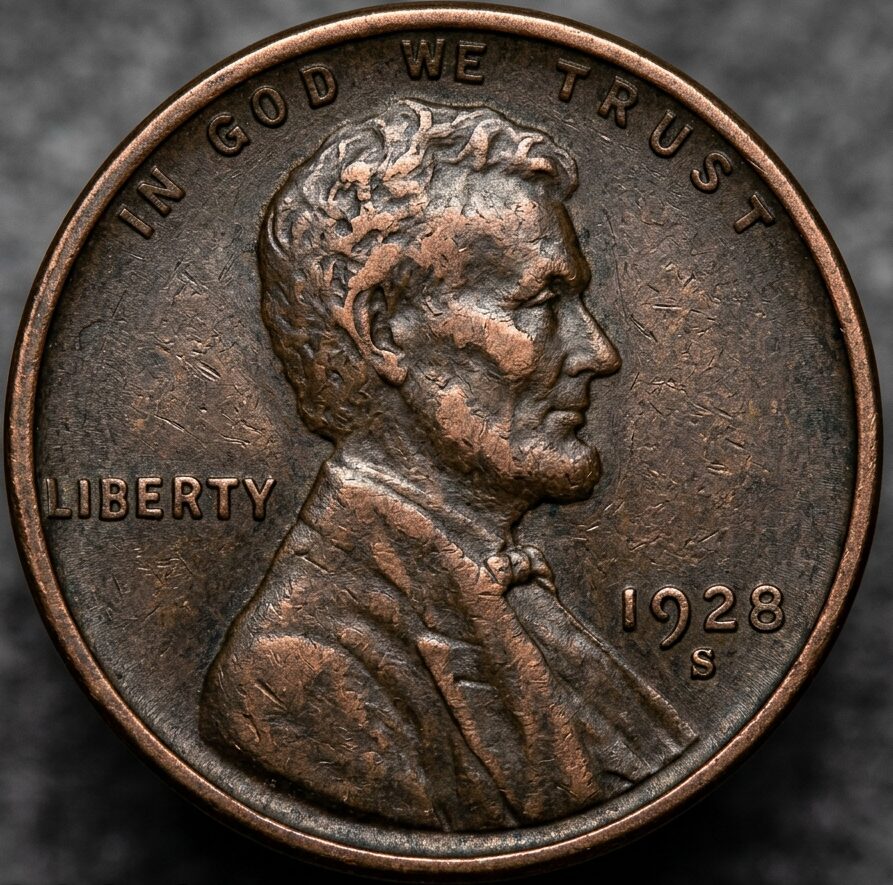
To identify it, simply look at the obverse (front) of the coin featuring Abraham Lincoln. Look at the space below the date “1940.” If there is no small letter “D” (Denver) or “S” (San Francisco) there, you have a Philadelphia-struck coin. Because so many were made, simply finding one doesn’t mean you’ve hit the jackpot. However, the historical significance of a coin from the dawn of WWII is undeniable. If you are struggling to see the details, using a top coin identifier and value app can help you zoom in and verify the date and mint mark status instantly.
When looking at the reverse of the coin, you will see the classic “Wheat Ears” design that defines this era of American currency (1909–1958). For everyday Americans, these are some of the most recognizable and beloved coins in history. While most are worth only a few cents, the excitement comes from finding those rare versions that stayed in a drawer for 80 years, preserved in their original shiny red copper state.
Your Old Coin Could Be Valuable!
Identify It & Know Its Real Value — Free Download
Determining the Condition and Grade of Your 1940 Penny
The value of a 1940 penny is determined almost entirely by its grade. Professional graders look at the amount of wear on Lincoln’s hair, the sharpness of the wheat stalks, and the original luster of the copper. Most pennies you find in circulation today will be “Good” or “Fine,” meaning the details are worn down but the main features are still visible. In these lower grades, the coin is mostly worth its copper melt value plus a small premium for its age.
However, if you find a coin that still looks “new,” the value climbs significantly. Collectors categorize these as “Uncirculated” or “Mint State” (MS). A coin in this condition will have no visible wear even under magnification. For those who want a digital second opinion, the CoinKnow app is an excellent tool for comparing your coin’s condition against high-resolution library images to see where it might land on the grading scale.
Your Old Coin Could Be Valuable!
Identify It & Know Its Real Value — Free Download
The 1940 Philadelphia issue is particularly known for having some very well-struck examples. While many “no mint mark” pennies from earlier years are blurry or weak, 1940 was a year of high production quality. This means that to be truly valuable, your coin must be near-perfect. You can check the latest 1940 penny auction records and value charts to see what professional collectors are currently paying for these high-end “Red” (RD) specimens.
| Grade Designation | Appearance Characteristics | Typical Price |
|---|---|---|
| Brown (BN) | Dull chocolate color, heavy circulation | $0.15 – $0.50 |
| Red-Brown (RB) | Partial original luster, some orange tint | $1.00 – $5.00 |
| Red (RD) | Brilliant copper shine, looks brand new | $10.00 – $2,500+ |
Why the 1940 Wheat Penny Color Matters
For copper coins, color is a major factor in pricing. Collectors categorize pennies into three color tiers: Brown (BN), Red-Brown (RB), and Red (RD). A “Red” 1940 penny is one that has retained at least 95% of its original mint orange-red glow. Because copper oxidizes (turns brown) quickly when exposed to air and moisture, finding a 1940 penny that is still bright red is quite rare.
Your Old Coin Could Be Valuable!
Identify It & Know Its Real Value — Free Download
Most 1940 pennies found in old jars will be Brown. These are the workhorses of the era and, while charming, don’t command high prices. However, if you have a coin that was kept in a roll or a protective album, it might be a Red-Brown or even a full Red specimen. The price jump between a Brown MS65 and a Red MS65 can be dozens of dollars. This is why keeping your coins in a cool, dry place is essential for maintaining their value.
To get an accurate sense of which color category your coin falls into, you can use the CoinKnow app to scan the coin. The app uses advanced image recognition to help identify the surface quality. For a deeper dive into the specific market trends for this date, you can view this 1940 Wheat Penny price guide to see how color affects the final hammer price at major coin auctions.
Rare 1940 Penny Errors to Look Out For
While a standard 1940 penny is common, error coins are the “hidden treasures” that every collector hopes to find. Errors occur during the minting process and can result in unique, one-of-a-kind pieces that are worth far more than a standard coin. In 1940, several common error types were documented, though they remain rare compared to the total mintage.
Your Old Coin Could Be Valuable!
Identify It & Know Its Real Value — Free Download
One of the most popular errors to look for is the Doubled Die. While 1940 doesn’t have a “major” doubled die like the famous 1955 penny, there are minor Doubled Die Obverse (DDO) and Doubled Die Reverse (DDR) varieties. You’ll need a magnifying glass or a jeweler’s loupe to see slight doubling on the letters of “LIBERTY” or the date. Other errors include “Off-Center” strikes, where the coin image is not centered on the copper planchet, and “Lamination Flaws,” where the surface of the penny appears to be peeling or cracked.
| Error Type | What to Look For | Estimated Value |
|---|---|---|
| Off-Center Strike | Part of the design is missing | $10 – $100+ |
| Die Crack | Raised lines across the surface | $5 – $20 |
| Double Die Obverse | Slight blurring/doubling on letters | $20 – $150 |
Historical Context: The 1940 Penny and World War II
Understanding the historical backdrop of the 1940 Wheat Penny adds a layer of appreciation for those who hold one. In 1940, the United States was still coming out of the Great Depression, and the clouds of World War II were gathering in Europe. The penny was a vital denomination; in 1940, a single penny could still buy a piece of candy or a newspaper.
These coins were minted just before the U.S. began to ration copper for the war effort. Just three years later, in 1943, the Mint would switch to zinc-coated steel to save copper for shell casings and wiring. Therefore, the 1940 penny represents the last of the “classic” high-mintage pre-war copper pennies. Holding a 1940 penny is like holding a piece of history from a time of transition in American life.
Your Old Coin Could Be Valuable!
Identify It & Know Its Real Value — Free Download
Collectors often seek out 1940 pennies as part of a “Year Set” or a complete Wheat Penny collection. For everyday Americans, these coins serve as a nostalgic link to their parents’ or grandparents’ childhoods. Whether you find one in a dusty box or inherit a collection, the CoinKnow app can help you document and organize your finds, ensuring you keep track of the history and value of your collection as it grows.
Summary of 1940 No Mint Mark Value
In summary, while the 1940 Wheat Penny with no mint mark is a common coin, its value is highly dependent on its condition and the presence of rare errors. For most people, a 1940 penny found in a jar will be worth about 15 to 25 cents. However, those who uncover pristine, brilliant red examples could be looking at a coin worth $20, $50, or even more.
If you believe you have a high-grade 1940 penny or one with a unique error, the best next step is to have it evaluated. Comparison with auction prices is key. High-grade specimens in MS67 Red condition have been known to sell for over $2,000 at professional auctions, though these are extremely rare. Most hobbyists will find joy in the history and the hunt, using modern tools to bridge the gap between “pocket change” and “valuable collectible.”
| Key takeaway | Detail |
|---|---|
| Total Mintage | 586,810,000 |
| Composition | 95% Copper, 5% Tin/Zinc |
| Highest Known Price | $2,500+ (MS68 Red) |
FAQ about the 1940 Penny
Q: Does “No Mint Mark” mean it’s rare?
A: No. On a 1940 penny, the lack of a mint mark simply means it was minted in Philadelphia. Philadelphia was the main minting facility, so these coins are actually the most common variety for that year.
Your Old Coin Could Be Valuable!
Identify It & Know Its Real Value — Free Download
Q: Should I clean my 1940 Wheat Penny to make it worth more?
A: NO! Never clean your coins. Cleaning a coin with chemicals or clothes causes microscopic scratches that collectors can easily spot. A cleaned coin often loses 50-90% of its numismatic value. It is always better to leave the coin in its natural, aged state.
Q: How much copper is in a 1940 penny?
A: Each 1940 penny contains about 95% copper. While the face value is only 1 cent, the “melt value” of the copper is usually worth about 2 to 3 cents, depending on current metal market prices.
Q: Where can I sell my 1940 Wheat Penny?
A: If it is a common circulated coin, you can sell it to local coin shops or in bulk on eBay. If you suspect it is a high-grade “Red” coin or an error, it is best to get it graded by a service like PCGS or NGC before selling it at a major auction house.