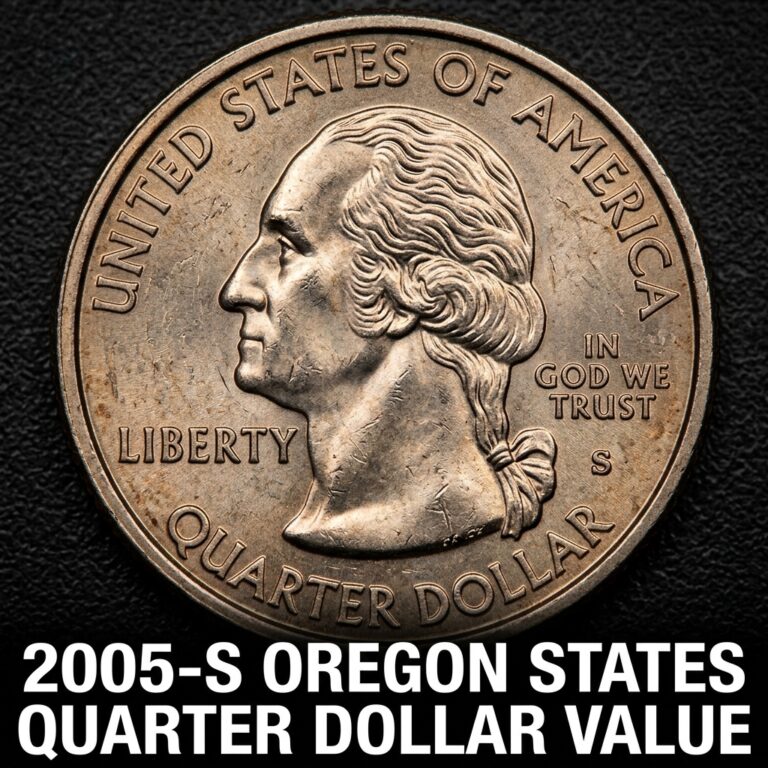
2014-S Great Sand Dunes Quarter Value Guide

Your Old Coin Could Be Valuable!
Identify It & Know Its Real Value — Free Download


The 2014-S Great Sand Dunes Quarter is worth anywhere from $0.25 in circulated condition to over $40 in high-grade silver proof condition. Whether you found one in your pocket change or inherited a mint set, understanding the mint mark and strike type is key to identifying its true market value.
| Coin Version | Circulated Value | Uncirculated/Proof Value |
|---|---|---|
| 2014-S Copper-Nickel Business Strike | $0.25 – $1.00 | $2.50 – $15.00 |
| 2014-S Clad Proof | N/A | $4.00 – $10.00 |
| 2014-S Silver Proof (90% Silver) | N/A | $12.00 – $45.00 |
Understanding the 2014-S Great Sand Dunes Quarter Variations
When you look at a 2014 quarter, the first thing you notice is the beautiful depiction of a hiker crossing the dunes in Colorado. However, for collectors, the most important detail is the “S” mint mark located on the obverse (the side with George Washington). This “S” signifies it was produced at the San Francisco Mint. Unlike the “P” or “D” quarters you see every day, the San Francisco versions were not primarily intended for general circulation.
If you are unsure whether your coin is a rare variety or just a standard strike, using a top coin identifier and value app can help you zoom in on the mint mark and surface texture. In 2014, the San Francisco Mint released three distinct versions of the Great Sand Dunes quarter: the business-strike NIFC (Not Intended For Circulation) copper-nickel coin, the Clad Proof, and the Silver Proof.
Because the business strikes were sold directly to collectors in bags and rolls rather than being released through banks, finding one in your change is rare. Most coins you find in your pocket are likely the “P” (Philadelphia) or “D” (Denver) varieties, which generally only hold a high premium in perfect condition. Finding a 2014-S in the wild is a lucky catch! To keep track of these finds, many hobbyists use CoinKnow to log their collection and track market trends in real-time.
Your Old Coin Could Be Valuable!
Identify It & Know Its Real Value — Free Download
2014-S Business Strike Quarters (NIFC)
The 2014-S Business Strike is a unique beast. Unlike proofs, which have a shiny, mirror-like finish, these look like “regular” quarters but carry the “S” mint mark. They were part of a special program where the Mint sold rolls directly to collectors. Because they weren’t released to banks, their survival rate in “Mint State” (MS) is quite high, but their total mintage was relatively low, often around 1 million pieces.
The Great Sand Dunes business strike price data shows that coins in MS65 or MS66 grades are quite common and affordable. However, once you reach MS67 or the elusive MS68, the price jumps significantly. Collectors value these because they are harder to find than their Philadelphia or Denver cousins.
If you find one that looks a bit worn (circulated), it is still worth more than 25 cents to a collector—usually around $1 to $2. If it is pristine and shiny with no scratches, it could be worth $5 to $15. Serious collectors often check these under magnification to ensure there aren’t too many “bag marks” from when the coins bumped into each other during production.
Your Old Coin Could Be Valuable!
Identify It & Know Its Real Value — Free Download
2014-S Proof and Silver Proof Value
Proof coins are the “supermodels” of the coin world. They are struck twice using polished dies to create a sharp image with a mirror-like background (field) and a frosted foreground (device). The 2014-S Great Sand Dunes Proof comes in two formats: Clad and Silver.
The Clad Proof is made of the standard copper-nickel “sandwich” metal. Its value usually hovers around $5 to $8. On the other hand, the 2014-S Silver Proof is made of 90% silver and 10% copper. These are highly sought after not just for their rarity, but for their precious metal content. As silver prices fluctuate, the “floor” value of these coins changes.
Your Old Coin Could Be Valuable!
Identify It & Know Its Real Value — Free Download
| Grade | Clad Proof Value | Silver Proof Value |
|---|---|---|
| PR67 (Near Perfect) | $4.50 | $15.00 |
| PR69 (Deep Cameo) | $8.00 | $22.00 |
| PR70 (Flawless) | $25.00 | $65.00+ |
Comparing these to other years, the 2014 Great Sand Dunes value information suggests that the Silver Proofs of this year have held their value remarkably well compared to some other national park sites. To accurately tell the difference between a Clad and Silver proof, look at the edge of the coin. If you see a copper stripe, it’s Clad. If the edge is solid silver/white, it’s 90% silver! Using CoinKnow can also help you identify these subtle visual cues.
Determining the Grade of Your 2014 Quarter
In coin collecting, “Grade” is everything. A coin that looks perfect to the naked eye might actually have tiny scratches that lower its value. Collectors use a 70-point scale. A “70” is a perfect coin, while a “1” is a flat piece of metal. Most 2014-S quarters you find will fall between MS63 and MS67 (for business strikes) or PR67 and PR70 (for proofs).
For the average person, grading can be intimidating. Here is a simple way to look at it:
1. Uncirculated (MS60-70): The coin has never been used in a store. it has “mint luster,” a soapy or satin-like shine.
2. About Uncirculated (AU): It looks new but has very slight wear on the highest points, like the hiker’s backpack or George Washington’s cheek.
3. Circulated: The details are smoothing out, and the mirror-like shine is gone.
Your Old Coin Could Be Valuable!
Identify It & Know Its Real Value — Free Download
Professional grading by services like PCGS or NGC can cost $20-$50 per coin. Therefore, it is only worth grading a 2014-S Great Sand Dunes quarter if it appears to be in “Perfect 70” condition. If you think you Have a winner, CoinKnow can provide high-resolution photo comparisons to help you decide if it’s worth the professional grading fee.
Key Features of the Great Sand Dunes Design
The Great Sand Dunes National Park quarter was the 24th release in the “America the Beautiful” series. It features a hiker and a child playing in the sand, with the massive dunes and the Sangre de Cristo Mountains in the background. This intricate design makes it a favorite among collectors, but it also makes “errors” harder to spot.
When examining your coin, look for doubling on the hiker’s gear or the child’s hands. While no major “Doubled Die” varieties have been widely publicized for the 2014-S specifically, the Philadelphia and Denver mints have had minor strike errors reported. Collectors often search for these tiny mistakes because they can turn a $0.25 coin into a $50 treasure.
If your coin has a strange “blob” of extra metal or appears to have been struck on a different metal blank, you might have an error coin. These “mint errors” are highly prized. Even a common 2014 quarter can be worth significant money if it was mis-struck at the mint.
Your Old Coin Could Be Valuable!
Identify It & Know Its Real Value — Free Download
Comparison Table: S-Mint vs. P & D Mints
To give you a better perspective on why the “S” mark matters, let’s compare the typical values of the different 2014 Great Sand Dunes quarters you might find. The sheer volume of P and D coins makes them much less “rare” than the S versions.
| Mint Mark | Mintage (Approx) | Common Value |
|---|---|---|
| P (Philadelphia) | 159 Million | $0.25 |
| D (Denver) | 171 Million | $0.25 |
| S (San Francisco – Business) | 1.1 Million | $1.00 – $10.00 |
| S (San Francisco – Silver) | 500,000 | $12.00 – $35.00 |
As you can see, the 2014-S is significantly rarer than the ones usually found in bank rolls. If you are going through a box of quarters, always keep an eye out for that “S.” It might not make you a millionaire, but it is a great way to start a valuable collection with very little investment.
Final Tips for Coin Hunters
If you want to maximize the value of your 2014-S Great Sand Dunes quarter, never clean it! Cleaning a coin with chemicals or even a soft cloth can create microscopic scratches that destroy its numismatic value. Collectors prefer a coin with “toning” (natural discoloration) over a coin that has been artificially shined.
Store your 2014-S quarters in PVC-free plastic flips or cardboard 2×2 holders. This prevents air and moisture from reacting with the metal, ensuring the value stays high for years to come. Whether you’re a seasoned collector or just someone who found a shiny coin in their car’s cup holder, the Great Sand Dunes quarter is a beautiful piece of American history worth holding onto. Keep hunting, and always check your change!
FAQ
Q: Why is the 2014-S quarter worth more than a 2014-P?
A: The San Francisco (S) mint produced significantly fewer coins than Philadelphia (P). While P and D quarters were made by the hundreds of millions for general circulation, S quarters were made in much smaller quantities for collectors, making them naturally rarer and more valuable.
Your Old Coin Could Be Valuable!
Identify It & Know Its Real Value — Free Download
Q: How can I tell if my 2014-S quarter is silver?
A: Check the edge of the quarter. If it is solid silver/white all the way through, it is likely the 90% silver proof version. If you see a copper-colored stripe running through the middle of the edge, it is a clad (copper-nickel) coin. Also, silver quarters weigh more (6.25g) than clad quarters (5.67g).
Q: Is a 2014-S Great Sand Dunes quarter I found in change worth anything?
A: Yes! While a circulated 2014-P or D is generally only worth 25 cents, an “S” mint coin found in circulation is usually worth at least $1.00 to $2.00 to a collector because they were not supposed to be in circulation in the first place.
Q: Where is the mint mark on the 2014 quarter?
A: The mint mark is found on the “heads” (obverse) side of the coin. Look at the right side of George Washington’s portrait, just below the “In God We Trust” motto. You will see a small P, D, or S.