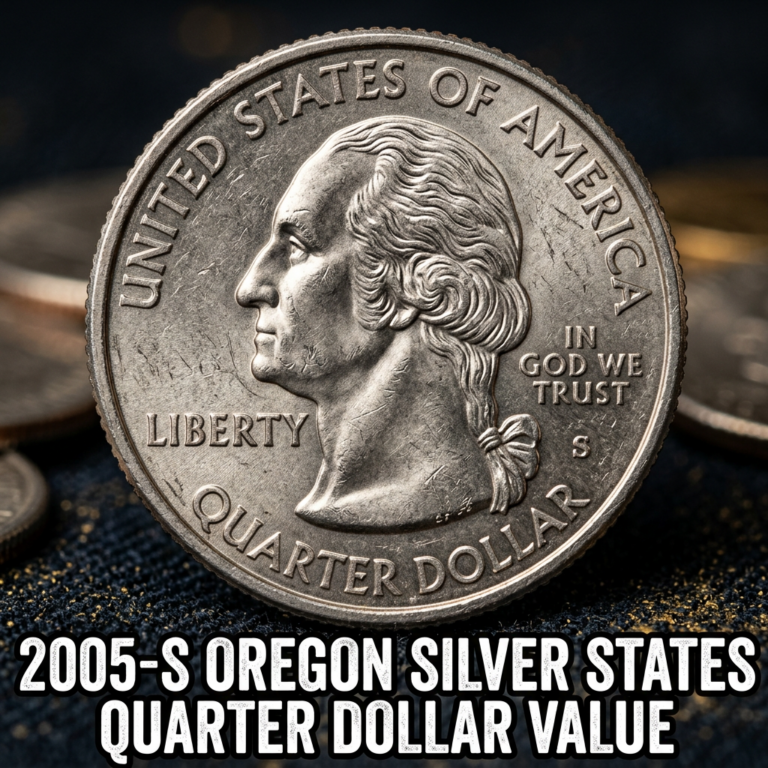
1913 Barber Half Dollar Value: What Is It Worth Today?

Your Old Coin Could Be Valuable!
Identify It & Know Its Real Value — Free Download


The 1913 Barber Half Dollar is worth anywhere from $25 in heavily worn condition to over $1,000 for high-grade specimens. This classic silver coin, featuring Charles E. Barber’s iconic design, remains a favorite for everyday Americans who happen to find a piece of early 20th-century history in an old jar or estate.
| Condition / Grade | Estimated Market Value |
|---|---|
| Good (G-4) | $25 – $30 |
| Fine (F-12) | $65 – $80 |
| Extremely Fine (XF-45) | $175 – $220 |
| Uncirculated (MS-60+) | $550 – $1,200+ |
Understanding the 1913 Barber Half Dollar No Mint Mark
If you are holding a 1913 Barber Half Dollar with no mint mark, you are looking at a coin struck at the Philadelphia Mint. During this era, the “mother mint” in Philadelphia did not use a mint mark on its currency. If you want to know more about which coins are truly valuable, using a top coin identifier and value app can help you distinguish between common Philadelphia issues and rarer branch mint strikes.
The 1913 Philadelphia issue had a relatively low mintage of just 534,000 pieces. While this might sound like a lot, it is quite small compared to modern production numbers. Because these coins were made of 90% silver and saw heavy daily use, many were lost to the melting pot or worn down until the dates were barely visible. Finding one in a drawer today is an exciting discovery for any casual collector.
To get an instant look at your coin’s potential, the CoinKnow app offers a seamless way to scan your coin and get a real-time estimate. It helps users understand if their 1913 Barber Half Dollar is a common “filler” piece or a high-grade treasure worth hundreds of dollars.
Your Old Coin Could Be Valuable!
Identify It & Know Its Real Value — Free Download
Factors That Determine the 1913 Barber Half Dollar Value
The value of a 1913 Barber Half Dollar depends heavily on its physical condition, also known as its “grade.” Collectors use a 70-point scale to rank coins. For the 1913 “no mint mark” variety, even a slight difference in the “LIBERTY” letters on the headband can mean a difference of fifty dollars or more.
Surface preservation is also vital. A coin that has been cleaned with chemicals or polished will unfortunately lose a significant portion of its collector value. Most experts recommend leaving the coin exactly as it is; the natural “patina” or toning is often preferred by serious buyers.
Your Old Coin Could Be Valuable!
Identify It & Know Its Real Value — Free Download
To understand what half dollars are worth money, you need to look at mintage figures and survival rates. The 1913 (P) is considered a “better date” in the series, meaning it is more collectible than many of the years preceding it.
| Grading Term | Key Visual Indicators |
|---|---|
| Good (G) | Rim is worn down; design is mostly a silhouette. |
| Very Fine (VF) | All letters in LIBERTY are visible but worn. |
| About Uncirculated (AU) | Nearly perfect with just a trace of wear on the cheek. |
The Silver Content of the 1913 Half Dollar
Regardless of the collector demand, every 1913 Barber Half Dollar has a baseline value tied to its silver content. These coins are composed of 90% silver and 10% copper. This is what enthusiasts call “junk silver,” though there is nothing junk about it when silver prices rise.
The silver melt value provides a “floor” for the price. Even if the coin is in terrible condition—perhaps it was found with a metal detector or is severely scratched—it will still be worth its weight in silver. However, because the 1913 Philadelphia mintage is low, the numismatic (collector) value almost always exceeds the melt value.
Your Old Coin Could Be Valuable!
Identify It & Know Its Real Value — Free Download
If you’re unsure if your coin is real silver, CoinKnow can provide historical data to help you verify the weight and diameter specifications. In a world of counterfeits, knowing the technical specs of your 1913 Barber Half Dollar is the first step in protecting your investment.
Mintage Comparison: Philadelphia vs. Other Mints
In 1913, only three mints produced half dollars: Philadelphia, Denver (D), and San Francisco (S). The Philadelphia mint, which produced the “no mint mark” version, actually had the second-lowest mintage that year. The “D” and “S” versions are generally more expensive, but the 1913 Philadelphia is no slouch in the rarity department.
Comparing mintage numbers helps explain why the 1913 Barber Half Dollar value is higher than, say, a 1908 half dollar. When fewer coins are made, fewer survive in high grades. This scarcity creates a competitive market among collectors who are trying to complete a “year set” or a “mint set.”
Your Old Coin Could Be Valuable!
Identify It & Know Its Real Value — Free Download
| Mint Location | Mintage Total | Rarity Level |
|---|---|---|
| Philadelphia (No Mark) | 534,000 | Scarce |
| Denver (D) | 534,000 | Scarce |
| San Francisco (S) | 608,000 | Common/Scarce |
How to Identify a 1913 Barber Half Dollar
Identifying this coin is relatively simple, even for someone who isn’t a “coin person.” The obverse (front) features the head of Liberty facing right, wearing a Phrygian cap and a laurel wreath. You will see the year “1913” clearly at the bottom.
The reverse (back) features a heraldic eagle clutching an olive branch and arrows. To check for the mint mark, look at the bottom of the reverse, just above the “R” and “D” of “HALF DOLLAR.” If that space is empty, you have the Philadelphia version.
With the CoinKnow app, you can simply take a photo of both sides. The app’s AI technology recognizes the Barber design instantly and identifies it as the 1913 “no mint mark” variety, giving you the peace of mind that you aren’t overlooking a valuable detail like a rare mint mark or a possible error.
Is a 1913 Barber Half Dollar a Good Investment?
For many Americans, old coins are a way to diversify a small portfolio or start a family heirloom collection. The 1913 Barber Half Dollar is a solid “mid-range” collectible. It isn’t so expensive that it’s out of reach for a beginner, but it’s rare enough that it has historically held its value well against inflation.
Your Old Coin Could Be Valuable!
Identify It & Know Its Real Value — Free Download
As the years pass, fewer of these coins are available on the open market. When you find one, especially in a condition where Liberty’s hair or the eagle’s feathers are still detailed, you are looking at a piece of Americana that many people would love to own.
Price trends for the 1913 Philadelphia issue have remained stable. While they may not see the explosive growth of a 1916-D Mercury Dime, they are consistent performers in the numismatic world. Keeping your coin in a protective flip or capsule will ensure that its condition—and therefore its value—remains preserved for the next generation.
| Era | AVG Price (VG Grade) | Market Trend |
|---|---|---|
| 2010 | $18 – $22 | Steady |
| 2024 | $35 – $50 | Rising |
FAQ Section
Q: Where is the mint mark on a 1913 Barber Half?
A: The mint mark is located on the reverse side (the back) of the coin, specifically at the bottom, centered directly above the letters “H” and “A” in “HALF DOLLAR.” If there is no letter there, it was minted in Philadelphia.
Q: Why is my 1913 Barber Half Dollar worth less than the guide says?
A: Price guides usually refer to “problem-free” coins. If your coin has deep scratches, has been cleaned, or has holes drilled in it for jewelry, its value will drop significantly, often down to just the price of the silver metal.
Your Old Coin Could Be Valuable!
Identify It & Know Its Real Value — Free Download
Q: Is there a 1913-D or 1913-S Half Dollar?
A: Yes, Denver (D) and San Francisco (S) also produced half dollars in 1913. The 1913-S is particularly well-known, but the 1913 Philadelphia (no mint mark) is actually rarer in terms of total mintage than the 1913-S!
Q: How can I safely clean my old Barber coins?
A: You shouldn’t! Never clean old coins. Mechanical scrubbing or chemical dips remove the original surface layers and “luster,” which collectors look for. A cleaned coin can lose 50% or more of its market value instantly.
Q: How much silver is in a 1913 Half Dollar?
A: It contains 0.36169 troy ounces of pure silver. To find the “melt value,” you can multiply the current spot price of silver by 0.36. However, because of the 1913 date’s rarity, it is almost always worth more as a collectible.