2000-S South Carolina Silver Quarter: Value & Identification Guide

Your Old Coin Could Be Valuable!
Identify It & Know Its Real Value — Free Download


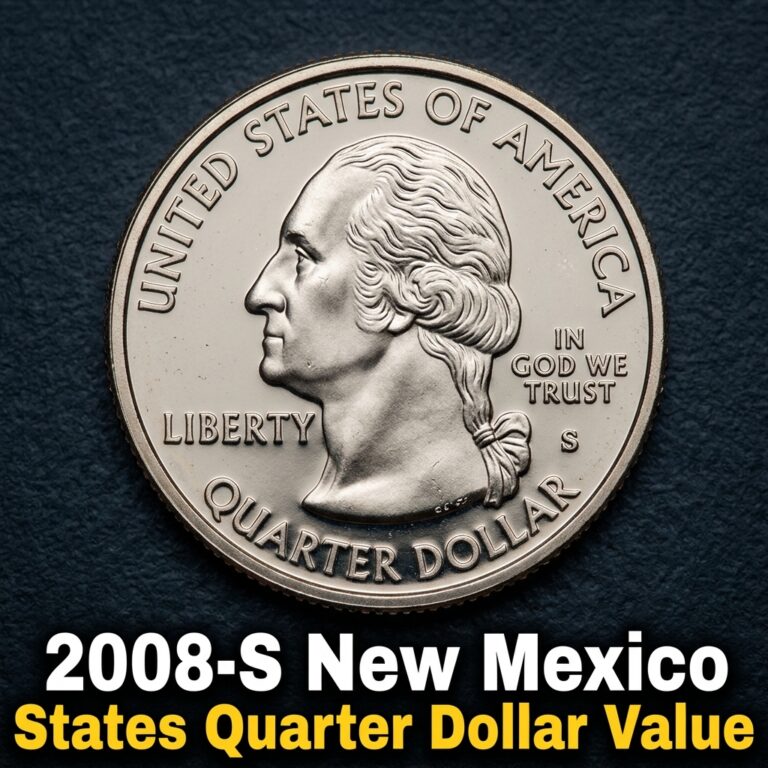
The 2000-S South Carolina Silver Quarter is worth anywhere from $6 in typical proof condition to over $100 in flawless high-grade specimens. This beautiful coin, minted specifically for collectors, features iconic symbols of the Palmetto State and remains a popular find for those checking their old coin jars or collection sets.
| Condition / Grade | Estimated Market Value |
|---|---|
| PR 65 (Deep Cameo) | $6 – $9 |
| PR 69 (Deep Cameo) | $12 – $18 |
| PR 70 (Perfect Grade) | $45 – $115 |
Identifying the 2000-S South Carolina Silver Proof Quarter
When you first encounter a 2000-S South Carolina Silver State Quarter, the most important step is distinguishing it from the standard copper-nickel version. If you aren’t sure what you have, using a top coin identifier and value app can help you distinguish between the different compositions instantly. The “S” mint mark indicates it was produced at the San Francisco Mint.
Unlike the quarters you find in your pocket change, these silver versions were sold as part of special Proof Sets. They feature a mirrored background and frosted details, a finish known as “Cameo.” To the naked eye, a silver quarter has a much brighter, whiter luster than a standard quarter.
The easiest way to check is to look at the edge of the coin. A standard clad quarter will show a copper-colored stripe around the rim. A 90% silver quarter will show a solid, bright silver edge with no brown or orange visible. If you are still unsure of your find, the CoinKnow app can analyze the visual details to provide a quick assessment.
Your Old Coin Could Be Valuable!
Identify It & Know Its Real Value — Free Download
The Precious Metal Value of the Silver South Carolina Quarter
Because this coin is struck in 90% silver and 10% copper, it possesses intrinsic “melt value.” Every 2000-S silver quarter contains approximately 0.1808 troy ounces of pure silver. This means even if the coin is scratched or damaged, it will always be worth at least its weight in silver.
When silver prices rise, the baseline value of these quarters increases accordingly. Collectors refer to this as the “bullion floor.” While the face value is only 25 cents, the silver content alone usually keeps the price above $5 or $6 regardless of the numismatic demand.
Higher-grade examples, however, trade well above their metal content. For those tracking market trends, the latest 2000 South Carolina silver quarter market rates show that collectors are willing to pay a premium for “Deep Cameo” coins that have been professionally graded by services like PCGS or NGC.
Your Old Coin Could Be Valuable!
Identify It & Know Its Real Value — Free Download
| Composition Factor | Details |
|---|---|
| Metal Content | 90% Silver, 10% Copper |
| Silver Weight | 0.18084 troy oz |
| Total Weight | 6.25 grams |
| Diameter | 24.3 mm |
What Makes the South Carolina Design Special?
The South Carolina quarter was the 8th coin released in the 50 State Quarters Program. The reverse design features key state symbols: the Palmetto tree, the Carolina Wren (state bird), and the Yellow Jessamine (state flower). It also includes a star to indicate the state’s capital, Columbia, and its nickname, “The Palmetto State.”
Designed by Thomas D. Rogers, the imagery is heavy with symbolism. The Palmetto tree is a reference to the Revolutionary War, specifically the defense of Sullivan’s Island, where palmetto logs were used to build a fort that survived British cannon fire. Knowing the history behind your coin adds significant emotional value for many hobbyists.
Your Old Coin Could Be Valuable!
Identify It & Know Its Real Value — Free Download
Collectors often look for “Mirror” surfaces where the reflection is clear and undisturbed by tiny scratches called hairlines. If you have a specimen that looks flawless, it’s worth using CoinKnow to compare it against high-resolution images of “Perfect 70” graded coins. Small imperfections can drastically change the final sale price.
Grading and Quality: From PR60 to PR70
In the world of coin collecting, the “Grade” is everything. For silver proof quarters, the scale usually starts at Proof 60 (PR60) and goes up to Proof 70 (PR70). A PR70 coin is considered “perfect” under 5x magnification, meaning it has zero post-production flaws, scratches, or spots.
Most silver quarters found in original US Mint packaging will grade between PR67 and PR69. Jumping from a grade of 69 to 70 can increase the value by triple or more. Finding a perfect 70 is the goal of every serious collector because of its rarity and visual appeal.
Your Old Coin Could Be Valuable!
Identify It & Know Its Real Value — Free Download
If your coin has been handled without gloves, it likely contains oils from your skin that can lead to “toning” or cloudiness over time. To get an accurate idea of what your specific coin might be worth, you can look up current South Carolina silver quarter price guides. These guides update based on recent auction data from major hobbyist exchanges.
| Grade Designation | Visual Description |
|---|---|
| Cameo (CAM) | Moderate contrast between fields and devices. |
| Deep Cameo (DCAM) | Strong, frosting-like contrast on all design elements. |
| Toned | Natural coloration (blue/gold) due to oxidation. |
Can You Find a 2000-S Silver Quarter in Pocket Change?
While it is extremely rare, it is possible to find a 2000-S Silver South Carolina Quarter in circulation. Usually, this happens when someone accidentally spends a proof set or a collection is stolen and spent at a local store. These are known in the “hobby” as “impaired proofs.”
An impaired proof is a coin that was intended for collectors but has since been handled, scratched, or worn down by moving through cash registers. Even in “circulated” condition, the silver content remains. If you hear a high-pitched “ping” when you drop a quarter on a table, it’s a good sign you’ve found silver.
For everyday Americans, the excitement of finding a silver quarter in the wild is like finding a $5 bill on the sidewalk. You can use the CoinKnow mobile app to keep an inventory of your finds and double-check their rarity while you are on the go or visiting local coin shops.
Your Old Coin Could Be Valuable!
Identify It & Know Its Real Value — Free Download
How to Store and Protect Your Silver State Quarter
If you discover that you own a 2000-S South Carolina silver quarter, protecting its condition is paramount. Silver is a soft metal and can scratch easily. More importantly, silver reacts with sulfur in the air, which can turn the coin black or dark grey over time.
Ideally, you should keep your silver quarters in PVC-free plastic holders or “flips.” These prevent the coin from rattling against other objects. For coins that are potentially worth $50 or more, consider having them professionally “slabbed” (certified) by a grading company.
Using a spreadsheet or a digital collection tool like CoinKnow helps you track the value of your collection as silver prices fluctuate. Keeping a digital record also makes it easier to show your collection to potential buyers without having to handle the physical coins more than necessary.
| Storage Method | Protection Level |
|---|---|
| Ziploc Bag | Poor (High risk of scratching) |
| Cardboard Flip | Good (Standard for beginners) |
| Hard Plastic Case | Excellent (Prevents most damage) |
| Professional Slab | Ultimate (Museum quality protection) |
FAQ about the 2000-S South Carolina Silver Quarter
Q: How do I know if my 2000 South Carolina quarter is silver or clad?
A: Check the weight and the edge. A silver quarter weighs 6.25 grams, while a clad quarter weighs 5.67 grams. Additionally, the edge of a silver quarter is solid silver-white, whereas a clad quarter has a visible copper stripe.
Q: Does the “S” mint mark always mean it is silver?
A: No. The San Francisco mint (“S”) produced both copper-nickel (clad) proof quarters and 90% silver proof quarters in 2000. You must verify the composition using weight or the edge-test mentioned above.
Your Old Coin Could Be Valuable!
Identify It & Know Its Real Value — Free Download
Q: Where can I sell my 2000-S South Carolina Silver Quarter?
A: You can sell these to local coin shops, through online auction sites like eBay, or at coin shows. Because they have a high silver content, most gold and silver exchange shops will also buy them based on the current silver market price.
Q: Should I clean my silver quarter to make it worth more?
A: No! Never clean a collectible coin. Cleaning creates microscopic scratches that can destroy the coin’s numismatic value. Even if the coin looks “dirty,” collectors prefer original patina over a cleaned surface.
Q: Are there any errors to look for in this series?
A: While rare for silver proofs, some 2000-S quarters may show “doubled die” features or striking errors. Use a magnifying glass to look for blurry or doubled lettering, which could significantly increase the coin’s value to a specialist.