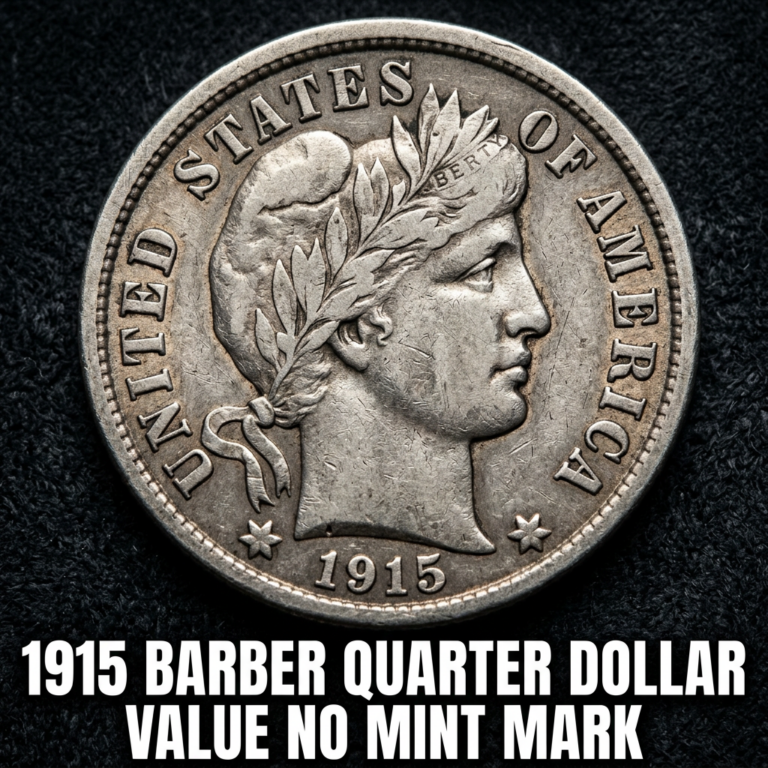
1887 Liberty Nickel Value: Price Guide for Collectors

Your Old Coin Could Be Valuable!
Identify It & Know Its Real Value — Free Download


The 1887 Liberty Head Nickel is worth anywhere from $5 in worn condition to over $1,500 in pristine mint state. Known by collectors as the “V-Nickel” because of the Roman numeral on the reverse, this coin is a fascinating piece of late 19th-century American history that many people still find in old jars today.
| Condition | Estimated Value |
|---|---|
| Good (G-4) | $5.00 – $8.00 |
| Fine (F-12) | $15.00 – $25.00 |
| Extremely Fine (XF-40) | $55.00 – $75.00 |
| Uncirculated (MS-60) | $150.00 – $220.00 |
| Superb Gem (MS-65+) | $1,000.00+ |
A Brief History of the 1887 Liberty Head Nickel
The 1887 Liberty Nickel belongs to a series that was minted between 1883 and 1912. Designed by Charles E. Barber, who was the Chief Engraver of the United States Mint at the time, this coin replaced the older Shield Nickel. By the time 1887 rolled around, the design had settled into its permanent form, following a controversial first year in 1883 where the word “CENTS” was missing from the back, leading fraudsters to gold-plate the nickels and pass them off as $5 gold pieces.
If you have stumbled upon one of these coins, you might want to use a top coin identifier and value app to get a quick estimate of its grade. The 1887 issue saw a healthy mintage of over 15 million coins, all of which were produced at the Philadelphia Mint. Because Philadelphia was the only mint producing nickels at this time, you will not find a mint mark on this coin.
Modern collectors love the 1887 Nickel because it represents the Gilded Age of America. While millions were made, the vast majority spent decades in circulation, meaning high-grade examples are quite rare. If you use an app like CoinKnow, you can easily compare your coin’s details to high-resolution images to see if yours has survived in “Uncirculated” condition, which significantly drives up the price.
Your Old Coin Could Be Valuable!
Identify It & Know Its Real Value — Free Download
Assessing the 1887 Liberty Nickel Value by Grade
When determining how much your coin is worth, the “grade” is the most important factor. Grading is a way of describing how much wear and tear a coin has suffered over the last 130+ years. For a casual owner, distinguishing between a “Fine” and “Very Fine” coin can be difficult, but the price difference can be substantial.
Your Old Coin Could Be Valuable!
Identify It & Know Its Real Value — Free Download
The 1887 Liberty Nickel market values show that even a heavily worn coin is still worth several times its face value. Most 1887 nickels found in “junk silver” bins or old collections are in “Good” condition. In this state, the design is visible but mostly flat. As you move up the scale to “Fine” or “Very Fine,” you start to see the word “LIBERTY” clearly in the headband of Lady Liberty.
For those lucky enough to find a coin that still has its original “mint luster”—the frosty shine it had when it left the mint—the value jumps into the hundreds or even thousands of dollars. Professional grading by services like PCGS or NGC is usually recommended for coins that appear to be in “Mint State” to lock in their high market value.
Your Old Coin Could Be Valuable!
Identify It & Know Its Real Value — Free Download
| Grade Group | Key Features to Look For | Avg. Price |
|---|---|---|
| Circulated (G to VF) | Heavy wear; Liberty’s hair is flat; most details are gone. | $5 – $35 |
| About Uncirculated (AU) | Very slight wear on the highest points (hair and corn ears). | $80 – $130 |
| Mint State (MS-60+) | No wear; original surface shine remains intact. | $150 – $2,500 |
Key Features and Identifying the 1887 V-Nickel
The design of the 1887 Liberty Nickel is iconic. The obverse (front) features a left-facing portrait of Lady Liberty, surrounded by thirteen stars representing the original colonies. Within her coronet, the word “LIBERTY” should be visible on higher-grade specimens. If you can see all the letters of LIBERTY, you likely have a coin worth more than $20.
The reverse (back) features a large Roman numeral “V” inside a wreath of corn, wheat, and cotton. Unlike the 1883 “No Cents” variety, the 1887 has the word “CENTS” clearly inscribed at the bottom. Check your coin for damage such as scratches, “cleaning” (which ruins the value), or holes. Collectors greatly prefer “original” surfaces, even if they are dark or toned.
While looking through your collection, you might find other coins from the same era. For example, comparing the nickel to an 1887 Morgan Silver Dollar’s worth can show you just how much 19th-century currency values vary based on metal content and rarity. Tools like CoinKnow can help you keep track of these different values across multiple denominations.
Your Old Coin Could Be Valuable!
Identify It & Know Its Real Value — Free Download
Rare 1887 Liberty Nickel Varieties and Errors
While the 1887 Liberty Nickel does not have many famous “major” errors like other years (such as the 1918/7 Buffalo Nickel), there are still subtle variations that collectors look for. These include “Doubled Dies” where parts of the design appear blurry or doubled, or “Repunched Dates” where the mint worker struck the date into the die twice.
The most common “variety” found by amateurs is actually just damage. Because these coins are made of 75% copper and 25% nickel, they are susceptible to “environmental damage” if left in the ground or a damp basement. This can cause the coin to look black or pitted. Real errors, like an “off-center strike,” where the design is pushed to one side, can add hundreds of dollars to the 1887 Liberty Nickel value.
To spot these tiny details, you really need a magnifying glass or a high-quality digital zoom. Using CoinKnow allows you to take a clear photo and compare it to known error patterns, which is much faster than squinting through a handheld loupe.
Your Old Coin Could Be Valuable!
Identify It & Know Its Real Value — Free Download
| Potential Error Type | Rarity | Estimated Premium |
|---|---|---|
| Off-Center Strike | Very Rare | $100 – $500 |
| Die Crack (Cud) | Uncommon | $20 – $50 |
| Repunched Date | Scarce | $30 – $100 |
Why the 1887 Nickel is a Great Starter Coin
If you are new to coin collecting, the 1887 Liberty Nickel is an excellent “entry-level” coin. It is affordable enough that almost anyone can own a piece of history from over 135 years ago. Unlike gold or large silver coins, you don’t need a huge budget to start a collection of V-Nickels.
Furthermore, the 1887 date is considered a “semi-key” date by some, meaning it’s slightly harder to find than the common 1900-1912 dates, but much easier to find than the legendary 1885 or 1886 nickels. This makes it a satisfying find for anyone sorting through an old estate or a jar of “old money” from a grandparent’s attic.
Because these coins are no longer in circulation, their supply is fixed. Every year, more are lost or damaged, which means the value of well-preserved 1887 nickels is likely to grow steadily over time. If you think you’ve found one, keep it in a protective sleeve or a small plastic flip to prevent your skin oils from tarnishing the metal further.
FAQ
Q: Where is the mint mark on an 1887 Liberty Nickel?
A: You won’t find one! In 1887, all Liberty Head Nickels were minted at the Philadelphia Mint. During this era, the Philadelphia Mint did not use a “P” mint mark. If you see a mint mark on a V-Nickel, it was likely minted after 1912 (at Denver or San Francisco), but for 1887, they are all from Philly.
Your Old Coin Could Be Valuable!
Identify It & Know Its Real Value — Free Download
Q: Is a worn 1887 Nickel still worth keeping?
A: Absolutely. Even in a very worn state, an 1887 nickel is worth at least $3 to $5. While that might not buy a mansion, it is 100 times its original face value. Plus, it’s a genuine antique from the 19th century!
Q: Should I clean my 1887 Liberty Nickel to make it look better?
A: Never clean your coins! This is the number one mistake new collectors make. Cleaning a coin with chemicals or even a soft cloth creates micro-scratches that professional graders can see instantly. A cleaned coin usually loses 50% or more of its value compared to an “original” dirty coin.
Q: What is the most expensive 1887 Liberty Nickel ever sold?
A: Extremely rare examples in “Proof” condition or perfect “Mint State” have sold for several thousand dollars at specialized auctions. For example, a specimen graded MS-67 can fetch upwards of $3,500, though these are almost never found in ordinary pocket change.