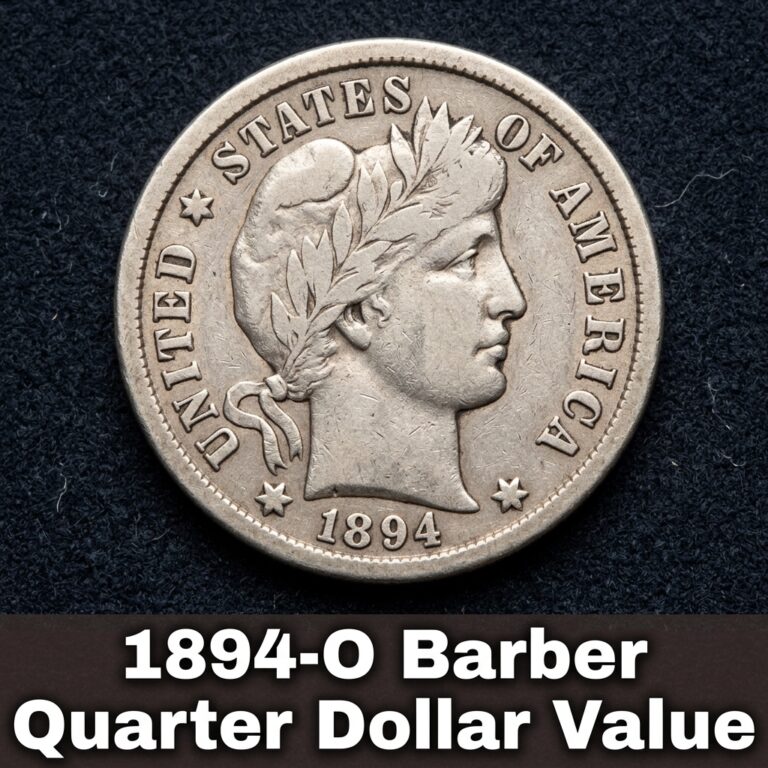
2007-D Kennedy Half Dollar Value: What Is It Worth Today?

Your Old Coin Could Be Valuable!
Identify It & Know Its Real Value — Free Download


The 2007-D Kennedy Half Dollar is worth anywhere from $0.50 in circulated condition to over $1,200 for a high-grade Mint State specimen. While these coins are not found in daily change as often as quarters or dimes, they remain a fascinating piece of modern American numismatcs for casual collectors and enthusiasts alike.
| Condition / Grade | Estimated Value |
|---|---|
| Circulated (Pocket Change) | $0.50 – $1.00 |
| About Uncirculated (AU58) | $1.50 – $3.00 |
| Mint State 63 (MS63) | $5.00 – $12.00 |
| Mint State 65 (Gem BU) | $25.00 – $45.00 |
| Mint State 67+ High Grade | $150.00 – $1,200+ |
Why the 2007-D Kennedy Half Dollar is Special
Finding a 2007-D Kennedy Half Dollar in your pocket might feel like winning a small lottery, but it is important to understand why these coins are different from the ones your grandparents used. Starting in 2002, the U.S. Mint stopped producing half dollars for general circulation. Instead, they began striking them only for collectors who purchased rolls or bags directly from the Mint at a premium.
Using a top coin identifier and value app can help you quickly determine if your coin is a NIFC (Not Intended For Circulation) issue. Because the 2007-D (minted in Denver) was never officially released to banks, any example you find in a vending machine or bank roll was likely broken out of a collector set.
For the everyday American, this means the supply is significantly lower than half dollars from the 1970s or 1980s. While millions were still made, they didn’t suffer the “wear and tear” of traveling through cash registers for decades. This makes finding a “perfect” version quite competitive among professional collectors using social tools like CoinKnow.
Your Old Coin Could Be Valuable!
Identify It & Know Its Real Value — Free Download
Grading and the 2007-D Half Dollar Market
The value of your 2007-D half dollar is almost entirely dependent on its grade. In the world of coin collecting, we use a 70-point scale. A coin that looks like it just popped out of the machine at the Denver Mint is called “Mint State” (MS). Most 2007-D coins found today are in the MS60 to MS65 range.
If you are looking for specific 2007 kennedy half dollar price trends, you will notice a massive jump in value once a coin hits the MS67 grade. At this level, the coin must have nearly perfect luster and almost no visible scratches, even under magnification.
Your Old Coin Could Be Valuable!
Identify It & Know Its Real Value — Free Download
Most people who find these coins have “Circulated” or “About Uncirculated” examples. These are worth roughly their face value or a small premium to a local hobbyist. However, if you have a roll of 2007 coins that has never been opened, you might be holding a “Gem” that could be worth much more after professional grading.
| Grade Designation | Physical Appearance | Market Value |
|---|---|---|
| MS60-62 | Shiny but many scuffs | $2 – $5 |
| MS64 | Very few marks, good luster | $15 – $25 |
| MS66 | High eye appeal, minimal marks | $50 – $100 |
Identifying Mint Marks: What Does the “D” Mean?
Early collectors often ask about the small letter located just above the date on the front (obverse) of the coin. The “D” stands for the Denver Mint. In 2007, the Denver Mint produced approximately 2.4 million half dollars. For comparison, the Philadelphia Mint (marked with a “P”) produced about the same amount.
While the 2007-D and 2007-P have similar values in lower grades, the Denver strikes are sometimes noted for having slightly better luster. If you are trying to complete a collection, you will need both. If you are unsure which one you have, the CoinKnow app can use your phone’s camera to zoom in on that mint mark instantly.
Your Old Coin Could Be Valuable!
Identify It & Know Its Real Value — Free Download
Checking the 2007 Kennedy half dollar value guide shows that while the “D” mint mark is common, finding one with a “S” mint mark is a different story. The “S” coins are Proofs from San Francisco, made with a mirror-like finish specifically for collectors, and they carry their own unique pricing structure.
Error Coins: Are There Rare 2007-D Varieties?
One of the most exciting ways a regular 50-cent piece becomes a valuable treasure is through minting errors. For the 2007-D Kennedy Half Dollar, collectors keep a sharp eye out for “Die Doubling” or “Off-Center Strikes.” Although modern minting processes have become very efficient, mistakes still happen.
A doubled die error occurs when the hub strikes the die misaligned, resulting in a doubling effect on the lettering or the date. If you see “2007” looking like it was stamped twice, you could be looking at a coin worth hundreds of dollars. Before you get too excited, remember that “machine doubling” (a common shelf-like doubling) is not valuable.
Your Old Coin Could Be Valuable!
Identify It & Know Its Real Value — Free Download
Other errors include “clipped planchets,” where the coin looks like a bite was taken out of the side, or “wrong stock” errors. Because these are rare, it is always worth double-checking your coins with a magnifying glass. Professionals often upload photos to CoinKnow to get a second opinion from the community before paying for expensive grading services.
| Error Type | Rarity | Price Range |
|---|---|---|
| Double Die Obverse | Very Rare | $50 – $200 |
| Off-Center Strike | Extremely Rare | $100 – $500 |
| Missing Clad Layer | Rare | $75 – $150 |
Does the 2007-D Half Dollar Contain Silver?
This is one of the most common questions asked by everyday Americans who find an old-looking coin. Unfortunately, the 2007-D Kennedy Half Dollar does NOT contain any silver. The U.S. Mint stopped using 90% silver for circulation coins in 1964 and removed the 40% silver content from Kennedy halves in 1971.
The 2007-D is a “clad” coin, meaning it is made of a core of pure copper sandwiched between layers of cupro-nickel (75% copper and 25% nickel). This gives it the silver-colored appearance without the precious metal value. If you look at the edge of the coin and see a brownish-copper stripe, it is a standard clad coin.
However, don’t let the lack of silver discourage you. The value of modern coins is driven by “condition rarity.” Since most people spend these coins or leave them in jars, finding one in pristine, flawless condition is what drives collector demand. A perfect 2007-D can actually be worth more than a common silver half dollar from the 1960s!
Your Old Coin Could Be Valuable!
Identify It & Know Its Real Value — Free Download
How to Store and Protect Your 2007 Half Dollar
If you believe you have found a high-value 2007-D, the worst thing you can do is clean it. Cleaning a coin with chemicals or even a soft cloth can leave microscopic scratches that destroy its numismatic value. Professional buyers want “original skin,” which is the natural oxidation and luster the coin developed at the mint.
Instead, place the coin in a 2×2 cardboard flip or a plastic “air-tite” capsule. This prevents oils from your fingers from causing spots or “milk marks” on the surface. Storing your coins in a cool, dry place is essential for maintaining their grade over time.
Many new collectors use digital tools to manage their inventory. The CoinKnow app allows you to take a photo of your protected coin and keep a digital log of its condition and estimated value. This is a great way to track your collection as market prices for the 2007-D Kennedy Half Dollar fluctuate.
FAQ
Q: Why is my 2007-D Half Dollar not in my normal change?
A: The U.S. Mint stopped making half dollars for circulation in 2002. Any 2007 half dollar you find was originally sold in a special bag or roll to a collector, then eventually spent by mistake or by someone who didn’t know its origin.
Your Old Coin Could Be Valuable!
Identify It & Know Its Real Value — Free Download
Q: Is a 2007-D Half Dollar worth getting professionally graded?
A: Only if it is in nearly perfect condition (MS67 or higher). The cost of grading usually starts around $20-$30 per coin, so the coin needs to be worth at least $50 to $100 to make the investment worthwhile.
Q: Where can I sell my 2007-D Kennedy Half Dollar?
A: You can sell it to local coin shops, on eBay, or at coin shows. For a quick sale, a coin shop is easiest, but for the highest price, selling directly to another collector through an online marketplace is often better.
Q: How many 2007-D Half Dollars were made?
A: The Denver Mint produced 2,400,000 Kennedy Half Dollars in 2007. This sounds like a lot, but compared to the billions of pennies made that year, it is a relatively low mintage.