1979 Lincoln Penny Value: No Mint Mark Coin Guide

Your Old Coin Could Be Valuable!
Identify It & Know Its Real Value — Free Download


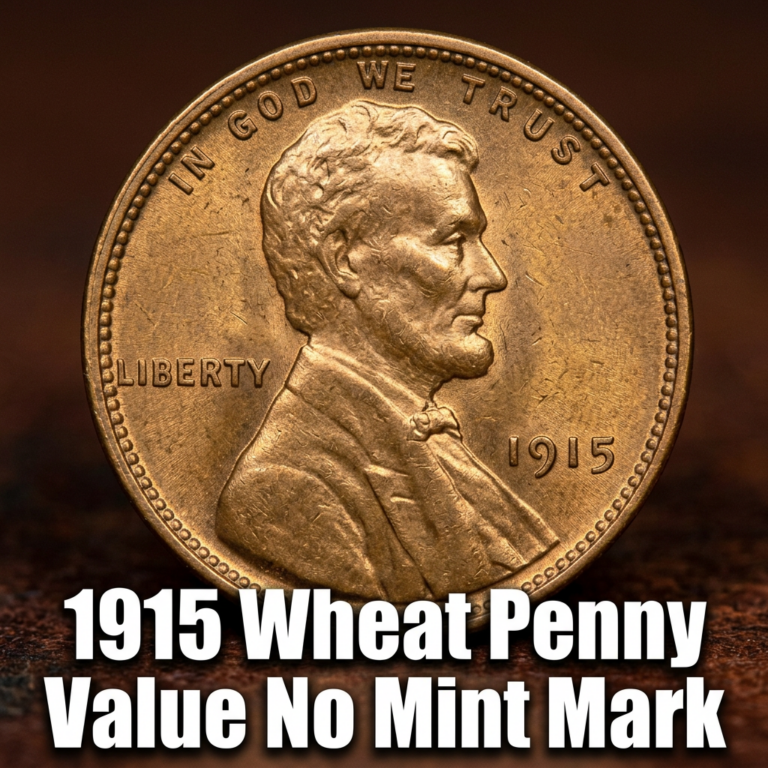
The 1979 Lincoln Penny with no mint mark is worth anywhere from $0.01 in worn condition to over $150 in high-grade mint state. While most of these pennies found in pocket change are only worth their face value or a few cents in copper melt, certain rare errors and pristine grades can fetch a premium.
| Condition / Grade | Estimated Value Range |
|---|---|
| Circulated (Average Wear) | $0.02 – $0.05 |
| Uncirculated (MS63 – MS65) | $1.00 – $10.00 |
| Gem Mint State (MS67+) | $50.00 – $150.00+ |
| Rare Errors | $20.00 – $500.00+ |
What Does “No Mint Mark” Mean on a 1979 Penny?
If you are looking at your 1979 penny and notice there is no small letter “D” or “S” underneath the date, don’t panic. This doesn’t mean your coin is a mistake or a rare variety. In the world of US coinage, the absence of a mint mark usually signifies that the coin was struck at the Philadelphia Mint. During the late 1970s, the Philadelphia facility produced billions of these copper cents to keep up with the nation’s demand for small change.
To get an instant look at what you have, many collectors use a top coin identifier and value app to confirm the origin or find hidden details. Because more than 6 billion 1979 pennies were struck in Philadelphia alone, they are incredibly common today. However, because they are made of 95% copper, they are technically worth about 2 cents just for their metal content, though it is currently illegal to melt them down for profit.
When you are scanning through your jar of coins, remember that CoinKnow can help you distinguish between a common circulation strike and a potential high-value specimen. Most people will find that their “no mint mark” penny is a standard business strike intended for daily transactions. While common, the historical significance of the Lincoln Memorial design remains a favorite among those starting their journey into numismatics.
Your Old Coin Could Be Valuable!
Identify It & Know Its Real Value — Free Download
Grading and 1979 Lincoln Penny Value Factors
The value of any coin is primarily determined by its “grade,” which refers to its physical condition. For a 1979 penny, the difference between a coin that has been in a pocket for forty years and one that was tucked away in a felt-lined roll is significant. Collectors use the Sheldon Scale, which ranges from 1 to 70, to determine the exact worth of a coin.
For those looking for data on high-end specimens, checking a 1979 MS67 Red Penny price is a great way to see how much truly “perfect” coins sell for at auction. Most coins found in change are “Brown” (BN), while uncirculated coins are “Red-Brown” (RB) or “Red” (RD). A “Red” coin retains its original mint luster and is highly sought after by serious collectors.
Your Old Coin Could Be Valuable!
Identify It & Know Its Real Value — Free Download
| Grade Designation | Appearance | Typical Price |
|---|---|---|
| Brown (BN) | Dull, chocolate color, no luster. | $0.02 – $0.10 |
| Red-Brown (RB) | Mix of original orange and brown oxidation. | $0.50 – $2.00 |
| Red (RD) | Full mint luster, bright orange-copper. | $5.00 – $150.00 |
Identifying 1979 Lincoln Penny Errors
While most 1979 pennies are worth only a few cents, error coins are the holy grail for “everyday” treasure hunters. An error occurs when something goes wrong during the minting process. Common errors for this year include “off-center strikes,” where the design is pushed to one side, and “die cracks,” which look like raised jagged lines on the surface of the coin.
If you find a penny that looks “weird,” you should use CoinKnow to see if it matches known error patterns. A popular error to look for is the “Double Die,” though major doubled dies are not famously documented for the 1979 Philadelphia issue. Instead, look for “clipped planchets,” where a piece of the circular coin is missing, or “re-engraved” details that appear thicker than normal.
Your Old Coin Could Be Valuable!
Identify It & Know Its Real Value — Free Download
The market price for 1979 error pennies can range from $20 for a minor lamination error to several hundred dollars for a dramatic 50% off-center strike. To the untrained eye, these might look like junk, but to a collector, they are unique pieces of history that bypassed quality control. Always handle these coins by the edges to avoid getting oils from your skin on the surface.
1979 vs 1979-D and 1979-S Values
To understand the full context of the 1979 Lincoln Penny value, it helps to compare the No Mint Mark (Philadelphia) version with its siblings from Denver (D) and San Francisco (S). The Denver Mint also produced billions of coins in 1979, so their value is generally identical to the Philadelphia strikes. The “S” mint mark coins, however, were usually produced as Proofs for collectors.
Proof coins are struck using special polished dies and planchets, resulting in a mirror-like finish. While you won’t typically find a Proof coin in your pocket change, it does happen. These are often worth a few dollars even in circulated condition. If you find a 1979-S, check the “S” mint mark carefully; there are “Type 1” and “Type 2” varieties, with the latter being more clearly defined and slightly more valuable.
Your Old Coin Could Be Valuable!
Identify It & Know Its Real Value — Free Download
| Mint Mark | Production Type | Mintage (Approx.) |
|---|---|---|
| None (P) | Business Strike | 6,018,515,000 |
| D (Denver) | Business Strike | 4,139,357,254 |
| S (San Francisco) | Proof Only | 3,677,175 |
Why the Copper Content Matters for the 1979 Penny
Modern pennies minted after 1982 are mostly zinc with a thin copper plating. However, the 1979 Lincoln Penny is part of the “old guard” made of 95% copper and 5% zinc/tin. This gives the coin a specific weight of 3.11 grams, compared to the lighter 2.5 grams of modern pennies. Because of the rising price of raw copper, the metal inside a 1979 penny is currently worth significantly more than its one-cent face value.
For many casual hoarders, these coins are saved simply for their “melt value.” While you cannot legally melt them today, many people believe that the law may change in the future, or they simply enjoy owning physical bullion in the form of US currency. If you have a massive jar of 1970s pennies, they are essentially a low-cost investment in copper.
When sorting through your copper cents, CoinKnow can be a handy tool to help you separate the high-grade specimens from the bulk copper. A 1979 penny that looks like it just came out of a fresh bank roll should be kept separate from the dull, oxidized ones. Even if it isn’t a “rarity,” a beautiful, shiny 1979 penny is a piece of Americana that many collectors are happy to pay a premium for to complete their sets.
Your Old Coin Could Be Valuable!
Identify It & Know Its Real Value — Free Download
How to Sell Your 1979 Lincoln Penny
If you believe you have found a 1979 Lincoln Penny with a high value or a significant error, your next step is to protect it. Put the coin in a protective sleeve or “flip” to prevent further scratches. Avoid cleaning the coin at all costs! Cleaning a coin with chemicals or even a soft cloth can strip away its original surface and destroy its numismatic value instantly.
To sell your coin, you have several options. For common copper cents, local coin shops or “we buy gold/silver” locations might buy them in bulk. For rare errors or high-grade Red pennies, online marketplaces like eBay or specialized auction houses are better venues. Be sure to take high-quality, clear photos of both the front (obverse) and back (reverse) of the coin so buyers can verify the condition.
Most 1979 pennies will only bring in a few cents, but the thrill of the hunt is what makes coin collecting so rewarding for everyday Americans. Whether you are looking for that elusive MS68 grade or just enjoy the history of the Lincoln Cent, these coins are a fascinating window into our nation’s economic past.
FAQ
Q: Why is there no mint mark on my 1979 penny?
A: The absence of a mint mark means the coin was minted at the Philadelphia Mint. During that era, Philadelphia did not use a “P” mint mark on pennies; they simply left the space blank.
Your Old Coin Could Be Valuable!
Identify It & Know Its Real Value — Free Download
Q: Is a 1979 penny rare?
A: No, the 1979 penny is not rare. Over 6 billion were produced in Philadelphia and over 4 billion in Denver. However, coins in “Gem Mint” condition or those with major errors are considered rare and valuable.
Q: How much copper is in a 1979 penny?
A: A 1979 Lincoln Penny consists of 95% copper and 5% zinc/tin. It weighs 3.11 grams, which is heavier than the zinc pennies produced after 1982.
Q: What is the most expensive 1979 penny ever sold?
A: High-grade specimens in MS68 Red condition have sold for over $500 at auction. Extraordinary errors can also reach several hundred dollars depending on the severity of the mistake.