1908-D Barber Dime Value and What Collectors Are Paying Today

Your Old Coin Could Be Valuable!
Identify It & Know Its Real Value — Free Download


The 1908-D Barber Dime is worth anywhere from $4 to $8 in heavily worn condition, but well-preserved examples can fetch $30 to $80 or more, and uncirculated specimens can climb into the hundreds of dollars depending on their grade.
If you just found one of these old silver dimes tucked away in a coin jar or inherited collection, you’re in the right place. This guide breaks down exactly what the 1908-D Barber Dime is worth, what makes certain examples more valuable, and how to figure out where your coin falls on the spectrum.
What Is the 1908-D Barber Dime?
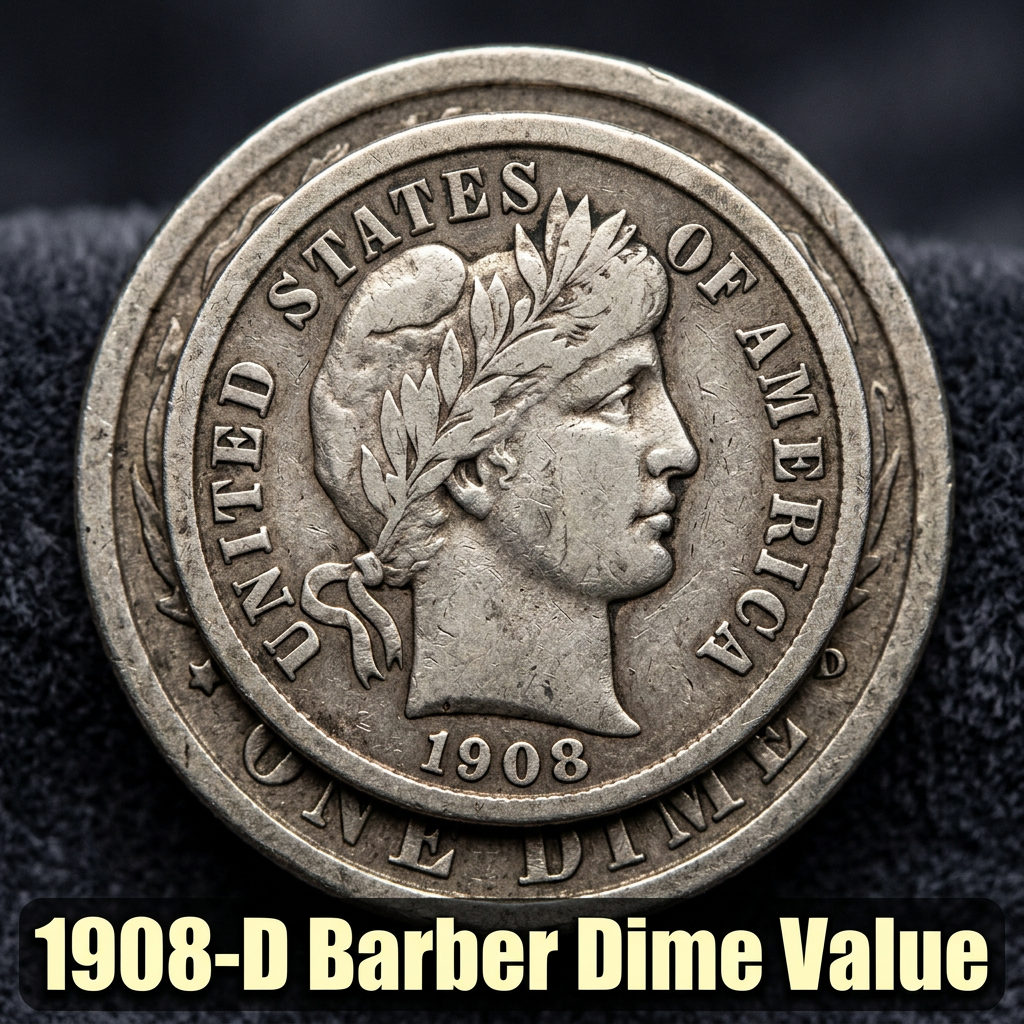
The 1908-D Barber Dime was struck at the Denver Mint in 1908 — hence the “D” mintmark you’ll find on the reverse side, just above the “E” in “ONE DIME.” It’s part of the Barber coinage series, designed by Charles E. Barber and minted from 1892 to 1916.
These dimes are made of 90% silver, which means even a beat-up example has some base metal value just from the silver content. The 1908-D had a mintage of around 7.49 million coins — not super rare, but not common enough to be boring either.
Your Old Coin Could Be Valuable!
Identify It & Know Its Real Value — Free Download
Using a coin identifier and value app can help you quickly confirm the mintmark location and condition grade before you dig deeper into pricing. Many collectors and casual finders use these tools to get a fast, reliable estimate right from their phone.
Your Old Coin Could Be Valuable!
Identify It & Know Its Real Value — Free Download
1908-D Barber Dime Value by Grade
Condition is everything when it comes to Barber Dimes. The design is intricate — Liberty’s hair detail above the ear is one of the first things to wear away — so even small differences in preservation can mean big differences in price.
Here’s a general value table to give you a clear picture:
Your Old Coin Could Be Valuable!
Identify It & Know Its Real Value — Free Download
| Grade | Description | Estimated Value |
|---|---|---|
| G-4 (Good) | Heavy wear, design outline visible | $4 – $6 |
| VG-8 (Very Good) | Moderate wear, some detail remains | $6 – $10 |
| F-12 (Fine) | Even wear, readable lettering | $12 – $20 |
| VF-20 (Very Fine) | Light wear on high points | $25 – $40 |
| EF-40 (Extremely Fine) | Slight wear, sharp detail | $55 – $80 |
| MS-60+ (Uncirculated) | No wear, full luster | $150 – $400+ |
These values reflect current market trends, but prices can shift based on silver spot prices and collector demand. For a more detailed breakdown, check out this complete guide to 1908 Barber Dime values across all mint marks and grades.
How to Check the Condition of Your 1908-D Barber Dime
You don’t need to be an expert to do a basic condition check. Start by looking at Liberty’s head on the obverse — if the hair strands above her ear are completely flat and blended together, you’re looking at a Good or Very Good coin.
If you can still make out individual hair strands and some of the headband detail, you’re probably in Fine to Very Fine territory. Extremely Fine examples will show nearly complete detail with just slight softness on the very highest points.
Your Old Coin Could Be Valuable!
Identify It & Know Its Real Value — Free Download
Luster is another big factor for uncirculated coins. A coin that’s never been in circulation will have a subtle shine that comes from the original minting process — not a polished shine, but a natural cartwheel effect when you tilt it under light. CoinKnow is a handy app that lets you scan your coin and compare it against graded examples to estimate where yours lands.
Silver Melt Value and Why It Matters
Even a heavily worn 1908-D Barber Dime has real value simply because it’s made of 90% silver. Each Barber Dime contains approximately 0.0723 troy ounces of silver.
When silver is trading around $28 to $30 per ounce (as it has been in recent times), your dime’s melt value alone is roughly $2.00 to $2.20. That means even the most beaten-up example is worth more than face value.
Your Old Coin Could Be Valuable!
Identify It & Know Its Real Value — Free Download
Of course, you should never melt a coin for silver — the numismatic value almost always exceeds the melt value, especially on pieces like the 1908-D. CoinKnow updates silver spot prices in real time, so you can always see the current melt value alongside the collector value of your coin.
What Makes Some 1908-D Barber Dimes More Valuable?
Beyond grade, a few factors can push the value of a 1908-D Barber Dime higher than the averages listed above. Full “LIBERTY” visible on the headband is one of the most important details collectors look for — on worn coins, these letters are often the first to disappear.
Coins with no cleaning, scratches, or damage will always command a premium. Collectors are very sensitive to cleaning — even a coin that looks shiny to a newcomer can be worth far less if it’s been cleaned with chemicals or polished. Original surfaces, even with some toning, are preferred.
Eye appeal matters too. A coin with pleasant, even toning and strong strike can sell for more than a technically higher-graded example that looks dull or blotchy. If you think you have an especially nice specimen, it may be worth getting a professional opinion or submitting it to a third-party grading service like PCGS or NGC.
Your Old Coin Could Be Valuable!
Identify It & Know Its Real Value — Free Download
FAQ
Q: Is the 1908-D Barber Dime rare?
A: It’s not considered rare in circulated grades — the Denver Mint produced over 7 million of them. However, high-grade uncirculated examples are genuinely scarce and can be quite valuable to collectors.
Q: Where is the mintmark on a 1908-D Barber Dime?
A: Flip the coin over to the reverse side. The “D” mintmark is located just above the “E” in “ONE DIME,” near the bottom of the coin between the olive branch and the arrows.
Q: Should I clean my 1908-D Barber Dime before selling it?
A: No — never clean a coin. Cleaning damages the surface and can significantly reduce the value. Collectors and dealers can easily spot a cleaned coin, and it will usually sell for much less than a naturally toned example in the same grade. Leave it as-is and let CoinKnow or a professional dealer assess it in its current state.