
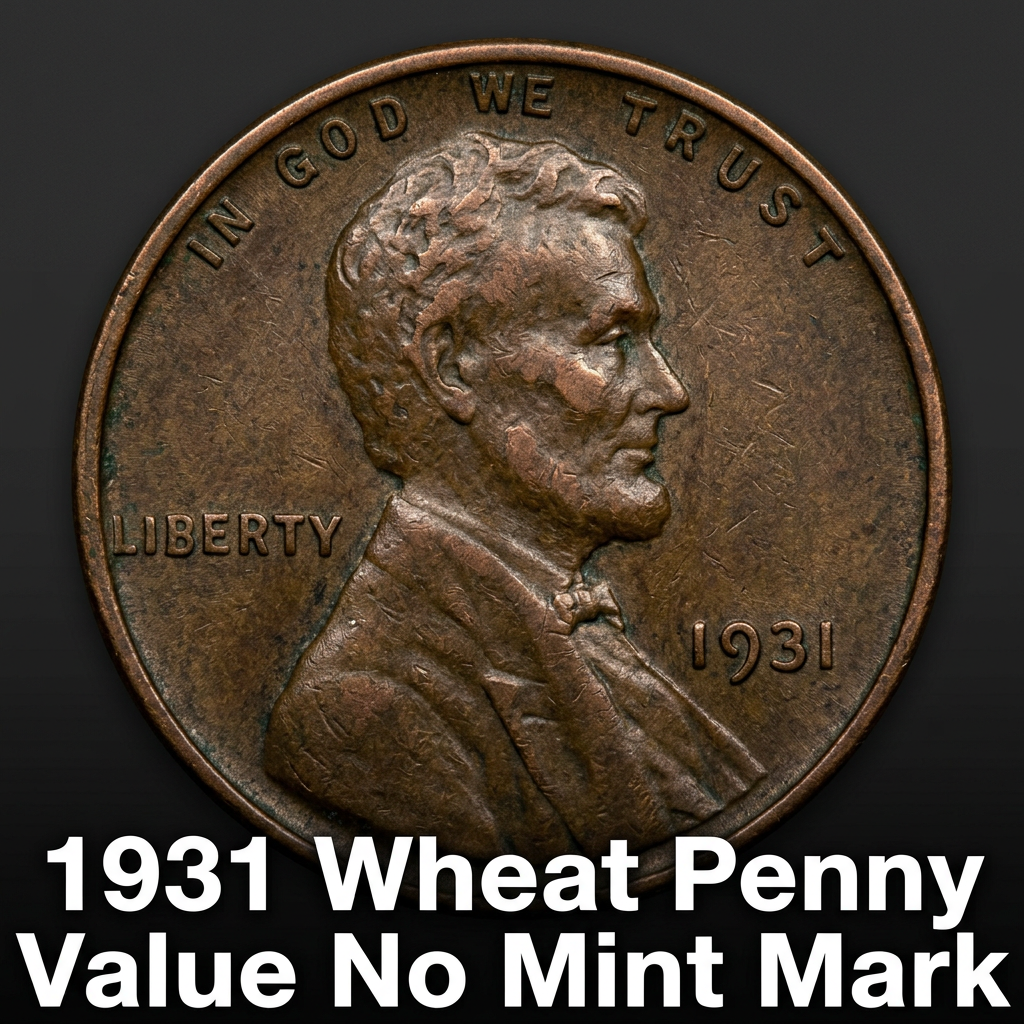
1931 Wheat Penny Value No Mint Mark What It’s Worth and Why Collectors Care

Your Old Coin Could Be Valuable!
Identify It & Know Its Real Value — Free Download


The 1931 Wheat Penny with no mint mark is worth anywhere from $0.50 in heavily worn condition to over $100 or more in pristine uncirculated grades. If you just pulled one of these old Lincoln cents out of a coin jar or inherited it from a family member, you’re in the right place — let’s break down exactly what you’ve got.
Before diving in, one helpful tip: if you’re not sure which mint made your coin or want to check its condition quickly, a coin identifier and value app can make the whole process a lot faster and easier. These tools let you photograph your coin and get an instant read on its potential value.
What Is the 1931 Wheat Penny No Mint Mark?
The 1931 Wheat Penny with no mint mark was struck at the Philadelphia Mint. During this era, Philadelphia didn’t place a mint mark on its coins — so if you flip your penny over and see nothing between the wheat stalks near the bottom, that means it came from Philly.
The year 1931 falls right in the heart of the Great Depression. The U.S. economy was in freefall, and coin production dropped dramatically. The Philadelphia Mint struck just over 19.3 million Lincoln Wheat Pennies that year — significantly fewer than in the boom years of the 1920s.
Your Old Coin Could Be Valuable!
Identify It & Know Its Real Value — Free Download
Lower mintage doesn’t always mean higher value on its own, but it’s one piece of the puzzle. The condition of your coin matters just as much, if not more. A worn 1931 Wheat Penny is common and worth only a modest premium, while a sharp, uncirculated example can bring in real money.
1931 Wheat Penny Value by Grade
The value of a 1931 no mint mark Wheat Penny depends almost entirely on its grade — the level of wear and surface preservation. Here’s a quick breakdown of what you can expect at different conditions:
Your Old Coin Could Be Valuable!
Identify It & Know Its Real Value — Free Download
| Grade | Description | Estimated Value |
|---|---|---|
| Good (G-4) | Heavy wear, design still visible | $0.50 – $1.00 |
| Fine (F-12) | Moderate wear, lettering clear | $1.50 – $3.00 |
| Extremely Fine (EF-40) | Light wear on high points | $6 – $12 |
| About Uncirculated (AU-55) | Trace wear only, most luster intact | $15 – $25 |
| MS-63 (Uncirculated) | No wear, some bag marks | $35 – $60 |
| MS-65 Red (Gem) | Full original red luster, near perfect | $90 – $150+ |
For a more detailed breakdown by specific MS grades, you can explore the 1931 Wheat Penny MS Red price data to see how certified coins have sold across auction records.
Your Old Coin Could Be Valuable!
Identify It & Know Its Real Value — Free Download
How Condition Affects Your 1931 No Mint Mark Penny
Most 1931 Wheat Pennies found in old coin jars or passed down through families fall into the Good to Fine range. At this level, the date and design are readable but the coin has clearly been through decades of handling. These are worth a small premium over face value — usually under $3.
If your coin shows sharper details — clear cheekbones on Lincoln’s portrait, visible wheat stalk lines on the reverse, and no major scratches — you might have an Extremely Fine or better example.
The holy grail is a coin with its original red or red-brown luster intact. These uncirculated examples were likely stored away shortly after minting and never entered circulation. CoinKnow is a great resource if you want to research what grades have sold for at auction and get a realistic sense of your coin’s market value.
Your Old Coin Could Be Valuable!
Identify It & Know Its Real Value — Free Download
Cleaning a coin will almost always reduce its value. If your 1931 Wheat Penny looks shiny or unnaturally bright, it may have been cleaned — which professional graders can spot immediately.
Is the 1931 No Mint Mark Penny Rare?
With 19.3 million struck, the 1931 Philadelphia Wheat Penny is not considered rare by most standards. Compare that to the 1931-S (San Francisco mint), which had only 866,000 produced — a coin that’s legitimately scarce and worth significantly more.
That said, “not rare” doesn’t mean “not interesting.” Any coin approaching 100 years old with strong original detail is worth keeping. High-grade examples certified by PCGS or NGC regularly sell for $80 to $150 or more.
If you want to check current and historical auction results for the full 1931 penny value across all mint marks and grades, that kind of data can help you decide whether to hold, sell, or get yours professionally graded.
Your Old Coin Could Be Valuable!
Identify It & Know Its Real Value — Free Download
CoinKnow also tracks price trends for Lincoln Wheat Pennies, making it easy to see if values are climbing or staying flat in the current collector market.
Should You Get Your 1931 Wheat Penny Graded?
If your coin looks uncirculated — no visible wear, original color, clean surfaces — it’s probably worth the cost of professional grading through PCGS or NGC. Certification can easily double or triple the selling price compared to a raw, ungraded coin.
For coins in worn condition, grading costs usually aren’t worth it. A Good-grade 1931 Wheat Penny just isn’t going to fetch enough to justify the fees.
CoinKnow can help you make this call by showing what certified versus raw examples are actually selling for, so you’re not guessing.
Your Old Coin Could Be Valuable!
Identify It & Know Its Real Value — Free Download
FAQ
Q: How do I know if my 1931 penny is from Philadelphia or another mint?
A: Check the reverse (tails) side of the coin near the bottom, between the wheat stalks. A Philadelphia Mint coin will have no mint mark at all. A “D” means Denver, and an “S” means San Francisco.
Q: My 1931 Wheat Penny looks shiny and clean — does that make it more valuable?
A: Unfortunately, no. A coin that’s been cleaned or polished actually loses collector value. Professional graders can detect cleaning, and a cleaned coin will be labeled “details” grade, which significantly reduces its market price.
Q: Where’s the best place to sell a 1931 Wheat Penny?
A: eBay is a popular option for reaching a wide audience. Coin shows and local coin dealers are also solid choices, especially if you want a quick sale. For top dollar on high-grade examples, consider submitting to a major auction house that specializes in numismatics.