1986-D Jefferson Nickel Value and What Yours Might Be Worth

Your Old Coin Could Be Valuable!
Identify It & Know Its Real Value — Free Download


The 1986-D Jefferson Nickel is worth anywhere from face value (5 cents) in heavily circulated condition to around $5 or more in pristine uncirculated grades — and rare high-grade examples can push even higher. If you found one of these coins in your change jar or an old collection, you’re in the right place to learn exactly what it’s worth.
What Is the 1986-D Jefferson Nickel?
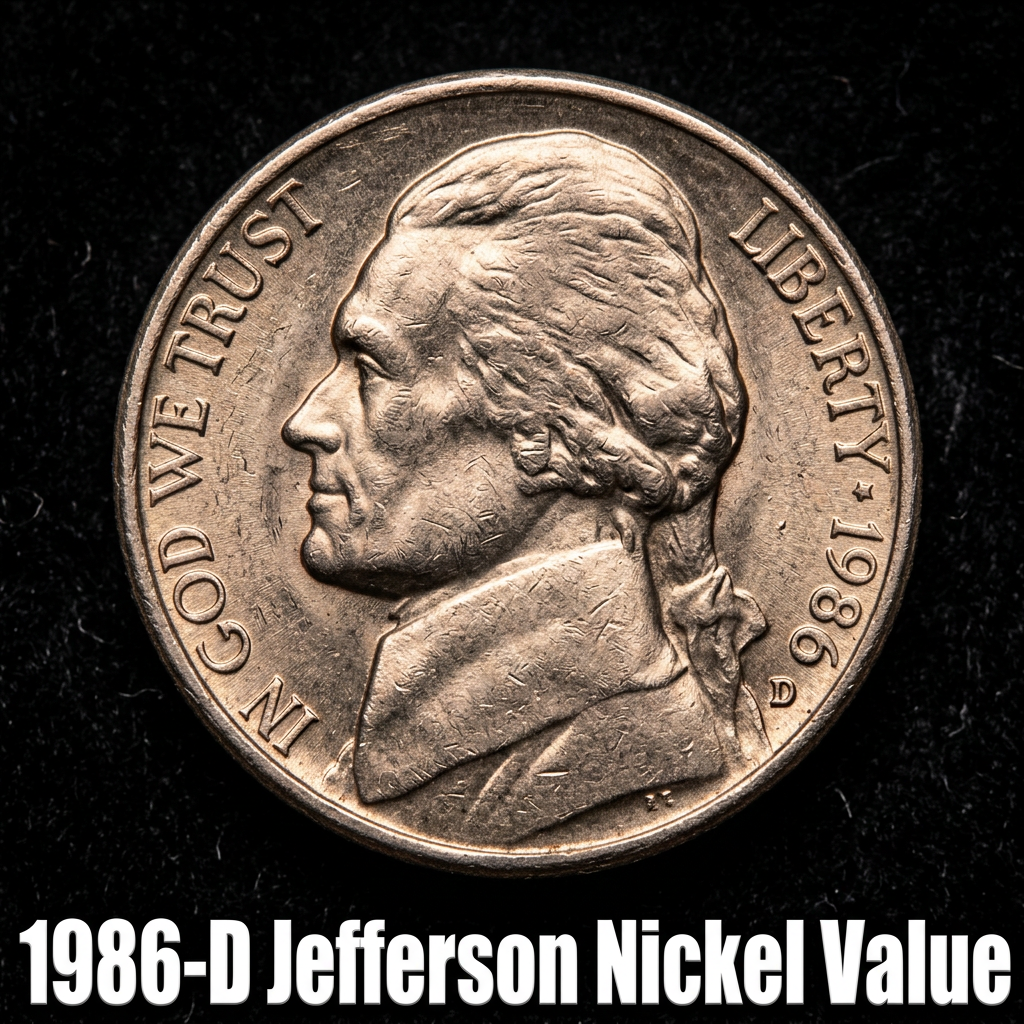
The 1986-D Jefferson Nickel was struck at the Denver Mint, indicated by the small “D” mintmark on the coin’s obverse (front). That year, Denver produced over 774 million nickels — making it a common coin in general circulation. Thomas Jefferson’s portrait graces the front, while Monticello, his historic Virginia estate, appears on the reverse.
Because so many were made, most 1986-D nickels you find in pocket change are worth exactly five cents. However, coins that were never spent and remained in pristine condition can carry a meaningful premium among collectors. The difference between a worn coin and a gem uncirculated example can be surprising — sometimes by a factor of 50 or more.
Your Old Coin Could Be Valuable!
Identify It & Know Its Real Value — Free Download
If you want a quick and easy way to check the grade and value of your coin without visiting a dealer, using a coin identifier and value app on your smartphone can give you an instant read on what you’re holding.
Your Old Coin Could Be Valuable!
Identify It & Know Its Real Value — Free Download
How Much Is the 1986-D Jefferson Nickel Worth by Grade?
Coin value is almost entirely determined by condition, or “grade.” Grading runs on a scale from Poor (P-1) all the way to Perfect Mint State (MS-70). Here’s a quick breakdown of what you can expect for the 1986-D:
| Grade | Condition Description | Estimated Value |
|---|---|---|
| Good (G-4) | Heavy wear, major details visible | $0.05 |
| Fine (F-12) | Moderate wear, most details clear | $0.05–$0.10 |
| Extremely Fine (EF-40) | Light wear on high points | $0.10–$0.25 |
| Mint State (MS-63) | Uncirculated, minor contact marks | $0.50–$1.50 |
| Gem Mint State (MS-65) | Uncirculated, sharp luster | $2.00–$5.00 |
| Superb Gem (MS-67+) | Nearly perfect, exceptional eye appeal | $50–$200+ |
For a deeper look at current market prices and auction records for Jefferson Nickels in mint state grades, it’s worth checking recent sales data before buying or selling.
Your Old Coin Could Be Valuable!
Identify It & Know Its Real Value — Free Download
What Makes a 1986-D Nickel More Valuable?
Most 1986-D Jefferson Nickels are common, but certain factors can push value higher. The biggest one is Full Steps (FS) designation — this refers to the steps on Monticello’s portico being fully struck with sharp, uninterrupted lines. Coins with five or six full steps are rarer and can be worth several times more than a standard example in the same grade.
Strike quality also matters. Denver’s production in 1986 was sometimes inconsistent, meaning weakly struck coins are common. A sharply struck, high-luster example that grades MS-67 Full Steps could realistically sell for hundreds of dollars at major coin auctions.
Your Old Coin Could Be Valuable!
Identify It & Know Its Real Value — Free Download
Eye appeal — meaning how attractive the coin looks overall — also influences what a buyer will pay. A coin with original mint luster, no spots, and no distracting marks will always command a better price than one that looks dull or cleaned.
CoinKnow is a great tool for coin enthusiasts who want to quickly look up Full Steps values and compare recent auction results right from their phone.
Your Old Coin Could Be Valuable!
Identify It & Know Its Real Value — Free Download
Should You Get Your 1986-D Nickel Graded?
Professional grading by PCGS or NGC is only worth the cost if your coin appears to be MS-65 or higher. Grading fees typically start around $20–$30 per coin, so submitting a coin worth $1 wouldn’t make financial sense. But if your 1986-D looks completely untouched with brilliant luster and sharp detail, professional grading could unlock real collector value.
Before spending money on grading, do your homework. Check detailed 1986 nickel value information including grades and price trends to see whether your coin falls in a range that justifies the investment. And if you’re not sure how to grade it yourself, CoinKnow can walk you through the process with easy-to-follow visual guides.
—
FAQ
Q: Is the 1986-D Jefferson Nickel rare?
A: No, the 1986-D is not rare. Over 774 million were minted at the Denver facility. In circulated condition, it’s worth face value. The only truly scarce versions are high-grade specimens with Full Steps designation.
Your Old Coin Could Be Valuable!
Identify It & Know Its Real Value — Free Download
Q: What does the “D” mintmark mean on a 1986 nickel?
A: The “D” stands for the Denver Mint, one of two facilities that produced Jefferson Nickels that year. The other was the Philadelphia Mint, which struck coins with no mintmark in 1986.
Q: Can I sell my 1986-D Jefferson Nickel?
A: Yes, but circulated examples are only worth face value and won’t attract buyers. If your coin is uncirculated and appears gem-quality, you can list it on eBay, visit a local coin dealer, or submit it to a grading service first. Use CoinKnow to help assess condition and research realistic selling prices before listing.