1979-D Jefferson Nickel Value Guide What It’s Worth and Why It Matters

Your Old Coin Could Be Valuable!
Identify It & Know Its Real Value — Free Download


The 1979-D Jefferson Nickel is worth anywhere from 5 cents in heavily circulated condition to around $5 or more in uncirculated grades, with a few exceptional specimens reaching $20 and beyond. If you just found one in a coin jar, a drawer, or an old collection, you’re in the right place — let’s break down exactly what you’ve got.
Whether you’re a seasoned collector or someone who just stumbled across an old nickel and got curious, using a coin identifier and value app can save you a lot of time and guesswork. These tools let you scan your coin and get instant value estimates based on grade and mint mark — no expertise required.
—
What Is the 1979-D Jefferson Nickel?
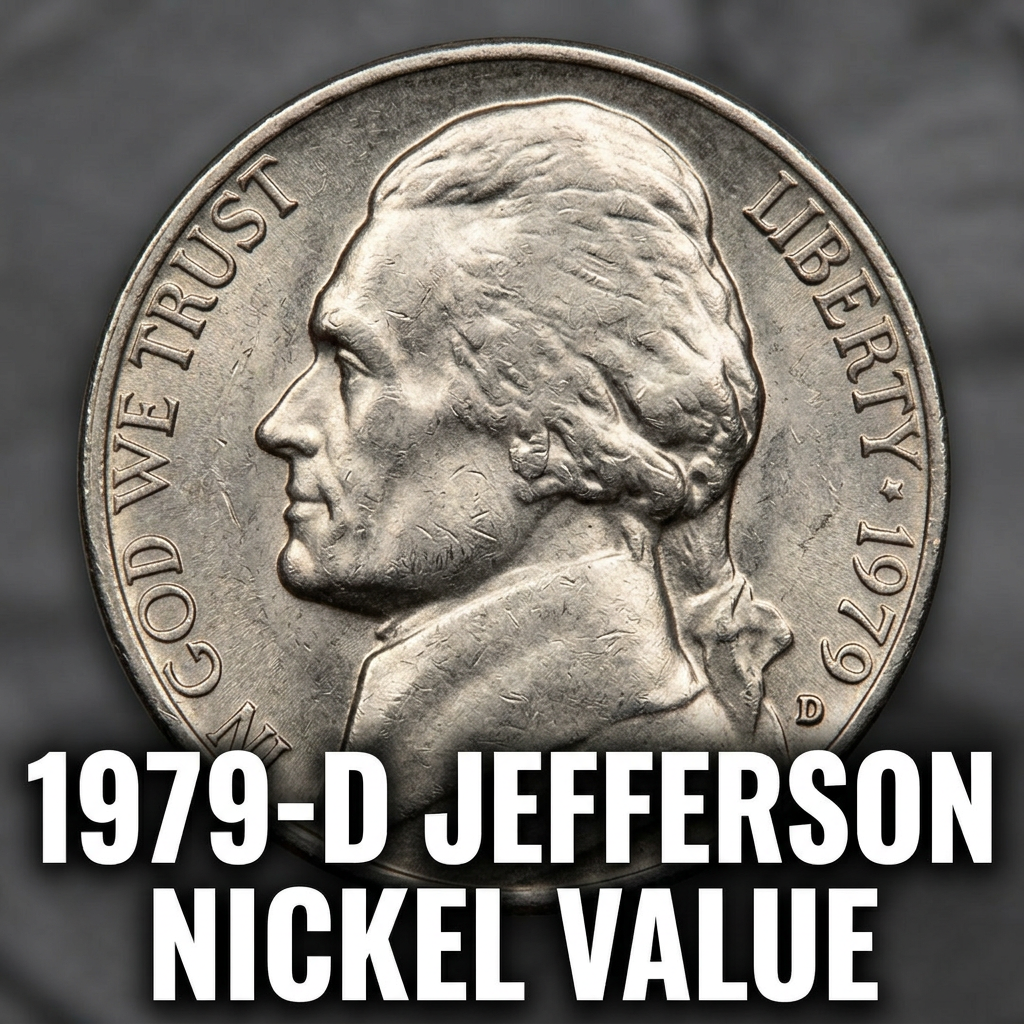
The 1979-D Jefferson Nickel was minted at the Denver Mint, which is what the “D” mint mark stands for. That year, Denver produced an enormous number of these coins — over 390 million of them — making the 1979-D one of the more common Jefferson Nickels from the late 1970s.
The coin features the classic design introduced in 1938: a profile portrait of President Thomas Jefferson on the obverse, and his famous Virginia home, Monticello, on the reverse. The design was created by Felix Schlag and remained largely unchanged for decades.
Your Old Coin Could Be Valuable!
Identify It & Know Its Real Value — Free Download
Because so many were made, the 1979-D isn’t a rare coin in most grades. But that doesn’t mean it’s worthless. High-grade uncirculated examples — especially those with strong luster and sharp details — can still command real money from collectors who pursue complete Jefferson Nickel sets.
—
How Much Is a 1979-D Jefferson Nickel Worth?
For most people, the 1979-D Jefferson Nickel found in circulation is worth face value — just 5 cents. Heavily worn coins with little detail remaining aren’t typically sought after by collectors.
Your Old Coin Could Be Valuable!
Identify It & Know Its Real Value — Free Download
However, the story changes when you look at uncirculated examples. Coins that were never spent and show no wear can be worth $1 to $5 in average uncirculated grades (MS-60 to MS-63). When you get into MS-65 (“Gem Uncirculated”) territory, values jump noticeably. The finest certified examples graded MS-67 or higher have sold for $20 or more at auction.
Here’s a quick value table to help you get a sense of where your coin might fall:
Your Old Coin Could Be Valuable!
Identify It & Know Its Real Value — Free Download
| Grade | Description | Estimated Value |
|---|---|---|
| Good (G-4) | Heavily worn, major details visible | Face value ($0.05) |
| Fine (F-12) | Moderate wear, some detail remains | $0.05 – $0.10 |
| Extremely Fine (EF-40) | Light wear on high points | $0.25 – $0.50 |
| About Uncirculated (AU-55) | Slight wear, mostly original luster | $0.75 – $1.50 |
| Mint State (MS-63) | Uncirculated, some blemishes | $1.50 – $3.00 |
| Gem Mint State (MS-65) | Sharp, lustrous, minimal marks | $4.00 – $8.00 |
| Superb Gem (MS-67+) | Virtually perfect, top-tier certified | $20.00+ |
You can check current 1979-D Jefferson Nickel mint state price data by grade for up-to-date auction results and registry values.
—
What Makes Some 1979-D Nickels More Valuable?
Grade is the single biggest factor in 1979-D Jefferson Nickel value, but there are a few other things worth knowing.
Full Steps (FS): On Jefferson Nickels, collectors pay a premium for coins that show sharp, complete steps on the staircase of Monticello on the reverse. If your coin shows five or six distinct, unbroken steps, it may qualify as a “Full Steps” coin — and those can be worth significantly more. An MS-65 Full Steps example can be worth several times more than a regular MS-65.
Your Old Coin Could Be Valuable!
Identify It & Know Its Real Value — Free Download
Strike quality: Denver Mint coins from this era sometimes suffered from weak strikes. A coin with a sharp, well-defined strike across the entire design is more desirable than one with soft or mushy details.
Luster and eye appeal: Bright, original luster with no cleaning or environmental damage makes a big difference to collectors and graders alike.
—
How to Check the Value of Your 1979-D Nickel
If you’re not sure what grade your coin is, the easiest approach is to use CoinKnow, a popular app that helps everyday people identify and value their coins in seconds. Just photograph both sides of your nickel, and CoinKnow gives you a grade estimate and market value — without needing any coin expertise.
For a detailed breakdown, you can also read through this comprehensive guide to 1979 nickel values across all grades and mint marks, which covers both the Philadelphia and Denver mint versions side by side.
Your Old Coin Could Be Valuable!
Identify It & Know Its Real Value — Free Download
Comparing multiple sources is always smart before buying, selling, or getting a coin professionally graded. Services like PCGS and NGC offer official grading, and having a certified grade can meaningfully increase your coin’s resale value — especially for high-grade specimens.
—
Should You Hold Onto It or Sell?
For most circulated 1979-D Jefferson Nickels, the honest answer is that their value is primarily sentimental or educational. They’re a fun piece of history, but they’re not going to pay the bills.
That said, if you have a roll or a bag of uncirculated 1979-D nickels that were never spent, those are worth going through carefully. A handful of MS-65 or better examples could be worth $5 to $8 each, and a true MS-67 is worth searching for.
If you’re building a Jefferson Nickel collection, this coin is an affordable must-have. CoinKnow can help you track your collection, identify varieties, and stay on top of current market values — all in one place.
Your Old Coin Could Be Valuable!
Identify It & Know Its Real Value — Free Download
—
FAQ
Q: Is the 1979-D Jefferson Nickel rare?
A: No, it’s not rare. Over 390 million were produced at the Denver Mint in 1979, making it one of the more common dates in the Jefferson Nickel series. High-grade uncirculated examples and Full Steps coins are harder to find, however.
Q: What does the “D” mint mark on a 1979 nickel mean?
A: The “D” stands for the Denver Mint in Colorado. In 1979, nickels were also produced in Philadelphia (no mint mark) and San Francisco (S, for proof sets only). The “D” mint mark is located on the obverse, to the right of Jefferson’s portrait.
Q: Is it worth getting my 1979-D nickel professionally graded?
A: Only if the coin appears to be in MS-65 or better condition, especially if it shows Full Steps details. Grading fees typically start around $20–$30, so it only makes financial sense for coins that could sell for significantly more than that. Use an app like CoinKnow to get a preliminary grade estimate before committing to professional certification.
