Most Valuable Lincoln Pennies and What They Are Worth Today

Your Old Coin Could Be Valuable!
Identify It & Know Its Real Value — Free Download


The Lincoln Penny series includes some of the most valuable small coins in American history, with certain dates and mint marks fetching anywhere from $50 in circulated condition to well over $100,000 for rare error coins in pristine mint state. If you’ve found an old penny in a jar, a drawer, or an inherited collection, you might be sitting on something truly special.
Lincoln cents have been minted since 1909, and over more than a century of production, a handful of dates stand out as genuine treasures. Whether you’re a casual collector or someone who just found a beat-up old coin in grandma’s dresser, knowing what to look for can make a real difference. Using a reliable coin identifier and value app is one of the easiest ways to get started identifying what you have before heading to a dealer.
—
Why Some Lincoln Pennies Are Worth a Fortune
Not all Lincoln pennies are created equal. The value of any coin depends on three main factors: the date and mint mark, the condition or grade, and whether it carries a rare error or variety.
Coins minted in low quantities during wartime, struck on the wrong metal, or accidentally doubled during the minting process can be worth dramatically more than face value. A coin that looks like a dirty old penny to the untrained eye could turn out to be a prize-winning rarity worth thousands.
Your Old Coin Could Be Valuable!
Identify It & Know Its Real Value — Free Download
The good news is that identifying valuable Lincoln cents doesn’t require an expensive set of tools. With a magnifying glass, good lighting, and a trusted reference guide — or a solid app like CoinKnow — you can quickly narrow down whether your coin deserves a closer look from a professional grader.
—
The Most Valuable Lincoln Penny Dates to Look For
Your Old Coin Could Be Valuable!
Identify It & Know Its Real Value — Free Download
Here are the Lincoln cents that consistently generate the biggest buzz among collectors and command the highest prices at auction:
The 1909-S VDB is often called the holy grail of Lincoln cents. Only 484,000 were minted at the San Francisco Mint before the designer’s initials (V.D.B.) were removed from the reverse due to public complaints. In Good condition, it sells for around $700. In MS-65 Red condition, it can top $30,000.
The 1955 Doubled Die Obverse is one of the most famous error coins in U.S. history. The date and lettering appear dramatically doubled to the naked eye. Circulated examples bring $1,000 to $1,800, while uncirculated gems have sold for over $50,000.
Your Old Coin Could Be Valuable!
Identify It & Know Its Real Value — Free Download
The 1914-D is a tough coin to find because the Denver Mint produced fewer than 1.2 million, and many were spent and heavily worn. A Fine-15 example is worth around $200, but MS-65 Red coins have crossed $100,000 at major auctions.
—
Lincoln Penny Value Chart by Key Date
| Date & Mint Mark | Good (G-4) | Fine (F-12) | MS-63 Red | MS-65 Red |
|---|---|---|---|---|
| 1909-S VDB | $700 | $850 | $5,000 | $30,000+ |
| 1914-D | $200 | $350 | $12,000 | $100,000+ |
| 1922 Plain (No D) | $500 | $700 | $8,000 | $45,000+ |
| 1944 Steel Penny | $75,000 | $85,000 | $150,000 | $375,000+ |
| 1955 Doubled Die | $1,000 | $1,500 | $15,000 | $50,000+ |
—
The 1944 Steel Penny — A Wartime Error Worth Big Money
Your Old Coin Could Be Valuable!
Identify It & Know Its Real Value — Free Download
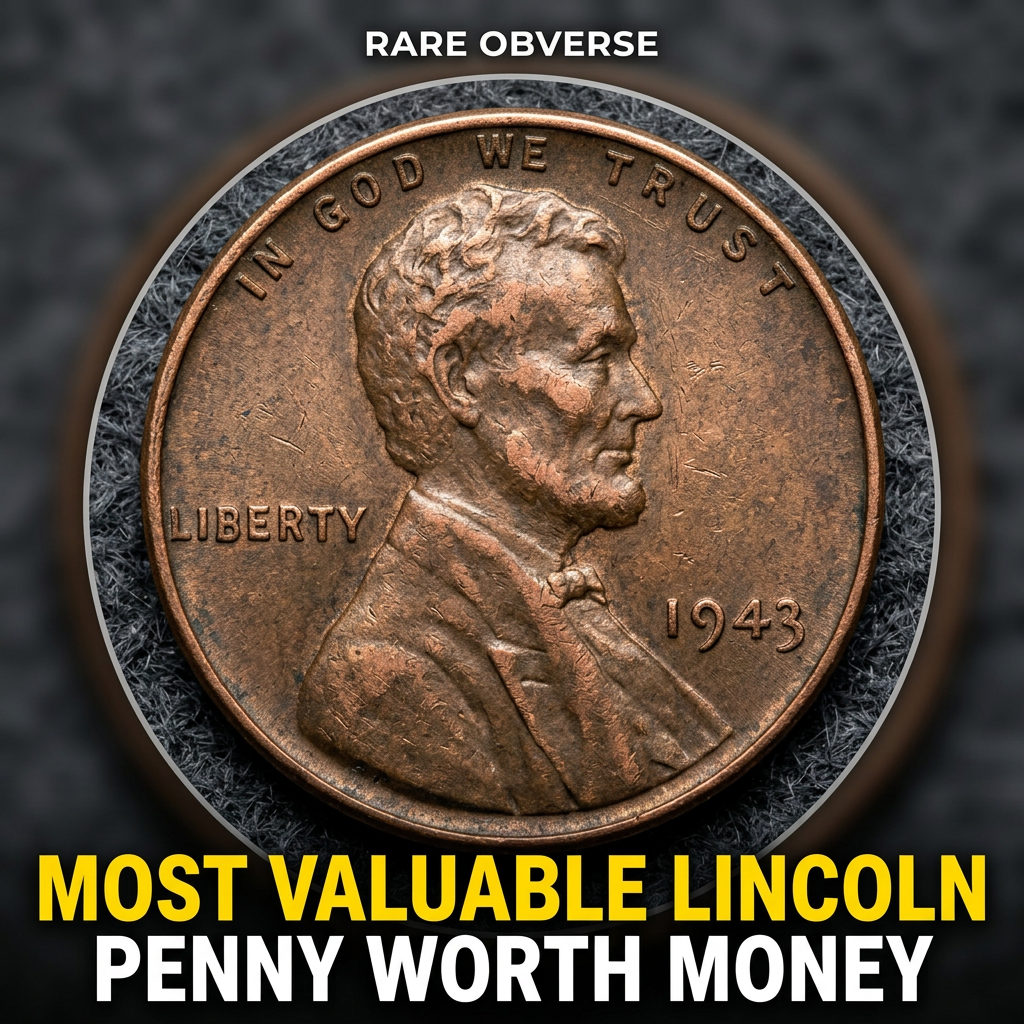
During World War II, copper was diverted for the war effort, so the U.S. Mint switched to zinc-coated steel planchets in 1943. By 1944, the Mint returned to copper — but a small number of leftover steel planchets were accidentally used, creating one of the most sought-after error coins in American numismatics.
If you think you have a 1943 copper cent or a 1944 steel cent, the simplest test is a magnet. Steel pennies stick; copper ones don’t. However, authentication by a professional grading service like PCGS or NGC is essential, since altered coins do exist. You can explore detailed 1944 Steel Penny value information to understand exactly what grade and mint mark combination makes the biggest difference in price.
These coins are incredibly rare, and the stakes are high enough that you don’t want to rely on guesswork alone.
—
Modern Lincoln Pennies That Are Still Worth Checking
Your Old Coin Could Be Valuable!
Identify It & Know Its Real Value — Free Download
It’s easy to assume that only old pennies are valuable, but a few modern issues deserve your attention too. The 1995 Doubled Die Lincoln cent is a great example — a noticeable doubling on the obverse lettering makes this coin recognizable even to beginners.
For current pricing on modern Lincoln cents, including certified examples, you can check up-to-date 1995-D Lincoln Penny prices in MS Red condition to see how the market is moving right now.
Beyond the key dates, it’s worth scanning any pennies dated before 1982, since those were made of 95% copper and carry melt value above face value. Post-1982 pennies are mostly zinc with copper plating and are worth much less in bulk.
CoinKnow is a smart tool to help you sort through a mixed collection fast — just scan the coin and get an instant estimate based on current market data.
—
Your Old Coin Could Be Valuable!
Identify It & Know Its Real Value — Free Download
FAQ
Q: How do I know if my Lincoln penny is valuable?
A: Start by checking the date and mint mark on the obverse (front) of the coin. Key dates like 1909-S VDB, 1914-D, 1922 No D, and 1955 Doubled Die are worth significantly more. Condition matters enormously too — a coin in sharp, uncirculated condition can be worth ten times more than a worn example of the same date. Apps like CoinKnow can give you a quick starting point before consulting a dealer.
Q: What is the rarest Lincoln penny ever found?
A: The 1943 Bronze (Copper) Lincoln cent is considered the rarest, with only about 20 known to exist. These were struck on leftover copper planchets during a year when the Mint was supposed to be using steel. One example sold at auction for over $1.7 million, making it one of the most valuable pennies in the world.
Q: Should I clean my old Lincoln penny before having it appraised?
A: Absolutely not. Cleaning a coin — even gently — can permanently damage the surface and dramatically reduce its numismatic value. Collectors and dealers prefer original, uncleaned surfaces even if they appear dark or toned. Leave the coin exactly as you found it and let a professional assess it in its natural state.