1897 Barber Quarter Dollar Value and What Yours Might Be Worth

Your Old Coin Could Be Valuable!
Identify It & Know Its Real Value — Free Download


The 1897 Barber Quarter Dollar is worth anywhere from $8 in heavily worn condition to well over $500 in higher mint state grades — and rare examples in pristine condition can fetch thousands at auction. If you found one of these old silver coins tucked away in a drawer or coin jar, you’re in the right place to find out exactly what it’s worth.
What Is the 1897 Barber Quarter Dollar?
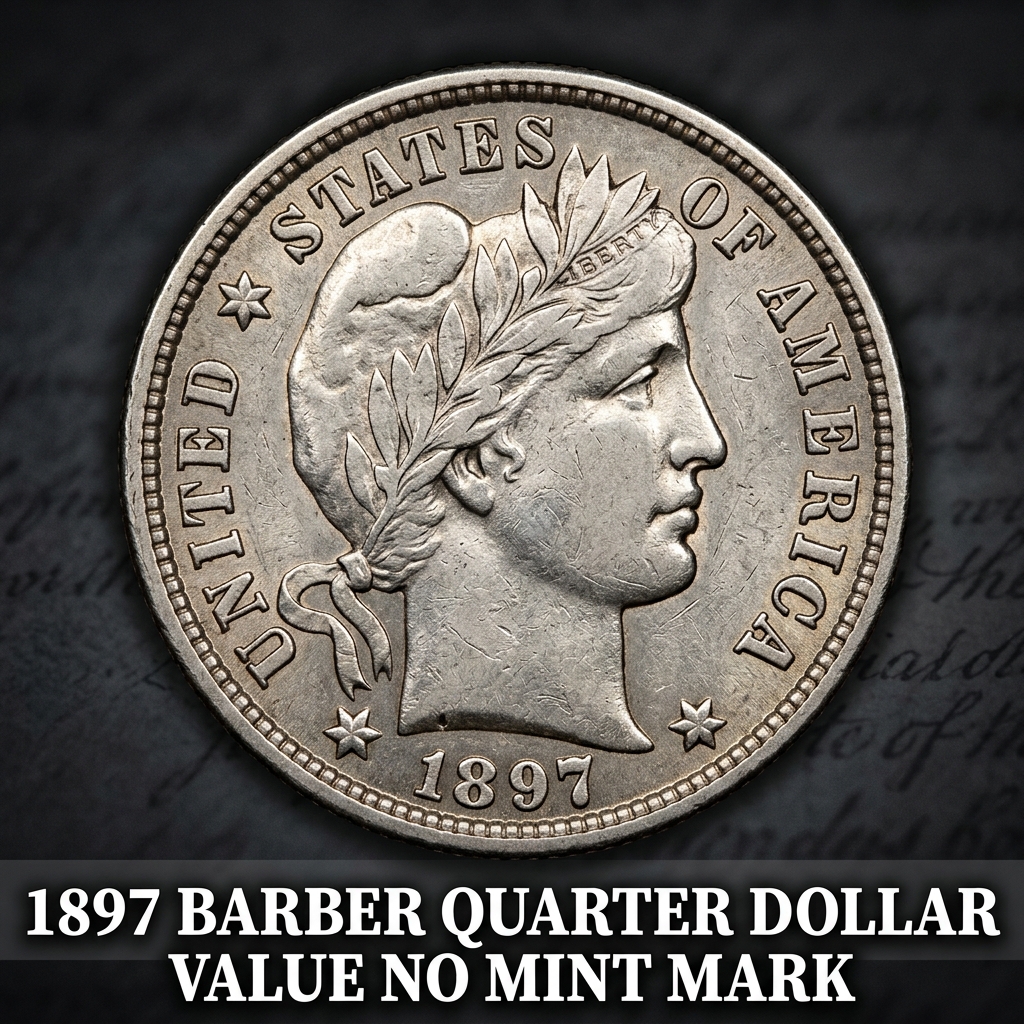
The 1897 Barber Quarter was minted at the Philadelphia Mint, which is why coins from this year with no mint mark are common among collectors. Designed by Chief Engraver Charles E. Barber, these quarters feature Lady Liberty in profile on the obverse and a heraldic eagle on the reverse. They were struck as part of the Barber coinage series that ran from 1892 to 1916.
The Philadelphia Mint produced 8,140,000 Barber Quarters in 1897, making this a relatively available date in the series. That said, coins in good circulated condition are still worth real silver money — and coins that survived without heavy wear are genuinely exciting finds.
These quarters contain 90% silver, so even a heavily worn example has melt value. With silver prices hovering around $25–$28 per ounce, each coin contains about 0.1808 troy ounces of silver, giving it a base melt value of roughly $4.50–$5. But numismatic (collector) value almost always exceeds that.
Your Old Coin Could Be Valuable!
Identify It & Know Its Real Value — Free Download
How Much Is the 1897 Barber Quarter Worth Today?
Value depends almost entirely on the coin’s grade — how much detail remains after years of circulation. A coin that looks smooth and worn is worth far less than one with sharp lettering and clear design details.
Here’s a quick value breakdown for the 1897 Barber Quarter with no mint mark:
Your Old Coin Could Be Valuable!
Identify It & Know Its Real Value — Free Download
| Grade | Description | Estimated Value |
|---|---|---|
| AG-3 (About Good) | Barely identifiable design | $8 – $10 |
| G-4 (Good) | Flat but readable | $10 – $14 |
| VG-8 (Very Good) | Some detail visible | $18 – $25 |
| F-12 (Fine) | Moderate wear, clear lettering | $30 – $45 |
| VF-20 (Very Fine) | Light wear, good detail | $55 – $75 |
| EF-40 (Extremely Fine) | Slight wear on high points | $100 – $140 |
| MS-63 (Mint State) | Uncirculated, minor marks | $400 – $600 |
| MS-65 (Gem Mint State) | Exceptional luster and strike | $1,000+ |
If you want a fast, accurate estimate without visiting a coin dealer, CoinKnow is a great tool to try. It uses image recognition to help identify coins and give you instant value guidance right from your phone.
Grading Your 1897 Barber Quarter at Home
Before you can estimate value, you need to understand the coin’s condition. Look at the words “LIBERTY” on Lady Liberty’s headband — this is the first area to show wear. If those letters are completely gone, the coin grades about Good. If you can clearly read all seven letters, you’re looking at Fine or better.
Your Old Coin Could Be Valuable!
Identify It & Know Its Real Value — Free Download
Also check the eagle’s feathers on the reverse. High-grade coins will show distinct feather lines across the breast and wings. Coins that look smooth in those areas have been in heavy circulation.
Explore detailed 1897 silver coin values and auction results to see what similar coins have sold for recently. Real auction data helps you understand the true market beyond the standard price guides.
Using a coin identifier and value app is another smart first step — especially when you’re not sure what you have. Many people discover their coin is worth far more than expected once it’s properly identified and graded.
Your Old Coin Could Be Valuable!
Identify It & Know Its Real Value — Free Download
No Mint Mark Means Philadelphia — But Does That Matter?
The Philadelphia Mint did not use a mint mark on coins during this era, so the absence of a letter under the eagle on the reverse is actually the norm for 1897. Some collectors specifically prefer Philadelphia strikes for their typically clean, sharp quality.
Other mints that produced Barber Quarters in 1897 include New Orleans (O) and San Francisco (S). The 1897-S in particular is one of the key dates in the Barber Quarter series, struck in very low numbers and worth significantly more than the Philadelphia issue.
If your coin has no mint mark, you have the Philadelphia version. It’s the most common 1897 Barber Quarter, but “common” doesn’t mean worthless — it just means you’ll find a healthy market of buyers when you’re ready to sell.
Your Old Coin Could Be Valuable!
Identify It & Know Its Real Value — Free Download
Tips for Selling or Getting Your Coin Appraised
If your 1897 Barber Quarter looks like it’s in Very Fine condition or better, it’s absolutely worth getting a professional opinion. Consider these options:
– Local coin dealers – Quick and easy, but offers may be below retail value
– PCGS or NGC grading – Third-party grading adds credibility and can increase sale price
– Online coin auctions (eBay, Heritage Auctions) – Access to thousands of buyers nationwide
– Coin shows – Great for getting multiple opinions in one afternoon
CoinKnow can also help you understand where your coin falls before you walk into a dealer’s shop. Going in with knowledge means walking out with a fair price.
—
Your Old Coin Could Be Valuable!
Identify It & Know Its Real Value — Free Download
Frequently Asked Questions
Q: How do I know if my 1897 Barber Quarter has no mint mark?
A: Flip the coin over to the reverse (eagle side) and look just below the eagle, above the words “QUARTER DOLLAR.” If there’s no letter there, it was minted in Philadelphia. A small “O” means New Orleans, and “S” means San Francisco.
Q: Is the 1897 Barber Quarter made of real silver?
A: Yes. All Barber Quarters are 90% silver and 10% copper, giving each coin about 0.1808 troy ounces of pure silver. That alone gives it a melt value of around $4.50–$5 at current silver prices, though collector value is usually much higher.
Q: What makes a 1897 Barber Quarter especially valuable?
A: The biggest factors are condition (grade), sharp strike quality, and original luster. An uncirculated example with full LIBERTY on the headband and no major marks or scratches can be worth many times more than a heavily worn one. CoinKnow can give you a fast initial read before you pursue a formal appraisal.