
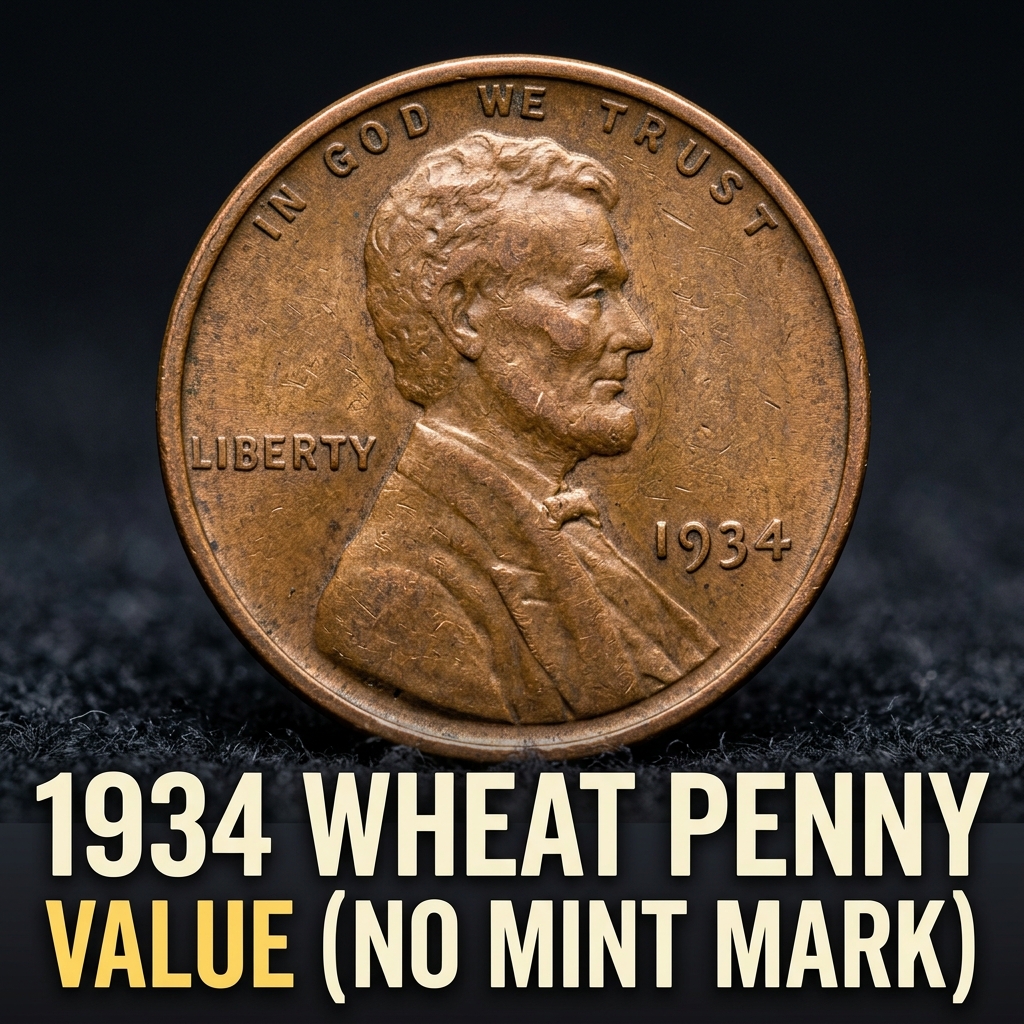
1934 Wheat Penny Value No Mint Mark What It’s Really Worth

Your Old Coin Could Be Valuable!
Identify It & Know Its Real Value — Free Download


The 1934 Wheat Penny with no mint mark is worth anywhere from $0.15 in heavily worn condition to over $75 or more in high-grade mint state. If you found one in a jar, a drawer, or an old collection, you’re holding a piece of genuine American history — and it might be worth more than you think.
Whether you’re a first-time coin finder or just curious about that old Lincoln cent sitting on your desk, using a coin identifier and value app is one of the easiest ways to get a quick estimate before diving deeper into research. But if you want the full picture on the 1934 no mint mark Wheat Penny, keep reading — we’ve broken it all down for you.
What Makes the 1934 Wheat Penny Special
The 1934 Lincoln Wheat Penny was produced at the Philadelphia Mint, which is why it carries no mint mark at all. Philadelphia coins from this era never bore a “P” — that tradition came much later. In 1934, the U.S. Mint struck over 219 million of these cents, making them relatively common in circulated grades.
That said, common doesn’t mean worthless. Coins in fine or very fine condition still hold modest collector value, and anything that grades Mint State 63 or higher can fetch a surprisingly strong price.
The 1934 Wheat Penny is made of 95% copper, which gives it that warm reddish-brown tone collectors love. Over time, the coin naturally tones to brown or red-brown, and those original red examples are the ones that command top dollar.
Your Old Coin Could Be Valuable!
Identify It & Know Its Real Value — Free Download
CoinKnow is a great tool to help you understand these grading tiers even if you’ve never collected coins before. The app walks you through what worn, fine, and uncirculated really look like in plain language.
1934 No Mint Mark Wheat Penny Value by Grade
Here’s a quick look at what the 1934 Wheat Penny with no mint mark is typically worth across different condition grades:
Your Old Coin Could Be Valuable!
Identify It & Know Its Real Value — Free Download
| Grade | Description | Estimated Value |
|---|---|---|
| Good (G-4) | Heavy wear, outline visible | $0.15 – $0.35 |
| Very Good (VG-8) | Moderate wear, details clear | $0.35 – $0.75 |
| Fine (F-12) | Even wear, lettering sharp | $0.75 – $1.50 |
| Very Fine (VF-20) | Light wear on high points | $1.50 – $3.50 |
| Extremely Fine (EF-40) | Slight wear, strong detail | $4.00 – $8.00 |
| Mint State (MS-63 RB) | Uncirculated, mixed color | $18 – $30 |
| Mint State (MS-65 RD) | Full red, gem uncirculated | $55 – $80+ |
For up-to-date auction results and price trends, you can check out detailed 1934 Wheat Penny MS Red price data across recent sales to see exactly what collectors are paying right now.
How Condition Affects the 1934 Wheat Penny Worth
When it comes to old Lincoln cents, condition is everything. A coin that looks “old and beat up” to the average person might be worth a few cents, while an identical coin that was kept safely in a drawer for 90 years could be worth many times more.
The key factors that affect the 1934 no mint mark Wheat Penny value are:
Color — Red coins (RD) are the most valuable. Red-Brown (RB) comes second. Brown (BN) is the most common and least valuable in uncirculated grades.
Your Old Coin Could Be Valuable!
Identify It & Know Its Real Value — Free Download
Strike quality — A well-struck coin with sharp wheat stalks on the reverse and crisp lettering is always more desirable.
Surface preservation — Scratches, cleaning, and spots all reduce value significantly. A cleaned coin, no matter how shiny, is almost always worth less than an original-surface example.
If you’re not sure how to assess these factors yourself, CoinKnow offers a simple grading guide built right into the app so anyone can get a reasonable read on their coin’s condition.
Your Old Coin Could Be Valuable!
Identify It & Know Its Real Value — Free Download
Are Any 1934 Wheat Pennies Rare or Valuable Errors
Most 1934 Wheat Pennies with no mint mark are common coins, but there are a few varieties and errors worth keeping an eye out for.
Some collectors search for doubled die errors, where the design elements appear slightly doubled due to a misalignment during the minting process. These are rare on 1934 cents but not unheard of. Look closely at the lettering and Lincoln’s features under magnification.
Off-center strikes are another error type that adds value. A coin struck 10–15% off-center might fetch $25–$50 or more depending on the severity. A dramatic 50% off-center example can go much higher.
It’s also worth noting that the 1934-D (Denver Mint) is a separate coin — one that’s slightly scarcer in high grades. If your penny has a small “D” under the date, that changes the value equation considerably.
For a comprehensive look at how all these variables affect pricing, this detailed guide to 1934 Wheat Penny values covers circulated and uncirculated grades in full.
Your Old Coin Could Be Valuable!
Identify It & Know Its Real Value — Free Download
Tips for Selling or Keeping Your 1934 Wheat Penny
If your coin grades Very Fine or below, it’s more of a keepsake than a financial windfall — but it’s still a cool piece of Depression-era American history.
If it’s uncirculated and appears original red, it’s absolutely worth getting a professional opinion. PCGS and NGC are the two main third-party grading services, and a certified MS-65 RD example can sell for $60–$80 or more at auction.
Before you sell anything, take a photo and run it through CoinKnow — it gives you a solid baseline so you don’t leave money on the table or overestimate what you have.
Always store wheat pennies in a proper coin flip or holder, away from humidity and direct sunlight. Improper storage is one of the top reasons old coins lose value before they ever reach a collector.
Your Old Coin Could Be Valuable!
Identify It & Know Its Real Value — Free Download
—
Frequently Asked Questions
Q: How do I know if my 1934 Wheat Penny has no mint mark?
A: Look directly below the date on the obverse (front) of the coin. If there’s no letter there, it was made in Philadelphia — that’s your no mint mark coin. A “D” means Denver.
Q: Is a 1934 Wheat Penny with no mint mark worth cleaning?
A: No — please don’t clean it. Cleaning removes the natural patina and surface luster, which actually lowers the coin’s value to collectors. An original, even toned surface is almost always preferred over a polished one.
Q: What’s the most valuable a 1934 no mint mark Wheat Penny has ever sold for?
A: In top certified grades like MS-67 RD, examples have sold at auction for several hundred dollars. These are exceptionally rare survivors, but they do exist — which is why it’s worth checking your coin carefully before assuming it’s worth only face value.