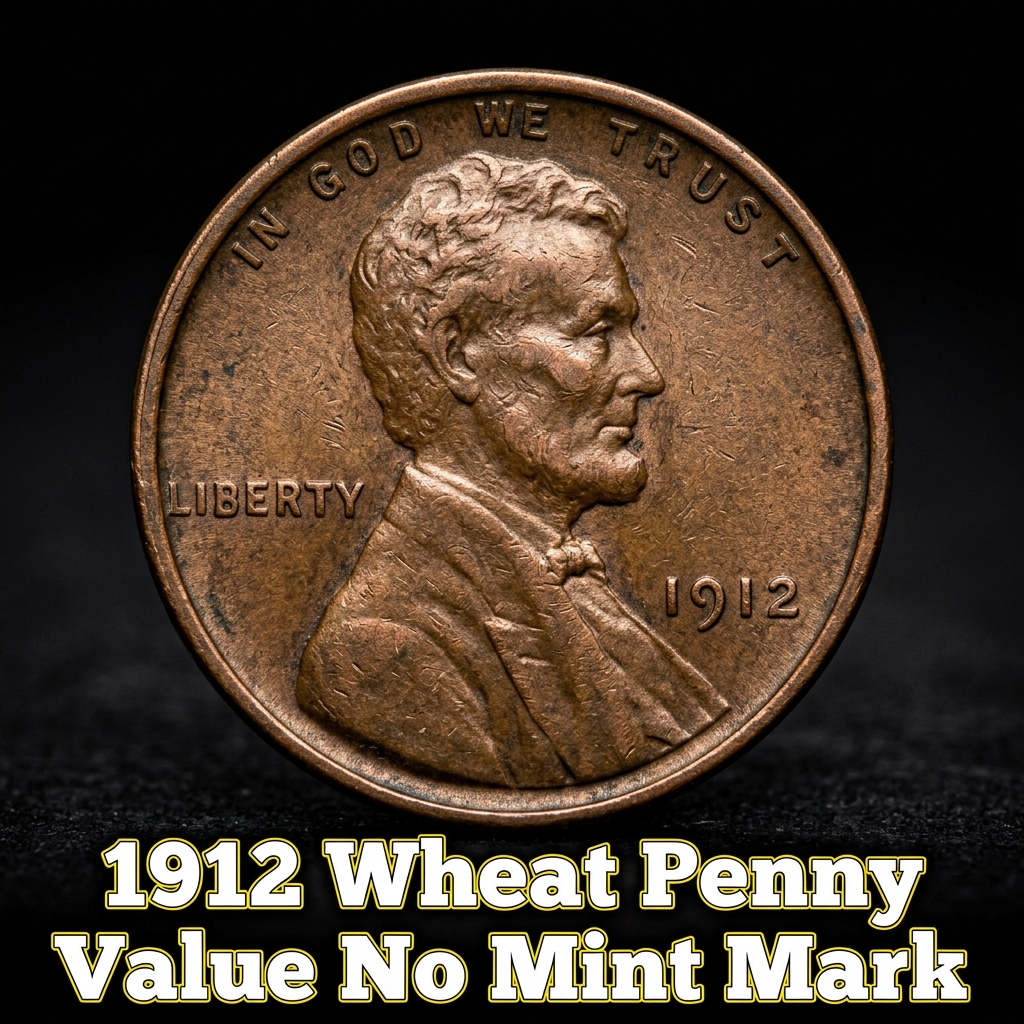
1912 Wheat Penny Value No Mint Mark What It’s Really Worth

Your Old Coin Could Be Valuable!
Identify It & Know Its Real Value — Free Download


The 1912 Wheat Penny with no mint mark is worth anywhere from $0.50 in heavily worn condition to well over $100 in high-grade mint state — and collectors have been known to pay even more for pristine examples. If you found one of these old cents tucked away in a jar, a drawer, or an inherited collection, you’re in the right place to find out exactly what you’ve got.
What Is the 1912 Wheat Penny No Mint Mark?
The 1912 Lincoln Wheat Penny without a mint mark was struck at the Philadelphia Mint, which — true to tradition — did not place a mint mark on its coins at the time. That means the absence of a letter beneath the date doesn’t mean anything is missing; it simply tells you this coin was made in Philly.
In 1912, the Philadelphia Mint produced over 68 million of these pennies, making them relatively common in lower grades. However, coins that survived in excellent condition are a different story entirely. Well-preserved examples are scarce and can command serious premiums on the collector market.
If you’ve recently discovered an old cent and want to quickly identify it, a coin identifier and value app can be a fast and accurate way to confirm what you’re holding before you head to a dealer or auction.
Your Old Coin Could Be Valuable!
Identify It & Know Its Real Value — Free Download
1912 Wheat Penny Value by Grade
The condition of your coin — known in the hobby as its “grade” — is the single most important factor in determining its value. A worn coin that has been passed from hand to hand for decades will be worth far less than one that looks nearly as sharp as the day it left the mint.
Your Old Coin Could Be Valuable!
Identify It & Know Its Real Value — Free Download
Here’s a general value breakdown for the 1912 Lincoln Wheat Penny with no mint mark:
| Grade | Description | Estimated Value |
|---|---|---|
| Good (G-4) | Heavy wear, design visible | $0.50 – $1.50 |
| Fine (F-12) | Moderate wear, details clearer | $3 – $6 |
| Extremely Fine (EF-40) | Light wear on high points | $15 – $25 |
| About Uncirculated (AU-55) | Slight wear, mostly sharp | $35 – $55 |
| Mint State (MS-63) | Uncirculated, minor marks | $75 – $100 |
| Mint State Red (MS-65 RD) | Full original red luster | $150 – $300+ |
For a deeper look at auction results and certified coin prices, you can check out 1912 Wheat Penny MS-RD price data from recent sales to see what top-grade examples are actually fetching from real buyers.
Your Old Coin Could Be Valuable!
Identify It & Know Its Real Value — Free Download
Color Designation Matters More Than You Think
One thing that surprises many newcomers is how much the color of an uncirculated Lincoln cent affects its value. Grading services like PCGS and NGC assign color designations to Mint State coins: Red (RD), Red-Brown (RB), and Brown (BN).
A 1912 Wheat Penny that still shows full original red copper luster is significantly rarer and more valuable than a brown or partially red example. Most uncirculated coins held in storage for over a century have naturally toned to red-brown or full brown.
If you think your coin might be a gem red example, having it professionally graded through a service like PCGS or NGC is absolutely worth considering. CoinKnow is a great tool to help you understand what grade range your coin might fall into before you spend money on professional submission.
Your Old Coin Could Be Valuable!
Identify It & Know Its Real Value — Free Download
How to Tell If Your 1912 Penny Is Valuable
Start by examining the coin under good lighting — natural light near a window works well. Look at Lincoln’s cheekbones, jaw, and the wheat stalks on the reverse. The more detail you can see, the higher the grade, and the more your coin is worth.
Check for original luster. Does the coin have any reddish-orange shine? Even partial original color boosts value. Avoid cleaning your coin — cleaned coins are worth significantly less to collectors, even if they look shiny.
Next, look for errors or varieties. While the 1912 no mint mark penny doesn’t have famous major errors, doubled dies or striking anomalies occasionally show up. Use a magnifier and take your time. CoinKnow can help you identify specific varieties quickly using your phone’s camera, which is especially handy if you’re new to coin collecting.
Your Old Coin Could Be Valuable!
Identify It & Know Its Real Value — Free Download
You can also visit this detailed 1912 penny value guide for a comprehensive overview of all three mint marks from that year and how they compare in value.
Other 1912 Wheat Penny Mint Marks to Know
The Philadelphia Mint wasn’t the only facility producing Lincoln cents in 1912. The Denver Mint struck coins with a “D” mint mark, and the San Francisco Mint produced coins with an “S” mint mark — both found just below the date on the obverse.
The 1912-S is the key date of the three, with a much lower mintage and higher collector demand in all grades. The 1912-D sits in the middle. If you have multiple 1912 pennies, compare the area below the date carefully under magnification to identify each one correctly.
Whether you use a loupe, a reference book, or CoinKnow on your phone, proper identification is step one before you can know true value.
Your Old Coin Could Be Valuable!
Identify It & Know Its Real Value — Free Download
Frequently Asked Questions
Q: Is a 1912 penny with no mint mark rare?
A: Not in circulated grades — over 68 million were minted in Philadelphia. However, high-grade examples graded MS-65 Red or better are genuinely scarce and can be worth hundreds of dollars to serious collectors.
Q: Should I clean my 1912 Wheat Penny before selling it?
A: No — please don’t. Cleaning a coin almost always destroys collector value, even if it makes the coin look shinier to the naked eye. Experienced dealers and collectors can spot a cleaned coin immediately, and it will sell for a fraction of what an original-surface coin would bring.
Q: Where is the best place to sell a 1912 Wheat Penny?
A: Options include eBay, coin shows, local dealers, and auction houses like Heritage or Stack’s Bowers for higher-grade examples. For common circulated examples, a local coin shop is the fastest and most straightforward option.