1923-S Wheat Penny Value: How Much Is This Rare Cent Worth?

Your Old Coin Could Be Valuable!
Identify It & Know Its Real Value — Free Download


The 1923-S Wheat Penny is worth anywhere from $5 in worn condition to over $1,500 in high-grade mint state. Finding this San Francisco minted coin in your pocket change is a rare treat for any casual collector or history enthusiast looking to turn old copper into cash.
| Condition | Estimated Value |
|---|---|
| Good (G-4) | $5.00 – $7.50 |
| Fine (F-12) | $15.00 – $25.00 |
| Extremely Fine (EF-40) | $65.00 – $90.00 |
| Uncirculated (MS-63) | $350.00 – $500.00 |
Understanding the 1923-S Wheat Penny Rarity
The 1923-S Wheat Penny holds a special place in the hearts of numismatists because it is a “semi-key date” in the Lincoln cent series. While it isn’t quite as elusive as the legendary 1909-S VDB, it is significantly harder to find than its 1923 Philadelphia counterpart. During this era, the San Francisco Mint typically produced far fewer coins than Philadelphia, making any “S” mint mark from the 1920s a potentially valuable discovery for everyday Americans.
If you believe you have found one of these treasures, using a top coin identifier and value app is the quickest way to confirm the mint mark and initial condition. The CoinKnow app can help you distinguish between a common 1923 cent and the much more desirable San Francisco strike. Because millions of these coins were circulated heavily during the Roaring Twenties, finding one that hasn’t been worn down to a smooth copper disc is quite challenging today.
The total mintage for the 1923-S was only 8,720,000. While eight million might sound like a large number, when you compare it to the 74 million minted in Philadelphia that same year, you begin to see why the market price is so much higher for the “S” version. Most of these coins were used in daily transactions for decades, which is why high-grade examples are so fiercely contested at auctions.
Your Old Coin Could Be Valuable!
Identify It & Know Its Real Value — Free Download
1923-S Wheat Penny Value by Grade
When determining the value of your 1923-S penny, the most important factor is the “grade” or the physical condition of the coin. Collectors use a 70-point scale to determine how much wear a coin has sustained. A coin that looks nearly new will command a massive premium compared to one that is scratched or faded.
For those checking their jars at home, look closely at Lincoln’s coat and the wheat stalks on the reverse. If the lines in the wheat ears are clear and distinct, you could be looking at a “Fine” or “Very Fine” grade, which pushes the value well above the $20 mark. If the coin still possesses its original red copper glow from the day it was minted, the 1923-S Wheat Penny worth can skyrocket into the hundreds or even thousands of dollars.
Your Old Coin Could Be Valuable!
Identify It & Know Its Real Value — Free Download
To get a better idea of the current market, you can check the latest 1923-S Wheat Penny auction prices for high-grade specimens. Even a slight jump in grade from AU-58 to MS-60 can double the price.
| Grade Detail | Typical Price Range |
|---|---|
| Very Good (VG-8) | $8 – $12 |
| Very Fine (VF-20) | $25 – $40 |
| About Uncirculated (AU-50) | $110 – $150 |
| Mint State (MS-65 Red) | $4,500+ |
How to Identify the “S” Mint Mark
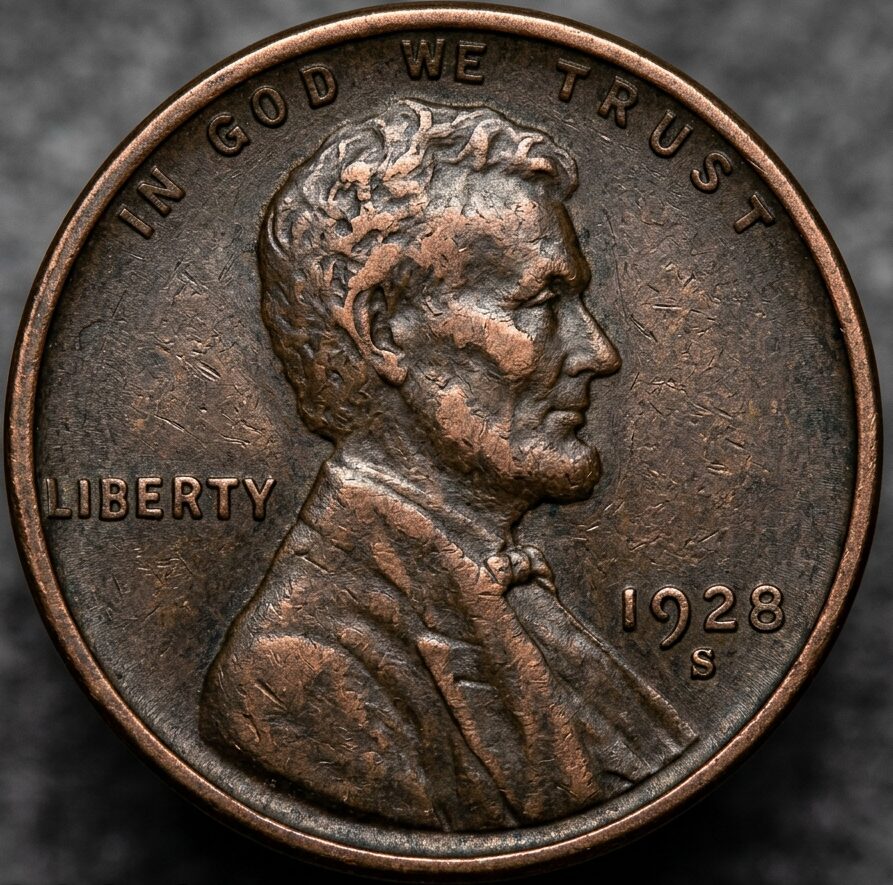
Identifying the mint mark is the first step in realizing you have something more than just a common penny. The mint mark on a Lincoln Wheat cent is located right below the date (1923). If there is no letter under the date, it was minted in Philadelphia and is worth significantly less—usually under $1 in average condition.
Your Old Coin Could Be Valuable!
Identify It & Know Its Real Value — Free Download
The “S” stands for the San Francisco Mint. It is often very small, so you may need a magnifying glass or a high-resolution photo from the CoinKnow app to see it clearly. Sometimes, dirt or “toning” (the natural oxidation of copper) can hide the mint mark. Be careful not to clean the coin to see the letter better! Cleaning a vintage coin actually destroys its collector value and can turn a $100 coin into a $10 coin instantly.
Once you have identified the “S,” you should look at the 1923 penny value guide to see how yours compares to others found in the wild. Remember, the San Francisco mint in 1923 was known for having slightly “mushy” strikes, meaning even some uncirculated coins might not look as sharp as those from other years.
The Importance of Color: Red, Red-Brown, and Brown
Copper coins are unique because they change color as they react with oxygen in the air. Professional grading services like PCGS or NGC categorize Wheat Pennies into three color groups: Red (RD), Red-Brown (RB), and Brown (BN). This classification is vital for the 1923-S because “full Red” examples are incredibly rare.
Your Old Coin Could Be Valuable!
Identify It & Know Its Real Value — Free Download
Most 1923-S pennies found today are Brown (BN). This means they have lost their original luster and have aged to a chocolatey or dark copper tone. A Brown 1923-S is still valuable, but it won’t reach the record-breaking prices of a Red coin. Red pennies look like they just came off the printing press, retaining at least 95% of their original copper orange-red color.
| Color Designation | Impact on Value |
|---|---|
| Brown (BN) | Standard market value for the grade. |
| Red-Brown (RB) | Can increase value by 20% to 50%. |
| Red (RD) | Can increase value by 200% to 500% in high grades. |
Common Errors and Varieties to Look For
While the standard 1923-S is valuable on its own, some collectors hunt for specific errors that can make a coin one-of-a-kind. Error coins occur when something goes wrong during the minting process. For the 1923 series, you should keep an eye out for “Double Dies” or “Off-Center” strikes.
A Doubled Die error occurs when the hub leaves two impressions on a die, resulting in a doubled appearance of the letters or numbers. While there isn’t a major, famous 1923-S Doubled Die like the 1955 version, minor doubling on the date or the word “LIBERTY” can still add a nice premium. Using the CoinKnow photo identification feature can help you zoom in on these details to see if your coin has something special.
Other errors include “Lamination Errors,” where the copper surface of the coin appears to be peeling or cracking. While these are interesting, they don’t always add a lot of value unless the error is dramatic. Most collectors prefer a clean, well-struck 1923-S over a minor lamination error. However, a significant off-center strike—where the design is partially missing because the coin wasn’t lined up—can be worth hundreds of dollars regardless of the date.
Your Old Coin Could Be Valuable!
Identify It & Know Its Real Value — Free Download
Is Your 1923-S Penny Worth Grading?
If you’ve found a 1923-S and it looks much better than the dirty pennies in your pocket, you might wonder if you should send it to a professional grading service like PCGS. Professional grading costs money—usually between $30 and $50 per coin including shipping—so it’s only worth it if the coin’s value justifies the cost.
Generally, if your 1923-S Wheat Penny is in “Fine” or “Very Fine” condition, it is worth $20 to $40. In this case, it’s better to keep it in a protective plastic flip or sleeve rather than paying for professional grading. However, if your coin has no visible wear and still has some original shine (Uncirculated), it is absolutely worth getting it certified. A certified “Mint State” 1923-S is much easier to sell to serious collectors and ensures you get the highest possible price.
Before spending money on grading fees, use digital tools to estimate the grade yourself. Comparing your coin to high-resolution photos online can give you a realistic expectation of what a grader would say. If you think your coin could hit the MS-63 mark or higher, you are looking at a substantial investment piece.
FAQ
Q: Why is the 1923-S penny more expensive than the 1923-D?
A: Actually, there is no 1923-D penny! The Denver Mint did not produce any Lincoln cents in 1923. Pennies were only made in Philadelphia (no mint mark) and San Francisco (S). This lack of a Denver strike makes the San Francisco version the only “mint marked” penny for that year, increasing its desirability.
Your Old Coin Could Be Valuable!
Identify It & Know Its Real Value — Free Download
Q: Can I find a 1923-S in my pocket change today?
A: It is extremely unlikely but not impossible. Most Wheat Pennies were pulled from circulation by the 1960s and 70s. However, “estate find” coins or old collections sometimes get spent by people who don’t know their value, so always keep an eye out for that “S” under the date!
Q: Does cleaning the coin help increase the 1923-S Wheat Penny value?
A: Never clean your coins! Cleaning with chemicals, soap, or even a soft cloth creates microscopic scratches and removes the natural “patina” that collectors look for. A cleaned coin is often valued at only a fraction of its original worth. Keep it in its natural state.
Q: What is the highest price ever paid for a 1923-S penny?
A: A 1923-S Lincoln Cent graded MS-67 Red by PCGS sold for over $60,000 at auction. This is an extreme rarity, as almost all 1923-S pennies were circulated or have turned brown over the last hundred years.