1935 Wheat Penny Value No Mint Mark What It’s Worth and Why Collectors Care

Your Old Coin Could Be Valuable!
Identify It & Know Its Real Value — Free Download


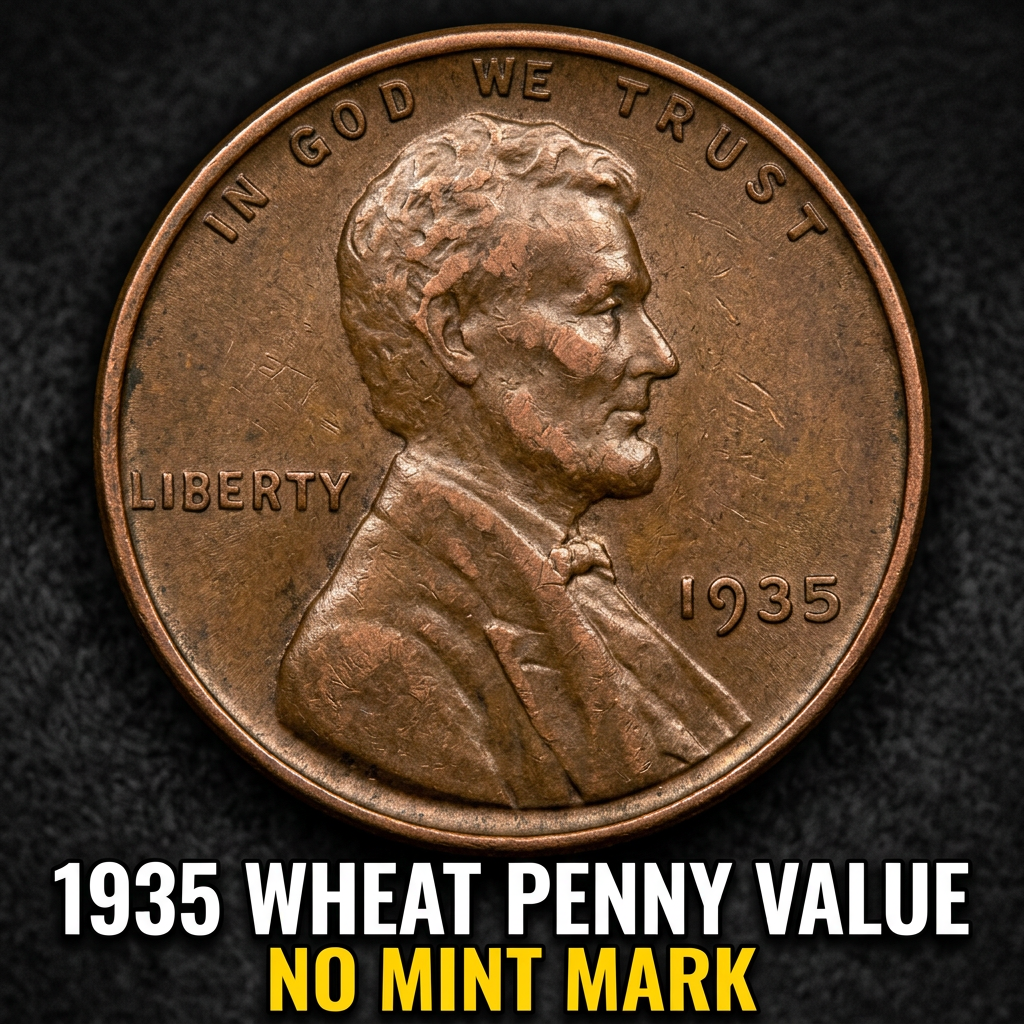
The 1935 Wheat Penny with no mint mark is worth anywhere from $0.10 in heavily worn condition to over $15 or more in uncirculated grades — and rare high-grade examples can fetch significantly more at auction. If you found one of these old Lincoln cents in a jar, a drawer, or a family collection, you’re in the right place to find out exactly what it’s worth.
What Is the 1935 No Mint Mark Wheat Penny?
The 1935 Lincoln Wheat Penny with no mint mark was struck at the Philadelphia Mint, which historically did not add a mint mark to its coins. This coin is part of the beloved “Wheat Cent” series, minted from 1909 to 1958, featuring Abraham Lincoln on the obverse and two stalks of wheat framing the words “ONE CENT” on the reverse.
In 1935, the Philadelphia Mint produced a massive 245,388,000 pennies — making this a relatively common date in the series. Because so many were made, they’re easy to find in circulated grades. However, coins in pristine, uncirculated condition are far less common and command a solid premium.
If you’re not sure which mint your coin came from, a coin identifier and value app can help you quickly confirm the details and narrow down the value based on your coin’s condition.
Your Old Coin Could Be Valuable!
Identify It & Know Its Real Value — Free Download
How Much Is a 1935 Wheat Penny Worth Today
The value of a 1935 no mint mark penny depends almost entirely on its condition, also called “grade” in the coin collecting world. A coin that has been heavily circulated — showing lots of wear, flat detail, and possibly some nicks — is worth only a few cents to around 25 cents. A lightly circulated coin might bring $0.50 to $1.50.
Where things get interesting is in the uncirculated range. Coins graded MS-63 (choice uncirculated) typically sell for $5 to $10, while those graded MS-65 or higher (gem uncirculated) can reach $15 to $40 or more. Coins with full Red (RD) designation — meaning they still have their original copper luster — are the most desirable.
Your Old Coin Could Be Valuable!
Identify It & Know Its Real Value — Free Download
For a deeper look at 1935 Wheat Penny MS Red price data across different grades, you can explore certified auction records and population reports to understand where your coin might fall.
Your Old Coin Could Be Valuable!
Identify It & Know Its Real Value — Free Download
| Grade / Condition | Estimated Value |
|---|---|
| Good (G-4) | $0.10 – $0.25 |
| Fine (F-12) | $0.25 – $0.75 |
| Extremely Fine (EF-40) | $1.00 – $2.50 |
| Uncirculated (MS-63 BN/RB) | $4.00 – $10.00 |
| Gem Uncirculated (MS-65 RD) | $15.00 – $40.00+ |
| Superb Gem (MS-67 RD) | $100.00 – $300.00+ |
Condition Is Everything When Grading Your 1935 Penny
Most 1935 Wheat Pennies you’ll encounter have been through years of pocket change, which means they show significant wear. The key areas to examine are Lincoln’s cheekbone, jaw line, and the wheat stalks on the reverse. If these areas are flat and featureless, the coin is in lower grades.
A coin that shows some luster remaining under the fields but has light contact marks is likely in the EF or AU range. A coin with no wear at all, original shine, and minimal marks is uncirculated — and that’s where value can jump considerably.
Using CoinKnow to scan your coin is one of the easiest ways to get an instant grade estimate. The app uses image recognition to assess surface details and give you a ballpark value in seconds — no coin collecting experience required.
Your Old Coin Could Be Valuable!
Identify It & Know Its Real Value — Free Download
Are There Any Valuable Errors on the 1935 No Mint Mark Penny
Error coins from 1935 do exist and can be worth far more than a typical example. The most common types to look for include doubled die obverses (where the lettering or Lincoln’s portrait shows slight doubling), off-center strikes, and repunched dates. These varieties are uncommon but not impossible to find.
A doubled die 1935 penny in circulated condition might bring $20 to $75 or more, depending on how dramatic the doubling appears. Off-center strikes — where the design is visibly shifted — can sell for $25 to $100+ if the date is still visible.
If you suspect your coin might have an error, CoinKnow can help you compare it against known varieties in its database. Getting a second opinion from a professional coin dealer or submitting the coin to a grading service like PCGS or NGC is always a smart move for potentially valuable pieces.
Your Old Coin Could Be Valuable!
Identify It & Know Its Real Value — Free Download
For a full breakdown of 1935 penny value across all mint marks and error types, including the 1935-D and 1935-S issues, checking a comprehensive value guide is worth your time.
Should You Clean or Hold Onto Your 1935 Wheat Penny
One of the most important things to know: never clean your old coins. Cleaning removes the natural patina and surface luster that collectors prize, and it dramatically lowers a coin’s value — sometimes by 50% or more. Even if a coin looks dull or dirty, leave it alone.
If your 1935 no mint mark penny is in average circulated condition, it’s a fun piece of history but won’t make you rich. However, if it’s uncirculated, shows an interesting error, or grades exceptionally high, it could be worth getting it certified and listed for sale.
Store it in a protective flip or holder, away from humidity and direct sunlight, until you decide what to do with it. CoinKnow also has resources to help you track your collection and monitor market trends over time.
Your Old Coin Could Be Valuable!
Identify It & Know Its Real Value — Free Download
FAQ
Q: How do I know if my 1935 penny was made in Philadelphia?
A: If there is no mint mark below the date on the obverse of the coin, it was struck at the Philadelphia Mint. Coins from Denver carry a “D” and coins from San Francisco carry an “S.”
Q: Is a 1935 Wheat Penny worth getting graded by PCGS or NGC?
A: It depends on the condition. If your coin appears fully uncirculated with original red luster, or if you believe it has an error, professional grading can be worthwhile. For average circulated coins, the grading fee would likely exceed the coin’s value.
Q: What makes a 1935 Wheat Penny rare or especially valuable?
A: The key factors are high uncirculated grade (MS-65 RD or better), full original red color, and the presence of a confirmed error or variety. Coins in top-tier certified grades from PCGS or NGC regularly outperform general price guide estimates at major coin auctions.