1939 Reverse of 1938 Jefferson Nickel Value and What Collectors Are Paying Today

Your Old Coin Could Be Valuable!
Identify It & Know Its Real Value — Free Download


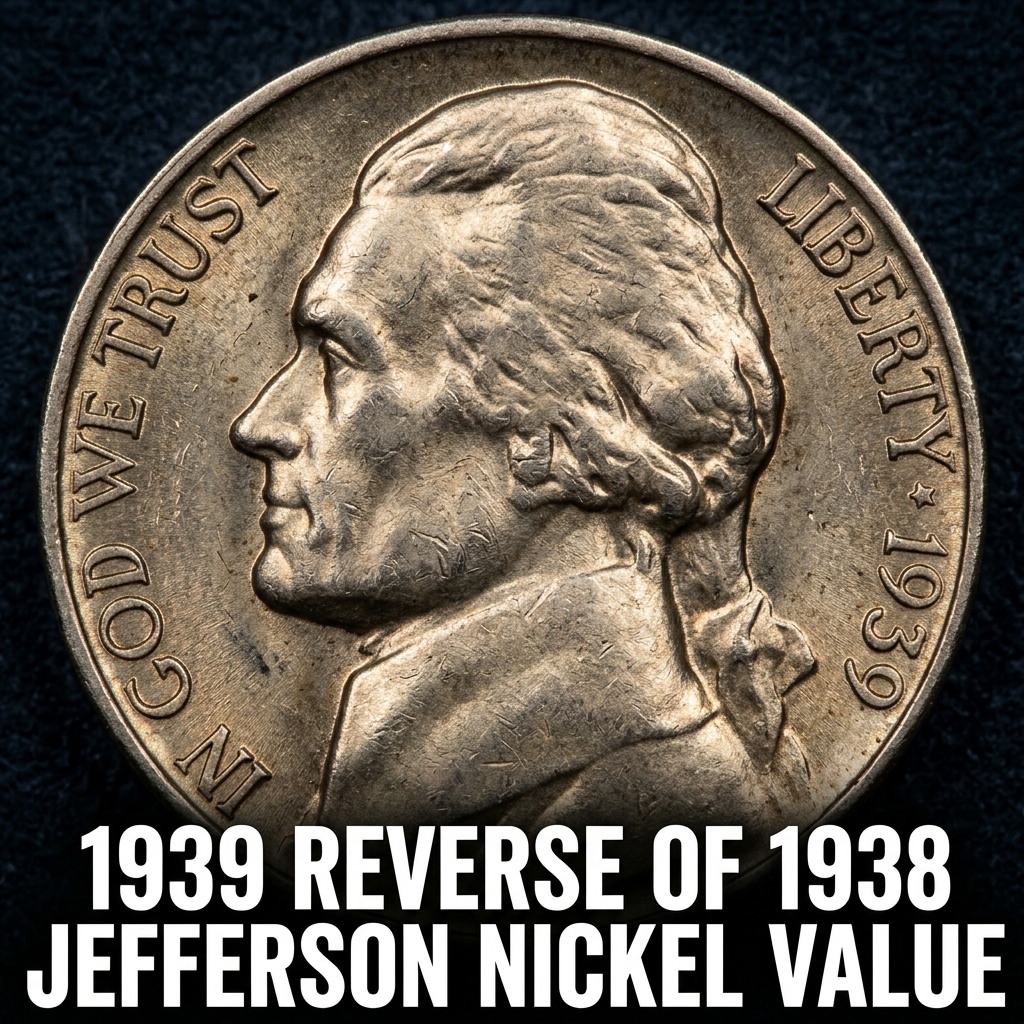
The 1939 Reverse of 1938 Jefferson Nickel is worth anywhere from $0.25 in heavily worn condition to over $100 or more in pristine uncirculated grades — and if you’ve got one sitting in an old coin jar, it’s definitely worth a closer look. This unusual variety has a fascinating backstory that makes it stand out from regular 1939 nickels, and collectors genuinely seek it out.
What Makes the 1939 Reverse of 1938 Jefferson Nickel Special
When the Jefferson Nickel launched in 1938, the Monticello design on the reverse went through some refinements heading into 1939. During the transition, some 1939-dated coins were struck using the older 1938 reverse die — creating what collectors now call the “Reverse of 1938” variety. The tell-tale sign is the appearance of Monticello’s steps: on the 1938 reverse, the steps look shallower and less defined compared to the crisper, more detailed steps found on the updated 1939 reverse.
This isn’t a mistake or a damaged coin — it’s a legitimate die variety that happened during normal mint operations. That’s exactly what makes it collectible. If you’ve got a 1939 nickel and aren’t sure which reverse it carries, a good coin identifier and value app can help you tell them apart quickly without needing a magnifying glass and a reference book.
How to Identify the Reverse of 1938 on Your Coin
Spotting the difference between the two reverses takes a little patience but it’s very doable. On the 1938-style reverse, the steps of Monticello appear softer and less detailed — sometimes almost blending together. The 1939-style reverse shows noticeably sharper, more separated steps with better overall relief.
Your Old Coin Could Be Valuable!
Identify It & Know Its Real Value — Free Download
Look at the lettering too. The 1938 reverse tends to have slightly different letter spacing and style compared to the updated design. Holding your coin under good lighting at an angle (called “raking light”) really helps bring out these details.
Your Old Coin Could Be Valuable!
Identify It & Know Its Real Value — Free Download
If you want to dig deeper into the graded auction data, you can explore detailed 1939 Jefferson Nickel MS grade price records to see what certified examples have actually sold for at auction — which gives you a much more realistic picture than just looking at asking prices.
Your Old Coin Could Be Valuable!
Identify It & Know Its Real Value — Free Download
1939 Reverse of 1938 Jefferson Nickel Value by Grade
Condition is everything with this variety. A coin that’s been rattling around in pockets for decades is going to be worth a fraction of what a clean, uncirculated example commands. Here’s a general value breakdown:
| Grade / Condition | Estimated Value |
|---|---|
| Good (G-4) | $0.25 – $0.75 |
| Fine (F-12) | $1 – $3 |
| Extremely Fine (EF-40) | $5 – $12 |
| About Uncirculated (AU-55) | $15 – $30 |
| MS-63 (Uncirculated) | $40 – $70 |
| MS-65 (Gem Uncirculated) | $80 – $150+ |
Keep in mind these are ballpark figures — actual sales can vary based on eye appeal, luster, and whether the coin has been certified by a grading service like PCGS or NGC.
Is It Worth Getting Your 1939 Reverse of 1938 Nickel Graded?
If your coin looks crispy and uncirculated, professional grading might genuinely add value. A certified MS-65 example carries far more buyer confidence than a raw coin, and that trust translates into real dollars at auction.
Your Old Coin Could Be Valuable!
Identify It & Know Its Real Value — Free Download
For circulated examples in average condition, the grading fee probably isn’t worth it — you’d spend more on the service than the coin would return. But if you’re sitting on something that looks close to mint, it’s worth at least getting an opinion.
CoinKnow is a great starting point for everyday collectors who want to research varieties, check values, and track their collection without diving into thick price catalogs. The app makes it simple to look up what your coin might be worth in minutes.
You can also find a solid overview of 1939 Jefferson Nickel value information across different grades and mint marks that breaks things down in plain language — super helpful if you’re new to all this.
Your Old Coin Could Be Valuable!
Identify It & Know Its Real Value — Free Download
Tips for Selling Your 1939 Reverse of 1938 Jefferson Nickel
If you decide to sell, knowing your audience matters. This variety attracts Jefferson Nickel specialists and variety collectors, so selling on platforms where those buyers hang out — like Heritage Auctions, eBay’s coin category, or coin shows — gives you the best chance of getting fair money.
Always photograph your coin clearly in natural light before listing it. Buyers want to see the surfaces, edges, and both sides. Describing it accurately (including the Reverse of 1938 designation) will attract the right buyers and build trust.
CoinKnow can help you keep track of what similar coins have recently sold for, so you don’t accidentally underprice something worth real money.
Your Old Coin Could Be Valuable!
Identify It & Know Its Real Value — Free Download
Frequently Asked Questions
Q: How do I know if my 1939 nickel has the Reverse of 1938?
A: Compare the steps on Monticello — the 1938 reverse shows softer, less detailed steps, while the 1939 reverse has sharper, more defined steps. Good lighting and a loupe or magnifying glass will make this much easier to see.
Q: Are 1939 Reverse of 1938 Jefferson Nickels rare?
A: They’re not extremely rare, but they are a recognized variety that collectors actively look for. In high grades they can be genuinely hard to find, which is what pushes the value up significantly for pristine examples.
Q: Can I clean my coin to make it look better before selling?
A: Please don’t. Cleaning a coin almost always damages the surfaces in ways that are visible under magnification, and it dramatically reduces collector value. Even a coin that looks “dirty” to you may have original luster that collectors prize — leave it as-is.