1951 Jefferson Nickel Value No Mint Mark What It’s Worth Today

Your Old Coin Could Be Valuable!
Identify It & Know Its Real Value — Free Download


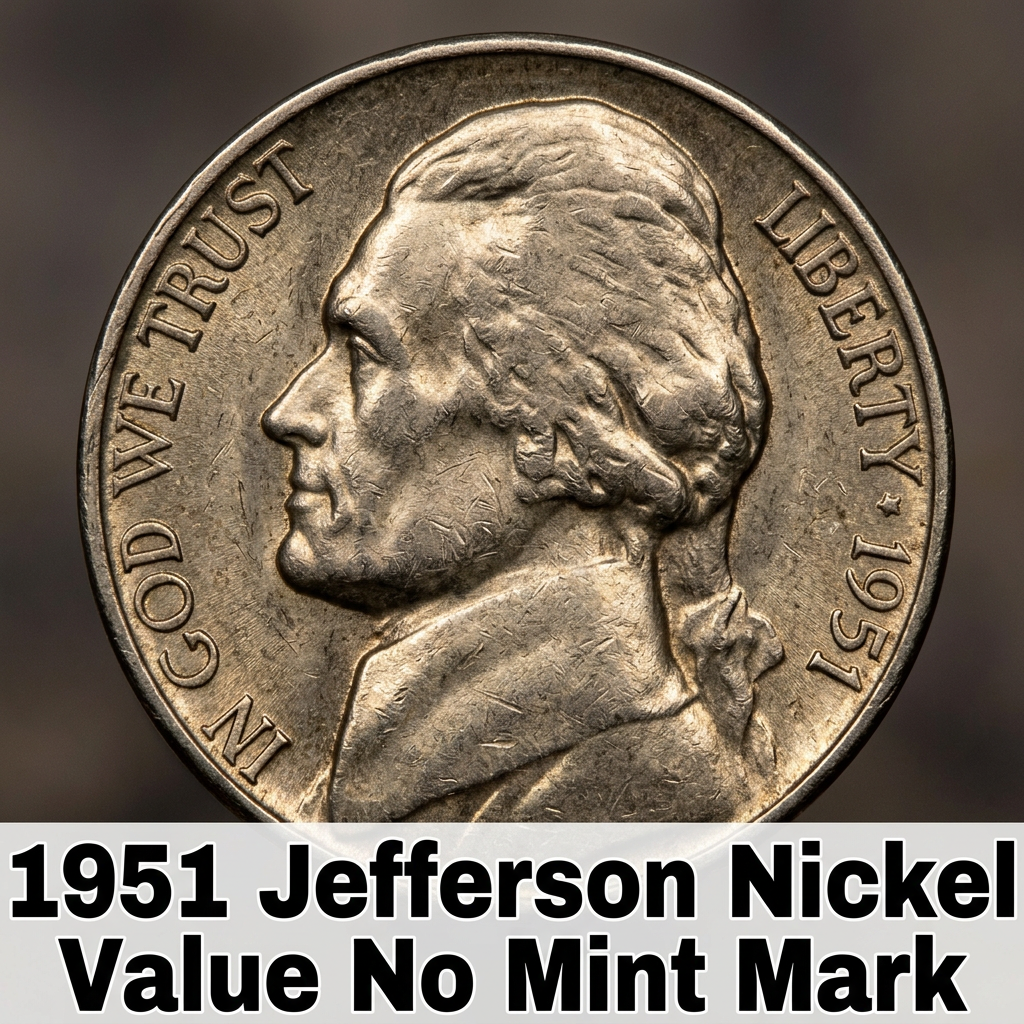
The 1951 Jefferson Nickel with no mint mark is worth anywhere from 10 cents in heavily worn condition to over $50 or more in pristine uncirculated grades. If you found one of these old nickels in a drawer or coin jar, you might be sitting on a small treasure — and this guide will help you figure out exactly what you have.
What Is the 1951 Jefferson Nickel No Mint Mark?
The 1951 Jefferson Nickel with no mint mark was struck at the Philadelphia Mint. Back then, Philadelphia didn’t add a mint mark to its coins, which is why yours appears blank below Monticello on the reverse side.
That year, the Philadelphia Mint produced over 28 million of these nickels, making them relatively common in circulated condition. But don’t let that discourage you — higher-grade examples are far scarcer and much more valuable to collectors.
If you’re not sure what mint mark you’re looking at (or aren’t sure if you even have the right coin), a coin identifier and value app can quickly scan your coin and give you an instant answer. Apps like CoinKnow are especially popular among beginners and seasoned collectors alike.
Your Old Coin Could Be Valuable!
Identify It & Know Its Real Value — Free Download
How Much Is the 1951 Jefferson Nickel No Mint Mark Worth?
The value of your 1951 Jefferson Nickel depends almost entirely on its condition, also called its “grade.” A coin that’s been circulated for decades will show wear on the high points — Jefferson’s cheek, hair, and the steps of Monticello. The more wear, the lower the value.
Here’s a general value breakdown:
Your Old Coin Could Be Valuable!
Identify It & Know Its Real Value — Free Download
| Grade / Condition | Estimated Value |
|---|---|
| Good (G-4) | $0.10 – $0.25 |
| Fine (F-12) | $0.25 – $0.50 |
| Extremely Fine (EF-40) | $0.75 – $1.50 |
| About Uncirculated (AU-55) | $2 – $5 |
| Mint State (MS-63) | $10 – $20 |
| Gem Mint State (MS-65) | $35 – $60+ |
For the most up-to-date auction prices and certified coin sales, you can check the latest 1951 Jefferson Nickel MS grade price data to see what collectors are actually paying right now.
The Full Steps Designation and Why It Matters
One of the most exciting things for Jefferson Nickel collectors is something called the “Full Steps” (FS) designation. This refers to the steps at the base of Monticello on the reverse — if five or six complete, unbroken steps are clearly visible, the coin earns the FS label from grading services like PCGS or NGC.
Your Old Coin Could Be Valuable!
Identify It & Know Its Real Value — Free Download
A standard 1951 Philadelphia Nickel in MS-65 might sell for around $35–$60. But an MS-65 Full Steps example? That same coin can jump to $200, $500, or even higher depending on demand.
Full Steps coins from 1951 are genuinely rare, because even many uncirculated examples show weak or incomplete strike on those steps. If you think your coin might qualify, it’s worth having it professionally graded.
CoinKnow can help you identify key features like Full Steps before you spend money on grading services — it’s one of the smartest free tools available for everyday collectors.
Your Old Coin Could Be Valuable!
Identify It & Know Its Real Value — Free Download
What Makes a 1951 Nickel More Valuable?
Beyond the Full Steps designation, a few other factors can affect what your 1951 Jefferson Nickel no mint mark is worth:
Luster: Uncirculated coins should have a bright, original mint shine. Any cleaning, polishing, or environmental damage (called “environmental damage” or “PVC damage”) dramatically reduces value.
Strike quality: Philadelphia coins from this era sometimes suffered from weak strikes, especially on Jefferson’s hair details and Monticello’s steps. A sharply struck coin stands out.
Eye appeal: Collectors will pay a premium for coins that simply look beautiful — even toning can add value if it’s natural and attractive.
Your Old Coin Could Be Valuable!
Identify It & Know Its Real Value — Free Download
If you want a full breakdown of 1951 nickel value details across all grades and mint marks, that resource covers everything from the Philadelphia issue to the Denver and San Francisco strikes.
Should You Hold On to Your 1951 Jefferson Nickel?
If your coin is worn and shows heavy circulation, it’s probably worth face value or just a bit more. That’s totally normal — millions of these were used as everyday change for decades.
But if your coin looks clean, bright, and sharp with minimal marks, you may have something genuinely collectible. At the very least, it’s worth comparing it to grading guides and running it through an app like CoinKnow before spending or selling it.
Jefferson Nickels from the early 1950s are an affordable entry point into coin collecting, and they have a dedicated collector base. Even a modest example in your collection is a piece of American mid-century history worth keeping.
Your Old Coin Could Be Valuable!
Identify It & Know Its Real Value — Free Download
FAQ
Q: How do I know if my 1951 nickel is from Philadelphia?
A: If there’s no mint mark on the reverse side below Monticello, your coin was struck at the Philadelphia Mint. Denver coins show a “D” and San Francisco coins show an “S.”
Q: Is a 1951 Jefferson Nickel with no mint mark rare?
A: In circulated condition, no — over 28 million were minted. However, high-grade examples, especially those with the Full Steps designation, are genuinely scarce and worth significant premiums.
Q: Can I clean my 1951 nickel to make it look better?
A: No — never clean old coins. Cleaning removes the original surface and luster, which permanently lowers collector value. Even a coin that looks dirty is worth more in its original, uncleaned state.