1951-S Jefferson Nickel Value Guide How Much Is It Worth Today

Your Old Coin Could Be Valuable!
Identify It & Know Its Real Value — Free Download


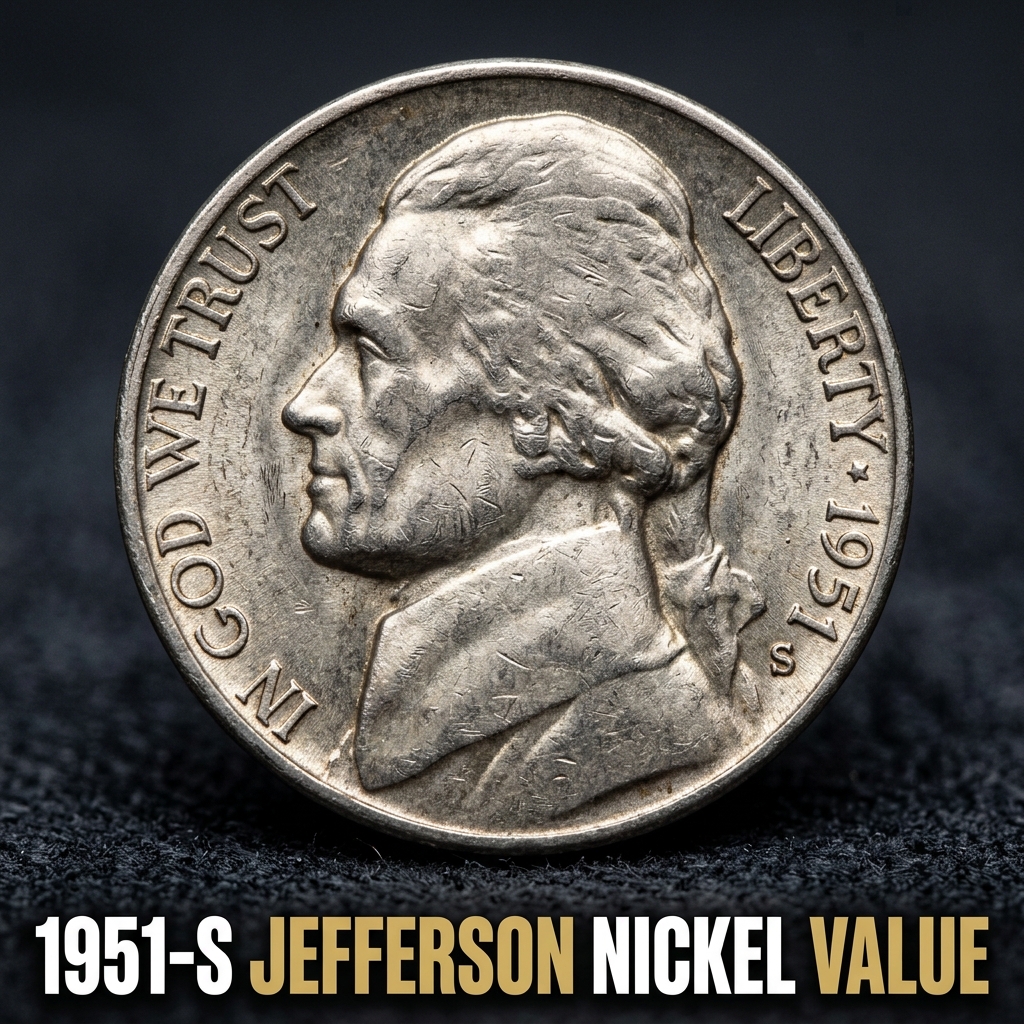
The 1951-S Jefferson Nickel is worth anywhere from $0.50 in heavily worn condition to over $100 or more in pristine mint state grades. If you just found one of these old nickels in a jar, a drawer, or an old collection, you’re in the right place — let’s break down exactly what it’s worth and what to look for.
If you want a quick answer on the go, a coin identifier and value app can scan your coin and give you an instant estimate based on condition and current market data. It’s one of the easiest ways to get started before diving deeper into the details.
What Is the 1951-S Jefferson Nickel?
The 1951-S Jefferson Nickel was struck at the San Francisco Mint, which is what the “S” mint mark stands for. You’ll find that small “S” on the reverse side of the coin, just to the right of Monticello — the famous Virginia home of Thomas Jefferson.
In 1951, the San Francisco Mint produced 7,776,000 of these nickels. That’s a relatively modest mintage compared to the Philadelphia issue that same year, which makes the 1951-S a bit more collectible.
Your Old Coin Could Be Valuable!
Identify It & Know Its Real Value — Free Download
The coin features the classic Jefferson design by Felix Schlag, which debuted in 1938 and remained largely unchanged for decades. On the obverse, you’ll see a left-facing portrait of Jefferson. On the reverse is Monticello, framed by the inscriptions “E PLURIBUS UNUM” and “FIVE CENTS.”
1951-S Jefferson Nickel Value by Grade
Coin value depends heavily on condition — what collectors call “grade.” A nickel that’s been circulated for years will show wear on the high points, while an uncirculated example may still have its original mint luster.
Your Old Coin Could Be Valuable!
Identify It & Know Its Real Value — Free Download
Here’s a general look at the 1951-S Jefferson Nickel value across different grades:
| Grade | Estimated Value |
|---|---|
| Good (G-4) | $0.50 – $1.00 |
| Fine (F-12) | $1.00 – $2.00 |
| Extremely Fine (EF-40) | $3.00 – $6.00 |
| About Uncirculated (AU-55) | $8.00 – $15.00 |
| MS-63 (Mint State) | $20.00 – $40.00 |
| MS-65 (Gem Mint State) | $60.00 – $100.00+ |
For the most up-to-date auction results and certified coin sales, you can check 1951-S Jefferson Nickel MS-grade price data to see what similar coins have actually sold for at major coin auctions.
Your Old Coin Could Be Valuable!
Identify It & Know Its Real Value — Free Download
What Makes a 1951-S Nickel More Valuable?
Beyond basic grade, a few specific factors can push the value of your 1951-S Jefferson Nickel significantly higher.
Full Steps designation is one of the biggest value multipliers in Jefferson Nickel collecting. On the reverse of the coin, the steps leading up to Monticello should show sharp, complete detail. When five or six full steps are clearly visible — uninterrupted by contact marks or weak strikes — the coin qualifies for the “FS” designation from grading services like PCGS or NGC. A Full Steps example in MS-65 can be worth several hundred dollars or more.
Strike quality also matters. San Francisco coins from this era are generally well-struck, but not every coin is equal. Hold your nickel under good lighting and look at the fine details on Jefferson’s hair and the pillars of Monticello.
Your Old Coin Could Be Valuable!
Identify It & Know Its Real Value — Free Download
Luster and eye appeal are factors that experienced collectors and graders weigh carefully. A coin with original, cartwheel luster and no distracting marks will always fetch a premium over a dull or cleaned example.
How to Check the Condition of Your 1951-S Nickel
You don’t need to be an expert to do a basic assessment of your coin. Start by examining the high points of the design — the cheekbone and hair above Jefferson’s ear on the obverse, and the upper steps of Monticello on the reverse. These areas wear first.
If the details are flat and the surfaces look gray and dull, the coin has seen significant circulation and will fall in the lower grade range. If you can see some shimmer or original shine and the details are fairly sharp, you might have an About Uncirculated or even Mint State example.
Never clean your coin. Cleaning damages the surface and actually reduces the value, even if it makes the coin look brighter. Collectors and dealers can almost always spot a cleaned coin, and they discount them accordingly.
Your Old Coin Could Be Valuable!
Identify It & Know Its Real Value — Free Download
For a more detailed breakdown of what your specific coin might be worth, this comprehensive 1951 nickel value guide walks through grading criteria and price ranges in easy-to-understand terms.
Should You Get Your 1951-S Nickel Graded?
If your 1951-S Jefferson Nickel looks like it might be in Mint State — no wear, good luster, sharp details — it may be worth submitting to a third-party grading service like PCGS or NGC. Professional grading adds credibility and can significantly increase what a buyer is willing to pay.
However, for most circulated examples worth a few dollars, grading fees won’t make financial sense. In that case, CoinKnow is a great alternative. CoinKnow lets you snap a photo of your coin and instantly get an AI-powered identification and value estimate, which is perfect for everyday collectors who just want a quick, reliable answer without the cost of professional grading.
If you have a small collection or a handful of old nickels to go through, CoinKnow can help you sort out which ones might actually be worth submitting for professional grading and which ones are better kept as cool pocket pieces.
Your Old Coin Could Be Valuable!
Identify It & Know Its Real Value — Free Download
FAQ
Q: How do I find the mint mark on my 1951 Jefferson Nickel?
A: Flip the coin over to the reverse side and look to the right of Monticello, near the right edge of the building. If you see a small “S,” it was made in San Francisco. No mint mark means it came from Philadelphia.
Q: Is a 1951-S nickel rare?
A: It’s not a rare coin by absolute standards — nearly 7.8 million were minted — but it’s less common than the Philadelphia issue and more sought after by collectors, especially in high grades with Full Steps details. Those high-grade examples can be genuinely difficult to find.
Q: What’s the most valuable version of the 1951-S Jefferson Nickel?
A: The most valuable examples are certified Mint State coins with the Full Steps designation, particularly in MS-65 FS or higher. These can sell for several hundred dollars at auction, depending on the registry appeal and overall eye appeal of the specific coin.