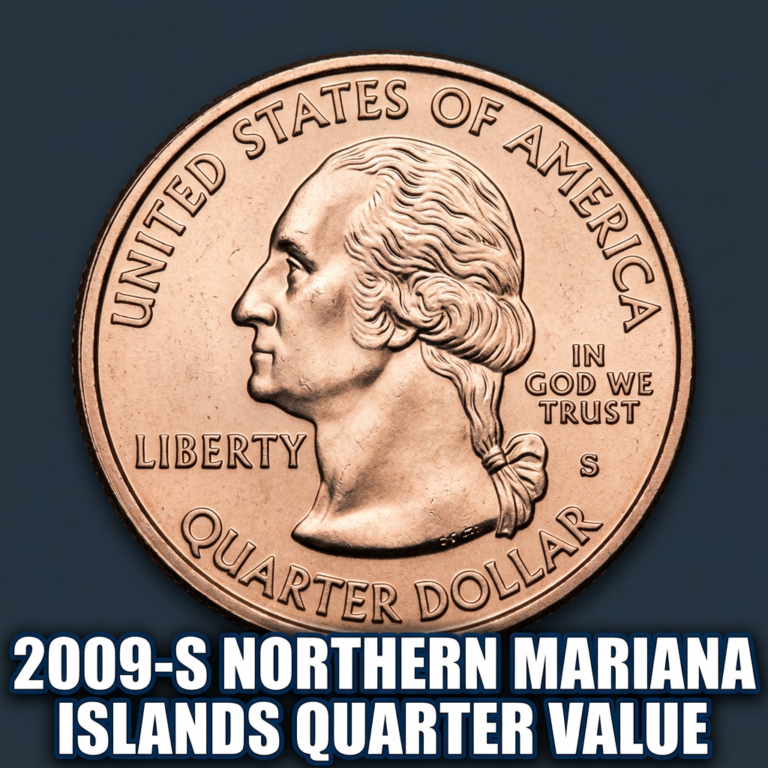
1968-S Washington Quarter Value: Guide to Proof Coin Prices

Your Old Coin Could Be Valuable!
Identify It & Know Its Real Value — Free Download


The 1968-S Washington Quarter is worth anywhere from $1 in typical proof condition to over $1,500 for rare, high-grade specimens. While most of these coins found in old collections are worth a few dollars, finding one with a “Deep Cameo” finish can significantly increase its market value.
| Condition / Grade | Estimated Value |
|---|---|
| PR-65 (Standard Proof) | $1.00 – $3.00 |
| PR-67 (Above Average) | $5.00 – $10.00 |
| PR-69 Deep Cameo (High Grade) | $40.00 – $90.00 |
| PR-70 Deep Cameo (Perfect) | $1,000.00+ |
Understanding the 1968-S Washington Quarter
If you have discovered a 1968 quarter with an “S” mint mark, you are looking at a Proof coin. Unlike the quarters you find in your pocket change today, these were specifically produced for collectors at the San Francisco Assay Office. To identify your find correctly, you might want to use a top coin identifier and value app to confirm its minting details and current market standing.
In 1968, the United States Mint resumed the use of mint marks on coins after a three-year hiatus. This year was also significant because it marked the first year that Proof sets were struck in San Francisco rather than Philadelphia. Because these coins were never intended for general circulation, they often maintain a mirror-like finish.
By using the CoinKnow app, you can quickly determine if your 1968-S quarter has been handled or if it remains in its original “Proof” state. Most of these coins were sold in protective plastic sets, but many have been broken out over the decades. Finding one in your spare change is rare, but it does happen.
Your Old Coin Could Be Valuable!
Identify It & Know Its Real Value — Free Download
Metal Composition and 1968-S Quarter Value
One of the first questions people ask when they find a 1968-S quarter is, “Is it silver?” Unfortunately, the answer for the 1968-S is no. The U.S. Mint transitioned from 90% silver to a copper-nickel “sandwich” composition in 1965. This coin consists of a pure copper core with an outer layer of 75% copper and 25% nickel.
Because there is no “melt value” from silver, the price is driven entirely by its condition and its appeal to collectors. If you are curious about the current market trends, checking the latest 1968 quarter auction records and pricing can provide a clearer picture of what buyers are currently paying.
Your Old Coin Could Be Valuable!
Identify It & Know Its Real Value — Free Download
The total mintage for the 1968-S Proof Washington Quarter was 3,041,506. While three million might sound like a lot, the number of coins that have remained in “Perfect” condition is much smaller. Collectors are always on the hunt for those few coins that escaped the micro-scratches and “haze” that often develop on old proof surfaces.
Identifying the S Mint Mark on Your Quarter
The “S” mint mark is located on the obverse (front) of the coin. If you look closely at Washington’s portrait, you will see the small letter “S” situated to the right of the ribbon in his hair, just above the year 1968. If there is no mint mark, the coin was struck in Philadelphia and was intended for circulation.
Your Old Coin Could Be Valuable!
Identify It & Know Its Real Value — Free Download
Understanding the difference between a proof strike and a business strike is crucial for valuation. Proof coins like the 1968-S were struck twice with specially polished dies. This process gives the background (fields) a reflective, watery look, while the design (relief) may appear frosted.
| Mint Mark | Mint Location | Strike Type |
|---|---|---|
| S | San Francisco | Proof Only |
| D | Denver | Business Strike |
| None | Philadelphia | Business Strike |
The “Deep Cameo” Difference in Value
When researching comprehensive 1968 Washington quarter value info, you will likely see the terms “Cameo” (CAM) and “Deep Cameo” (DCAM). These are designations given by professional grading services like PCGS or NGC. A “Deep Cameo” coin has an extreme contrast between the shiny background and the frosted portrait.
In 1968, the minting technology wasn’t as consistent as it is today. Only the first few hundred coins struck with a new die would exhibit that heavy frosting. As the die wore down, the frosting disappeared. Consequently, a 1968-S quarter with deep frosting is significantly more valuable than one where the frosting is faint or non-existent.
Your Old Coin Could Be Valuable!
Identify It & Know Its Real Value — Free Download
Most 1968-S quarters found today have a “brilliant” finish, meaning they are shiny all over. These are common and usually sell for under $5. However, if your coin looks like a black-and-white photograph because the frost is so thick, it could be worth hundreds of dollars. The CoinKnow app’s visual recognition can often help you identify these surface textures more accurately than the naked eye.
Common Errors Found on 1968 Washington Quarters
While the 1968-S is primarily valued for its grade, the Washington quarter series is famous for various minting errors. For the 1968 coins, collectors often look for “Double Die” errors. This happens when the hub strikes the die twice at slightly different angles, causing the letters or numbers to look doubled.
Another interesting error to look for is the “re-punched mint mark” or striking errors where a coin is struck on the wrong metal (though extremely rare for this specific year). If you find a coin that looks “off”—perhaps the edges are unusually thick or the image is off-center—you should have it looked at by a professional.
Your Old Coin Could Be Valuable!
Identify It & Know Its Real Value — Free Download
| Error Type | Description | Potential Value |
|---|---|---|
| Doubled Die Obverse | Doubling on “In God We Trust” | $25 – $100+ |
| Off-Center Strike | Design shifted to one side | $15 – $50 |
| Broadstruck | Coin struck without the collar | $10 – $30 |
How to Store and Protect Your 1968-S Quarter
Because the value of the 1968-S is tied so closely to its visual perfection, handling the coin properly is vital. Natural oils from your skin can leave permanent fingerprints on the mirrored surfaces of a proof coin. These marks, known as “milk spots” or toning, can decrease the value of a high-grade quarter instantly.
It is highly recommended to keep these coins in their original U.S. Mint packaging if they are already there. If you have a loose 1968-S quarter, place it in a PVC-free plastic flip or a hard plastic capsule. Avoid cleaning the coin at all costs; even a soft cloth can leave hairline scratches that a professional grader would consider “damage,” effectively ruining the coin’s numismatic value.
If you suspect your coin is a perfect specimen, you may consider professional grading. However, keep in mind that the cost of grading (often $30-$50 per coin) might exceed the value of the coin itself unless it is a high-grade Deep Cameo. Using tools like CoinKnow helps enthusiasts decide if a coin is “worth the trip” to a grading service by comparing it against an database of high-resolution images.
FAQs
Q: Is a 1968-S Washington Quarter made of silver?
A: No, 1968-S quarters are composed of a copper-nickel clad mix. The U.S. Mint stopped using 90% silver for quarters in 1964. There are no silver 1968-S business or proof quarters.
Your Old Coin Could Be Valuable!
Identify It & Know Its Real Value — Free Download
Q: What makes a 1968-S quarter worth $1,000?
A: Only a coin graded as PR-70 Deep Cameo (perfect condition with no visible flaws under 5x magnification) can reach prices near or above $1,000. Most found in sets are PR-65 to PR-68 and are significantly less valuable.
Q: Can I find a 1968-S quarter in my pocket change?
A: It is rare, but possible. Usually, this happens when someone breaks open a proof set and spends the coins. Because they have a distinct shiny finish, they are easy to spot, but once they circulate, they are usually only worth their face value of 25 cents.
Q: How do I know if my quarter is a Proof?
A: Proof coins like the 1968-S have extremely sharp details and mirror-like backgrounds. If the background reflects light like a mirror and it has an “S” mint mark, it is almost certainly a proof coin.