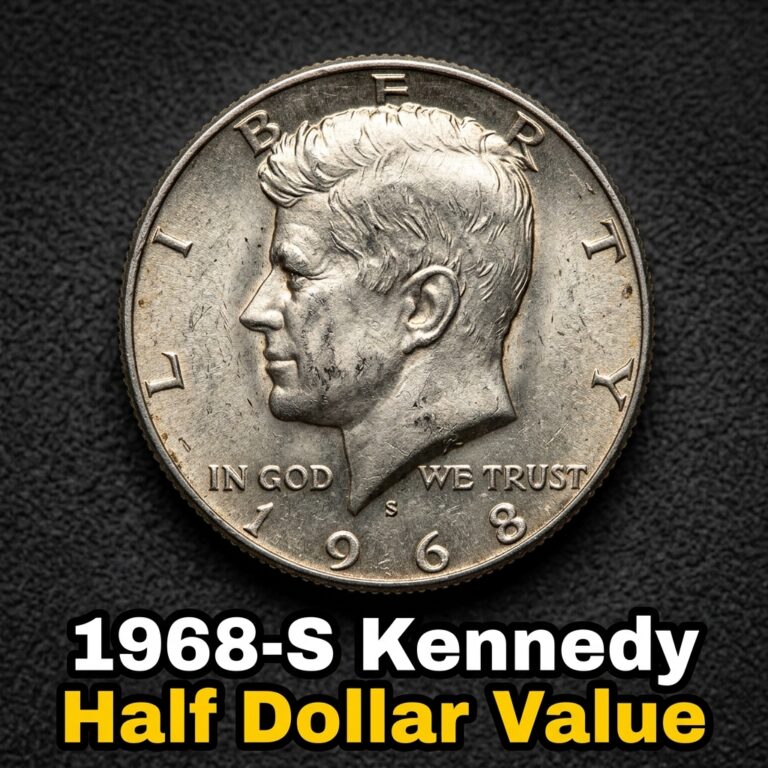
1989-D Kennedy Half Dollar Value: What Is It Worth Today?

Your Old Coin Could Be Valuable!
Identify It & Know Its Real Value — Free Download


The 1989-D Kennedy Half Dollar is worth anywhere from its face value of $0.50 in circulated condition to over $1,500 in pristine, high-grade mint state. While most coins you find in pocket change are only worth their weight in copper and nickel, certain rare specimens can be quite valuable to collectors.
| Condition / Grade | Estimated Market Value |
|---|---|
| Circulated (Average Wear) | $0.50 – $0.75 |
| About Uncirculated (AU58) | $1.00 – $3.50 |
| Uncirculated (MS63) | $5.00 – $12.00 |
| Choice Uncirculated (MS65) | $25.00 – $45.00 |
| Gem Uncirculated (MS67+) | $500.00+ |
Identifying Your 1989-D Kennedy Half Dollar
If you have stumbled upon a 1989 Kennedy Half Dollar with a small “D” mint mark, you are holding a piece of American history minted in Denver. By the late 1980s, half dollars were no longer common in daily transactions, having been largely replaced by the quarter and the dollar bill for convenience. However, the Denver Mint still produced over 21 million of these coins this year to meet the demands of banks and collectors.
To get an accurate assessment of your find, many hobbyists use a top coin identifier and value app to scan their coins instantly. This technology helps differentiate between a common spender and a potential treasure. If you are using the CoinKnow app, you can simply snap a photo to check for specific die markers that indicate a higher value.
Most 1989-D coins you find today will show signs of “bag marks”—tiny nicks and scratches caused by coins bumping into each other at the mint. Finding one in perfect, flawless condition is the key to unlocking real profit.
Your Old Coin Could Be Valuable!
Identify It & Know Its Real Value — Free Download
The Role of the “D” Mint Mark and Composition
The “D” on your coin signifies it was struck at the Denver Mint. Unlike the early halves from the 1960s, a 1989 half dollar contains no silver. It is composed of a copper core with an outer layer of 75% copper and 25% nickel. This is often disappointing for those hoping for precious metal value, but numismatic value (collector value) is determined by rarity and condition, not just metal content.
Because these coins are “base metal,” their value is tied strictly to their grade. A coin that looks like it just came out of a fresh mint roll is significantly more attractive to buyers. You can view detailed 1989 Kennedy half dollar price data to see how the Denver and Philadelphia mints compare in the current market. Keep in mind that while tens of millions were made, only a tiny fraction have survived in “Gem” condition.
Your Old Coin Could Be Valuable!
Identify It & Know Its Real Value — Free Download
If you are unsure where to look for the mint mark, it is located on the obverse (front) of the coin, just above the middle of the date. If there is no letter, it was made in Philadelphia. If there is an “S,” it is a proof coin from San Francisco.
Understanding the 1989-D Kennedy Half Dollar Grading Scale
Collectors use a 70-point scale to determine exactly what a coin is worth. For the 1989-D, the difference between a grade of 65 and 67 can be hundreds of dollars. Most coins found in jars or old piggy banks will fall into the “Circulated” or “About Uncirculated” categories. These are typically worth only their face value of 50 cents, or perhaps a small premium to a local hobbyist.
Your Old Coin Could Be Valuable!
Identify It & Know Its Real Value — Free Download
“Mint State” (MS) coins are those that never made it into public circulation. These coins usually have their original “mint luster”—that frosty, shimmery look when you rotate the coin under a light. If your coin looks exceptionally shiny and lacks scratches on JFK’s cheek, it might be worth professional grading. The CoinKnow app can help you compare your coin’s surface against high-resolution images of various grades to get a ballpark estimate.
| Grade Designation | Visual Description | Estimated Value |
|---|---|---|
| MS60 (Uncirculated) | Complete luster, but many marks/scratches. | $2.00 |
| MS64 (Choice) | Few marks, good eye appeal. | $15.00 |
| MS66 (Gem) | Very few marks, excellent luster. | $65.00 |
| MS67 (Superb Gem) | Virtually perfect to the naked eye. | $400.00+ |
Valuable Errors to Look For in 1989 Half Dollars
Error hunting is one of the most exciting ways to find value in modern coinage. While the 1989-D is known for being a relatively “clean” year for the mint, mistakes do happen. The most common errors include “Double Dies,” “Off-Center Strikes,” and “Clips.” A 1989 half dollar with a significant error can sell for over $100 even if the coin is not in perfect condition.
Look closely at the lettering in “LIBERTY” or the feathers on the eagle’s tail. If you see clear doubling of the lines, you might have a Doubled Die error. Another rare find is a “wrong planchet” error, where the half dollar was accidentally struck on a quarter or a different metal blank. These are extremely rare and highly sought after by specialists.
Your Old Coin Could Be Valuable!
Identify It & Know Its Real Value — Free Download
Before you spend that “weird-looking” coin, consider checking its 1989 Kennedy half dollar value information to ensure you aren’t passing up a rare minting mistake. Collectors often pay high premiums for errors because they are unique and visually striking.
Is the 1989-D Kennedy Half Dollar a Good Investment?
If you are looking for a long-term investment, the 1989-D is a “condition-sensitive” coin. This means it is only “investment grade” if it is at the very top of the grading scale (MS67 or higher). Lower-grade examples are plentiful and unlikely to rise significantly in price over the coming years.
However, for a casual collector, the 1989-D is a great addition to a “year set” or a Kennedy Half Dollar book. Using the CoinKnow app, you can keep a digital inventory of your collection and track price fluctuations in real-time. It’s a fun way to engage with history without needing to spend thousands of dollars to start.
Because millions were saved by hobbyists at the time of release, there is a steady supply of uncirculated rolls available. If you want a high-value 1989-D, your best bet is to look for “Original Bank Wrapped” (OBW) rolls and search through them for that one elusive, perfect specimen that could be sent off for professional grading.
Your Old Coin Could Be Valuable!
Identify It & Know Its Real Value — Free Download
| Item | Collector Interest | Potential Growth |
|---|---|---|
| Raw/Loose Coins | Low | Flat |
| Mint-Wrapped Rolls | Medium | Moderate |
| Certified MS67+ Coins | High | High |
Summary: What to Do with Your 1989 Half Dollar
If you find a 1989-D Kennedy Half Dollar in your change, the first thing to do is evaluate its luster. Is it shiny like a mirror, or dull and gray? If it is shiny and appears almost brand new, put it in a protective sleeve or flip to prevent further damage. Even a single scratch can drop the value from $50 down to $0.50.
If it is heavily worn, feel free to spend it or keep it as a memento. While it may not be a jackpot coin in average condition, it still represents a era in American minting where the Kennedy Half Dollar remained a symbol of national pride. Happy hunting, and always keep an eye out for those rare “D” mint marks!
FAQ
Q: Is the 1989-D Kennedy Half Dollar made of silver?
A: No, the 1989-D Kennedy Half Dollar is made of a copper-nickel clad composition. The Denver Mint stopped using silver for circulating half dollars after 1970.
Q: How many 1989-D Half Dollars were minted?
A: The Denver Mint produced 24,542,432 Kennedy Half Dollars in 1989. Because this is a relatively high mintage, only coins in top-tier condition carry a high premium.
Your Old Coin Could Be Valuable!
Identify It & Know Its Real Value — Free Download
Q: What is the highest price ever paid for a 1989-D Half Dollar?
A: High-grade examples graded MS68 by services like PCGS have sold at auction for over $1,500. These are exceptionally rare versions with no visible flaws.
Q: Where is the mint mark on a 1989 half dollar?
A: You can find the “D” (Denver) or “P” (Philadelphia) mint mark on the front (obverse) of the coin, located just above the date in the center.
Q: Can I find a 1989-D half dollar in my pocket change?
A: Yes, though it is becoming rarer. While banks don’t hand them out as often as quarters, they are still legal tender and occasionally show up in circulation.