2001-D Roosevelt Dime Value: Is Your Pocket Change Rare?

Your Old Coin Could Be Valuable!
Identify It & Know Its Real Value — Free Download


The 2001-D Roosevelt Dime is worth anywhere from its face value of $10 cents in worn condition to over $600 for high-grade specimens. While most of these coins found in your change today are only worth ten cents, certain errors and high-quality strikes can be surprisingly valuable to collectors.
| Condition | Estimated Value |
|---|---|
| Circulated (Average Wear) | $0.10 |
| Uncirculated (Mint State 65) | $2.00 – $5.00 |
| Full Bands (MS67FB) | $30.00 – $100.00 |
| Auction Record (MS69FB) | $650+ |
Understanding the 2001-D Roosevelt Dime Basics
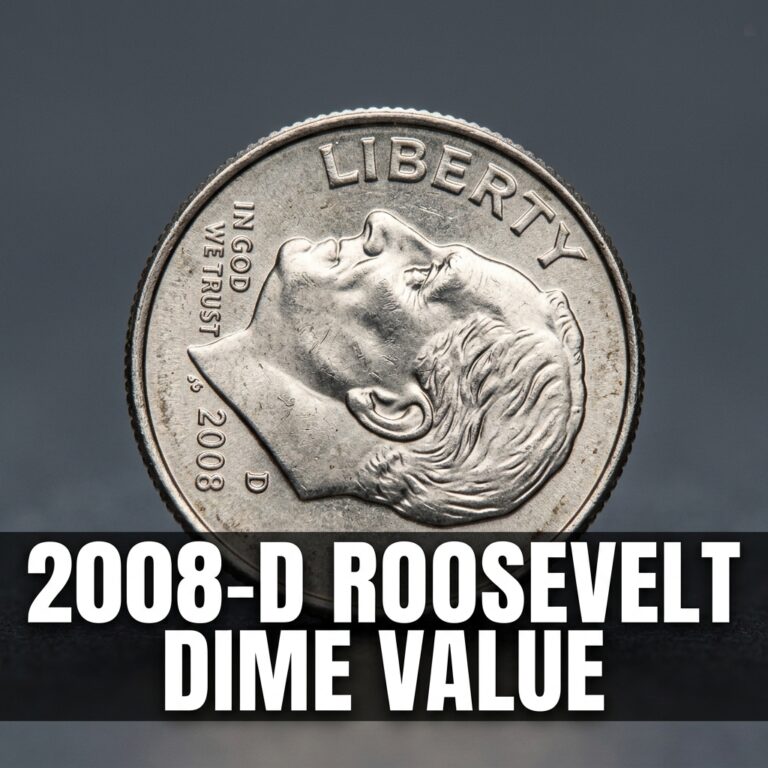
If you have just cleared out your jars of loose change and spotted a shiny dime with a small “D” on it, you are looking at a product of the Denver Mint. In 2001, the United States Mint produced over 2.7 billion Roosevelt dimes, split between the Philadelphia (P) and Denver (D) facilities. Because the mintage numbers for the 2001-D were so incredibly high—specifically 1,274,000,000 units—most of these coins remain common today. However, for everyday Americans, the challenge lies in identifying which specific coins have transitioned from “pocket change” to “collector’s item.”
Using a top coin identifier and value app can help you quickly determine if your dime has the luster and strike quality required to be worth more than a few cents. Most coins you find in circulation will show signs of wear, such as scratches and dullness, which typically keeps their value at face value. To truly find value in the 2001-D series, you must look for “Uncirculated” coins—those that never actually spent time in a cash register or vending machine.
Many people turn to the CoinKnow app to scan their finds. The app uses advanced image recognition to analyze the surface of the coin, helping you spot the difference between a common 10-cent piece and a potential gem-grade specimen. While the “D” mint mark is standard for Denver, the clarity of that mark and the surrounding details on Roosevelt’s portrait are the first things a professional numismatist looks at.
Your Old Coin Could Be Valuable!
Identify It & Know Its Real Value — Free Download
Historical Context: Why Was the 2001-D Dime Minted?
By the year 2001, the Roosevelt Dime had been a staple of American currency for over 50 years. Originally introduced in 1946 to honor President Franklin D. Roosevelt following his death, the design by John R. Sinnock has remained remarkably consistent. In 2001, the economy was in a state of transition, but the demand for small denominations remained high for daily transactions. The Denver Mint worked overtime to ensure that the “D” mint mark was seen across the Western United States.
Collectors often look at this year as part of the “modern era” of coinage. Unlike dimes minted before 1965, the 2001-D Roosevelt Dime contains no silver; it is composed of a copper core with a copper-nickel cladding. This means the intrinsic metal value is quite low. However, historical interest in modern coinage is growing, especially as high-grade examples become harder to find in pristine condition. Because billions were made, perfection is what creates value.
Your Old Coin Could Be Valuable!
Identify It & Know Its Real Value — Free Download
If you are curious about how this specific year compares to others, you can check the latest 2001 dime price guide data to see how mint-state examples are performing in the secondary market. For most people, finding a 2001-D is a common daily occurrence, but for those building a complete “date and mint” set, finding the highest possible grade from the Denver Mint is an essential task.
Grading and the “Full Bands” Characteristic
When discussing the value of a 2001-D dime, “grade” is everything. Coins are graded on a scale from 1 to 70. A coin graded MS60 (Mint State) is uncirculated but might have some “bag marks” from hitting other coins at the mint. A coin graded MS70 is perfect. For Roosevelt Dimes, there is an extra designation called “Full Bands” (FB). This refers to the horizontal bands on the torch located on the reverse (back) of the coin. If these bands are clearly separated with no interruptions, the coin is considered a premium strike.
Your Old Coin Could Be Valuable!
Identify It & Know Its Real Value — Free Download
| Grade Designation | Visual Description | Estimated Market Value |
|---|---|---|
| MS63 | Mint luster, some marks | $1 – $2 |
| MS65 | Strong luster, very few marks | $5 – $10 |
| MS67 | Exceptional strike and eye appeal | $25 – $40 |
| MS68 Full Bands | Perfect bands on torch | $150+ |
Achieving a Full Bands designation on a 2001-D is quite difficult because the dies used at the Denver Mint were often worn down by the time they reached the end of their production cycle. This scarcity of “perfect strikes” is what drives up the 2001-D Roosevelt dime worth information for serious collectors. If you look at your dime under a magnifying glass and see a clear line between those torch bands, you might be holding something special. Using CoinKnow can help you identify these fine details that the naked eye might miss.
Rare Errors to Look For in 2001-D Dimes
While most 2001-D dimes are standard, mistakes happen at the mint. Error coins are the “holy grail” for many casual hunters. In 2001, common errors included “Off-Center” strikes, where the coin was not properly aligned with the stamp, resulting in a crescent-shaped blank area. These can be worth $20 to $50 depending on how much of the design is missing.
Another rare but valuable error is the “Double Die.” This occurs when the die used to stamp the coin has a doubled image, making the letters or numbers look like they have a shadow. While no major “Red Book” double dies are famous for the 2001-D yet, “Die Cracks”—small raised lines of metal caused by a breaking stamp—are frequently found. These are generally worth a few extra dollars to the right buyer.
Your Old Coin Could Be Valuable!
Identify It & Know Its Real Value — Free Download
Always inspect the rim of your coin. A “Broadstruck” error occurs when the collar that holds the coin in place fails, causing the dime to spread out wider than a normal coin. If your 2001-D looks slightly larger or flatter than other dimes, it could be a broadstrike. CoinKnow features a database of known errors so you can compare your find against verified mint mistakes.
How Much Is a 2001-D Dime Worth in 2024?
As we move further away from the year 2001, the value of high-grade examples slowly climbs. In today’s market, you can expect to pay around $10 to $15 for a professionally graded MS66 specimen. However, if you are lucky enough to possess an MS68 or MS69 with Full Bands, you are looking at a coin that could fetch hundreds of dollars at a specialized numismatic auction.
For the average person, the 2001-D Roosevelt Dime is a great “starter coin.” It teaches you what to look for in terms of mint luster and strike quality without requiring a massive investment. Because billions were made, you can look through a single “roll” of dimes from the bank and likely find five or six 2001-Ds to compare against one another.
Your Old Coin Could Be Valuable!
Identify It & Know Its Real Value — Free Download
| Sale Platform | Condition | Realized Price |
|---|---|---|
| eBay | Raw Uncirculated (Roll) | $8.00 – $12.00 |
| Heritage Auctions | PCGS MS68 Full Bands | $400+ |
| Local Coin Shop | Average Circulated | $0.10 |
Tips for Preserving and Selling Your 2001-D Dime
If you find a 2001-D dime that looks “brand new,” the first rule is: do not clean it! Cleaning a coin with chemicals or even a soft cloth can create microscopic scratches that destroy its numismatic value. Instead, handle the coin only by its edges and place it in a protective “flip” or a plastic coin holder. This prevents the oils from your skin from causing “toning” or corrosion over time.
When you are ready to sell, your best bet for a high-value 2001-D dime is to have it authenticated by a service like PCGS or NGC. However, since grading costs money, you should only do this if you are confident the coin is in near-perfect condition. For everyday finds, selling them in bulk or as part of a set on platforms like eBay is the most common route.
Using the CoinKnow app can help you organize your collection and track the market value of your coins as they fluctuate. By keeping an eye on auction results and digital price guides, you ensure that you never accidentally spend a rare error coin at the grocery store.
FAQ
Q: Is the 2001-D Dime made of silver?
A: No, the 2001-D Roosevelt Dime is a clad coin made of a copper core and a nickel-copper outer layer. The last silver dimes for general circulation were made in 1964.
Your Old Coin Could Be Valuable!
Identify It & Know Its Real Value — Free Download
Q: What does the “D” mean on my 2001 dime?
A: The “D” stands for the Denver Mint. Dimes without a mint mark or with a “P” were minted in Philadelphia, while “S” mint marks are found on Proof coins from San Francisco.
Q: How can I tell if my 2001-D dime is “Full Bands”?
A: Look at the torch on the back. There are two sets of horizontal bands (one at the top and one at the bottom). If you can see a clear, distinct line separating the bands with no blending or flatness, it may qualify for the FB designation.
Q: Is it worth getting a 2001-D dime professionally graded?
A: Only if the coin is in pristine, uncirculated condition with no visible scratches under 10x magnification. Most 2001-D dimes are not worth the $20-$50 grading fee unless they are likely to grade MS67 or higher.