1953 Roosevelt Dime Value Guide: No Mint Mark Coin Worth

Your Old Coin Could Be Valuable!
Identify It & Know Its Real Value — Free Download


The 1953 Roosevelt Dime is worth anywhere from $2.50 in worn condition to over $600 in high-grade mint state. Whether you found one in a jar of change or inherited a collection, these silver coins carry significant value beyond their ten-cent face value due to their high precious metal content.
| Condition | Estimated Value |
|---|---|
| Good to Very Fine (Circulated) | $2.40 – $3.00 |
| Extremely Fine (XF 40) | $3.50 – $5.00 |
| Uncirculated (MS 60+) | $10.00 – $45.00 |
| Gem Mint (MS 67 Full Bands) | $500.00+ |
History and Identifying the 1953 Roosevelt Dime No Mint Mark
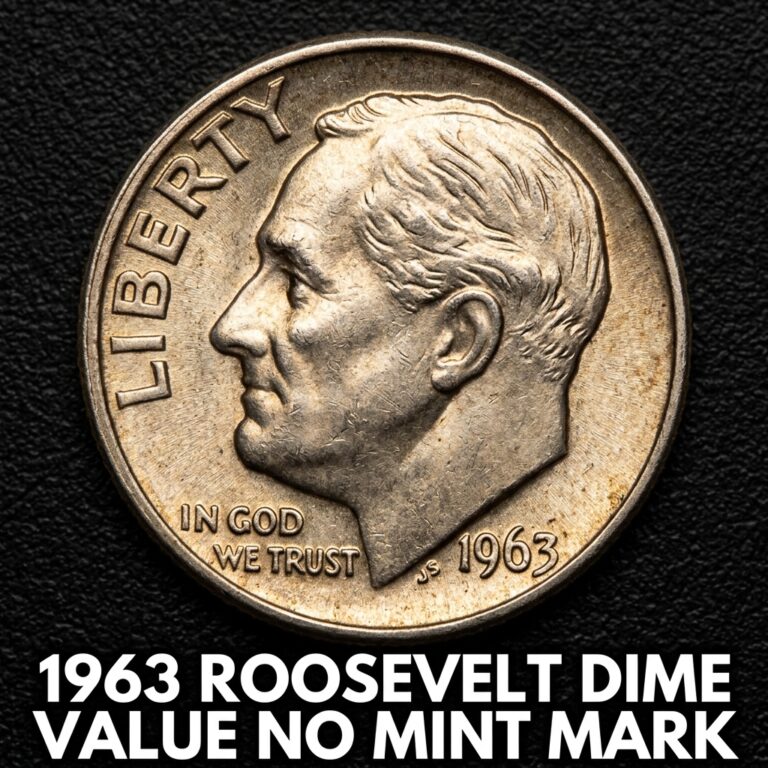
Identifying a 1953 Roosevelt Dime without a mint mark is the first step for any amateur collector. In the world of U.S. coinage, the absence of a tiny letter next to the torch on the reverse side indicates that the coin was struck at the Philadelphia Mint. During 1953, the Philadelphia Mint produced over 53 million of these dimes, making them relatively common but still highly sought after for their silver weight. If you are hobbyist trying to organize your findings, using a top coin identifier and value app can help you distinguish between the Philadelphia, Denver, and San Francisco strikes instantly.
The Roosevelt Dime was first introduced in 1946 to honor President Franklin D. Roosevelt following his death. These coins are part of the “silver era” of American currency. Unlike the copper-nickel “sandwich” dimes we use today (which started in 1965), the 1953 version is composed of 90% silver and 10% copper. This means that even if the coin is heavily scratched or worn down, it will always be worth its “melt value,” which fluctuates with the current market price of silver.
When examining your coin, look closely at the obverse (front) featuring FDR’s profile. You will see the date “1953” to the right of his neck. Flip the coin over to the reverse. If there is no “D” or “S” near the base of the torch, you have a Philadelphia strike. For many beginners, using CoinKnow is the easiest way to log these finds and keep track of their growing collection’s total worth.
Your Old Coin Could Be Valuable!
Identify It & Know Its Real Value — Free Download
Understanding the Silver Content and Melt Value
Before worrying about collector “grades,” it is important to understand the baseline value of a 1953 silver dime. Because it contains 0.07234 troy ounces of pure silver, the price of the coin is tied to the global bullion market. Even in the worst possible condition—bent, blackened, or smoothed over—it is worth significantly more than ten cents.
As of current market trends, the silver melt value usually hovers around $1.70 to $2.20 per dime. However, coin shops and collectors rarely sell them for just the metal price. Most “junk silver” 1953 dimes sell for a premium. If you are looking for specific 1953 Roosevelt Dime MS grade pricing, you will notice that the jump from silver value to collector value happens once the coin reaches “Uncirculated” status.
Your Old Coin Could Be Valuable!
Identify It & Know Its Real Value — Free Download
To get the most out of your silver coins, avoid cleaning them. Amateur collectors often think that scrubbing a dime with baking soda or polish will make it “look better” and increase the price. In reality, cleaning a coin leaves microscopic scratches that professional graders can spot instantly, often reducing the collector value by 50% or more. Let the natural patina remain; it tells the story of the coin’s 70-year history.
| Silver Purity | Silver Weight (Troy Oz) | Base Melt Value (Approx) |
|---|---|---|
| 90% Silver | 0.07234 oz | $1.85 (Varies) |
Determining the Grade of Your 1953 Roosevelt Dime
Condition is everything in coin collecting. To determine if your 1953 Roosevelt Dime is worth the big bucks, you need to look at the level of wear on the high points of the design. Professional graders use a 1-70 scale, but for everyday Americans, we can simplify this into four main categories: Circulated, About Uncirculated (AU), Mint State (MS), and Full Bands (FB).
Circulated coins will show wear on Roosevelt’s cheek, his hair above the ear, and the flames on the torch. These coins are generally traded for their silver content. On the other hand, an “About Uncirculated” coin might have slight friction on the highest points but still retains some of the original “mint luster”—that frosty glow that appears when a coin is freshly struck.
Your Old Coin Could Be Valuable!
Identify It & Know Its Real Value — Free Download
For those looking for a high-end valuation, the comprehensive 1953 dime value breakdown shows that “Mint State” coins (MS60 and above) are where the real profit lies. To accurately grade these at home, you can use the high-resolution camera on your phone along with CoinKnow to compare your coin against professional images. This helps you decide if it is worth the fee to send your coin to a professional grading service like PCGS or NGC.
The Rare ‘Full Bands’ Characteristic
If you want to find a 1953 Roosevelt Dime worth hundreds or even thousands of dollars, you need to look at the reverse of the coin through a magnifying glass. Specifically, look at the torch in the center. The torch has two sets of horizontal bands—one at the top and one at the bottom. In most strikes, these bands are slightly blurred or flat.
A “Full Bands” (FB) designated dime means that the horizontal lines are fully separated and distinct with no interruptions. Because the 1953 Philadelphia dies were often worn out, finding a sharp strike with Full Bands is incredibly rare. Collectors will pay a massive premium for this detail because it represents the pinnacle of the minting process for that year.
Your Old Coin Could Be Valuable!
Identify It & Know Its Real Value — Free Download
While a standard MS65 1953 dime might sell for $30, a 1953 MS65 with the “Full Bands” designation can easily fetch $150 to $200. If you find one that is both high grade and has Full Bands, you have hit the jackpot for this specific year. It is always a good idea to use CoinKnow to check current auction records for FB dimes to see how much they are currently fetching on the open market.
| Grade | Standard Price | Full Bands (FB) Price |
|---|---|---|
| MS 63 | $12 | $35 |
| MS 65 | $25 | $110 |
| MS 67 | $175 | $850 |
Error Coins to Look For in 1953 Dimes
While the 1953 Roosevelt Dime without a mint mark is generally valued based on its condition, error coins provide another avenue for high value. Errors occur when something goes wrong during the minting process, creating a unique piece of currency. In 1953, several common error types were documented that could turn a $2 coin into a $50 coin or more.
One common error is the “Die Crack.” As the metal dies used to stamp the coins aged, they would develop cracks. These cracks would then be transferred onto the coins as raised lines of metal. Another popular error is the “Clipped Planchet,” where the round disc (the planchet) used to make the dime was cut improperly, resulting in a coin with a crescent or curved piece missing from the edge.
Perhaps the most exciting for beginners is the “Off-Center” strike. This happens when the planchet isn’t perfectly centered when the die hits it. If you find a 1953 dime where the design is shifted by 10% or more, you have a valuable error. Even though the “no mint mark” version is standard for Philadelphia, always double-check the edges and the clarity of the letters for any “doubling” (Double Die), which happens when the die stamps the coin twice at slightly different angles.
Your Old Coin Could Be Valuable!
Identify It & Know Its Real Value — Free Download
Where to Sell Your 1953 Roosevelt Dime
If you’ve determined that your 1953 Roosevelt Dime is in great condition or features an error, your next question is likely: “Where do I sell it?” For most silver dimes in average condition, a local coin shop is the fastest option. They will usually pay you slightly under the “melt” value or a fair wholesale price if the coin has collector appeal. This allows them to make a small profit when they resell it.
For higher-grade coins, specifically those in the MS65+ range or those with Full Bands, online auctions like eBay or Heritage Auctions are your best bet. Selling online connects you with a global audience of specialists who are willing to pay top dollar for specific dates and conditions. Make sure to take high-quality, clear photos of both sides and the edge of the coin to build trust with potential buyers.
Before selling, it’s a smart move to run your coin’s details through CoinKnow one last time. Market prices for silver and rare coins can fluctuate weekly. Knowing the “sold” prices of similar coins from the last 30 days will help you negotiate a fair price, whether you are dealing with a professional dealer or a private collector on an auction site.
FAQ
Q: Why does my 1953 dime have no mint mark?
A: A 1953 dime with no mint mark simply means it was minted at the Philadelphia Mint. During that era, Philadelphia did not use a “P” mint mark on dimes. It is not an error; it is just a sign of where the coin was born!
Your Old Coin Could Be Valuable!
Identify It & Know Its Real Value — Free Download
Q: Is a 1953 dime real silver?
A: Yes! All Roosevelt Dimes minted from 1946 through 1964 are composed of 90% silver and 10% copper. You can often tell by looking at the edge of the coin; if you don’t see a brown copper stripe, it’s likely silver.
Q: How much is a 1953 Roosevelt Dime worth today?
A: Most 1953 dimes found in pocket change are worth between $2 and $3 based on their silver content. However, uncirculated specimens can sell for $10 to $50, and extremely rare “Full Bands” versions can exceed $600.
Q: Should I get my 1953 dime professionally graded?
A: Only if the coin appears to be in “as new” condition with no scratches and full details on the torch bands. Since grading fees usually cost $20-$50 per coin, it only makes financial sense if the coin’s value is expected to exceed $100.