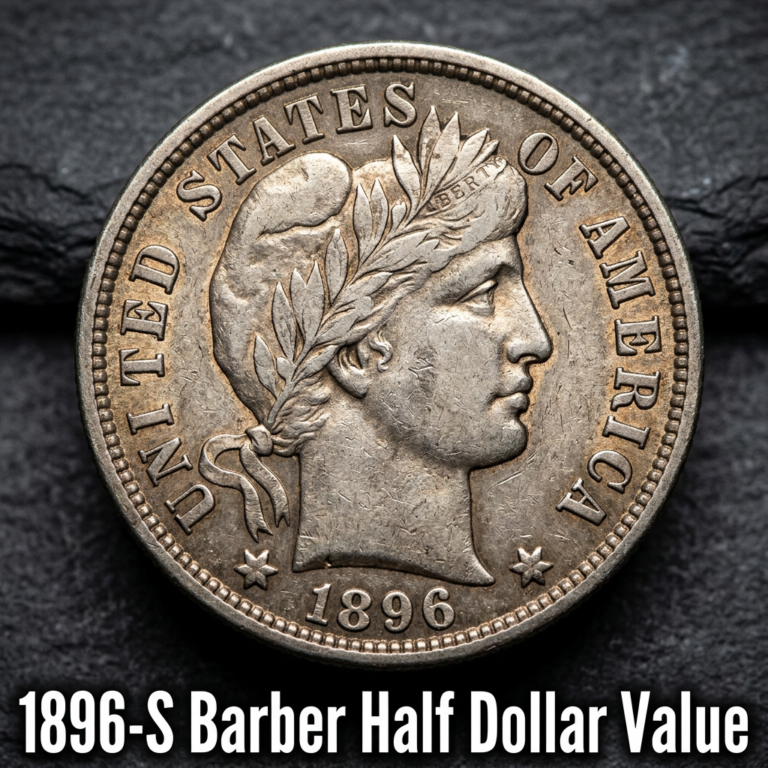
1951-S Franklin Half Dollar Value: What Is Your Coin Worth?

Your Old Coin Could Be Valuable!
Identify It & Know Its Real Value — Free Download


The 1951-S Franklin Half Dollar is worth anywhere from $12 in worn condition to over $15,000 for rare, high-grade specimens. If you have found one of these silver treasures in a drawer or inherited a collection, understanding its specific condition and mint mark is the key to unlocking its true market value.
| Condition / Grade | Estimated Value |
|---|---|
| Good (G-4) to Very Fine (VF-20) | $12.00 – $15.00 |
| Extremely Fine (XF-45) | $18.00 – $22.00 |
| About Uncirculated (AU-50+) | $25.00 – $35.00 |
| Mint State (MS-63) | $45.00 – $60.00 |
| Gem Mint State (MS-65+) | $150.00 – $15,000+ |
Identifying the 1951-S Franklin Half Dollar
The 1951-S Franklin Half Dollar belongs to a classic series of American coinage that ran from 1948 to 1963. It features the portrait of Founding Father Benjamin Franklin on the obverse and the iconic Liberty Bell on the reverse. If you are trying to determine if your coin is a “San Francisco” minting, look closely at the reverse side just above the yoke of the Liberty Bell.
You should see a small “S” mint mark nestled right below the “E” in “STATES.” If you see a “D,” it was made in Denver; if there is no letter at all, it was struck in Philadelphia. For many beginner collectors, using a top coin identifier and value app is the fastest way to verify these tiny details and ensure you aren’t overlooking a valuable mint variety.
Because these coins are made of 90% silver, they have a “melt value” that fluctuates with the global silver market. However, for the 1951-S specifically, the numismatic (collector) value almost always exceeds the raw silver price. Collectors prize the 1951-S because the San Francisco mint generally produced fewer half dollars compared to Philadelphia or Denver during this era, making high-quality survivors more sought after. When you use the CoinKnow app, you can track these price shifts in real-time.
Your Old Coin Could Be Valuable!
Identify It & Know Its Real Value — Free Download
Silver Content and Intrinsic Value
Even if your 1951-S Franklin Half Dollar is heavily worn, scratched, or damaged, it still holds significant value because of its metal composition. Every Franklin half dollar minted between 1948 and 1963 consists of 90% silver and 10% copper. This means the coin contains approximately 0.36169 ounces of pure silver.
When silver prices are high, even a beat-up “junk” silver coin can be worth $10 or more. However, you should never clean your coins, even if they look dirty. Cleaning a coin removes the original surface luster and can slash its collector value by 50% or more. Serious buyers prefer the natural “patina” or toning that develops over decades.
To get an accurate estimate of what buyers are currently paying, checking a reliable 1951 half dollar value guide will help you distinguish between a common silver coin and a rare collector’s item. Keep in mind that as the price of silver rises, the floor price for these coins rises with it, making them a popular “inflation hedge” for everyday Americans.
Your Old Coin Could Be Valuable!
Identify It & Know Its Real Value — Free Download
| Silver Price per Ounce | Approximate Melt Value |
|---|---|
| $25.00 | $9.04 |
| $30.00 | $10.85 |
| $35.00 | $12.66 |
Grading the 1951-S Half Dollar
The “Grade” of your coin is the most important factor in determining its final price. Coin grading is a scale from 1 to 70 used by professionals. For the 1951-S, there is a massive price jump between coins that have been in circulation (passed around in pockets) and those that are “Mint State” (never used as money).
In “Good” or “Fine” condition, you will see heavy wear on Franklin’s cheek and the details of the Liberty Bell’s lines will be blurry. In “About Uncirculated” (AU) condition, the coin looks almost new but has slight dullness on the high points of the design. CoinKnow allows you to compare your coin’s image against high-resolution photos of graded coins to see where yours fits.
Your Old Coin Could Be Valuable!
Identify It & Know Its Real Value — Free Download
If you are lucky enough to find a 1951-S that looks like it just came from the mint, you could be looking at a significant windfall. Professional grading by services like PCGS or NGC is often required to prove a coin is an “MS-66” or higher. You can find detailed 1951-S Franklin Half Dollar MS prices to see just how much a high grade adds to the bottom line.
The “Full Bell Lines” (FBL) Rarity
When researching the 1951-S Franklin Half Dollar value, you will often see the letters “FBL” mentioned. This stands for “Full Bell Lines.” This is a special designation given to Franklin halves that have complete, uninterrupted horizontal lines near the bottom of the Liberty Bell on the reverse.
Because the San Francisco mint often struggled with “weak strikes” in 1951, finding a coin where these lines are sharp and fully defined is incredibly rare. An MS-65 coin without FBL might sell for $150, but the same coin with the “Full Bell Lines” designation could fetch over $1,500 at auction.
Your Old Coin Could Be Valuable!
Identify It & Know Its Real Value — Free Download
This is the kind of detail that turns a regular silver coin into a “treasure.” Most people who aren’t coin collectors miss this detail entirely. Before selling your coin to a local pawn shop, use an app like CoinKnow to zoom in on the reverse and check for those elusive horizontal lines.
| Grade Group | Non-FBL Price | Full Bell Lines (FBL) Price |
|---|---|---|
| MS-63 | $45 | $85 |
| MS-64 | $65 | $140 |
| MS-65 | $150 | $600 |
| MS-66 | $350 | $3,250+ |
Historical Context: Why the 1951-S is Special
The year 1951 was a pivotal time in American history, and the San Francisco Mint was producing relatively low numbers of half dollars. Only 9,044,000 “S” mint halves were struck that year. While nine million sounds like a lot, it is quite small compared to the tens of millions struck in Philadelphia in later years.
Furthermore, Franklin Half Dollars were the workhorse of the American economy. They were used for groceries, gas, and everyday chores. Most 1951-S coins went straight into circulation and stayed there for decades. This attrition rate is why finding one in perfect, uncirculated condition is so difficult today.
The San Francisco mint eventually stopped producing circulating coins in 1955 (reopening later for proofs), which adds a layer of nostalgia for collectors who focus on “S” mint coins. Owning a 1951-S isn’t just about the silver; it’s about holding a piece of Post-War American prosperity.
Your Old Coin Could Be Valuable!
Identify It & Know Its Real Value — Free Download
Where to Sell Your 1951-S Franklin Half Dollar
If you’ve determined that your coin is valuable, your next step is finding a buyer. You have several options: local coin shops, online auctions (like eBay), or professional auction houses for extremely rare specimens.
Local shops are great for quick cash, but they need to make a profit, so they will usually offer you 60% to 80% of the coin’s retail value. Online auctions can get you a higher price, but you have to deal with shipping and fees.
For high-grade coins worth thousands of dollars, it is essential to get them “certified” by PCGS or NGC before selling. This guarantees the grade and authenticity, making buyers much more comfortable bidding high. Always use a price guide to ensure you aren’t being underpaid for your rare silver assets.
FAQ
Q: Where is the mint mark on a 1951 Franklin Half Dollar?
A: The mint mark is on the reverse (back) of the coin. Look for a tiny “S” or “D” located directly above the center of the Liberty Bell, below the word “STATES.” If there is no letter, it was minted in Philadelphia.
Q: Is a 1951-S Franklin Half Dollar made of real silver?
A: Yes, all 1951 Franklin Half Dollars are composed of 90% silver and 10% copper. This makes them highly desirable even in poor condition due to their precious metal content.
Your Old Coin Could Be Valuable!
Identify It & Know Its Real Value — Free Download
Q: What is the “Full Bell Lines” (FBL) designation?
A: FBL is a condition rank for Franklin halves where the two sets of horizontal lines near the bottom of the Liberty Bell are fully visible and not interrupted by scratches or “weak strikes.” FBL coins are worth significantly more than non-FBL coins.
Q: How can I tell if my 1951-S half dollar is uncirculated?
A: An uncirculated coin will have “mint luster,” which is a frosty, cartwheel-like shimmer when you rotate the coin under a light. If the highest points—like Franklin’s cheek or the bell’s texture—look smooth or dull, the coin has likely been in circulation.
Q: Is it worth getting my 1951-S graded?
A: It depends on the condition. If the coin looks brand new and potentially has Full Bell Lines, it may be worth the $30-$50 fee to have it professionally graded. If it is worn or scratched, the grading fee might cost more than the coin is worth.