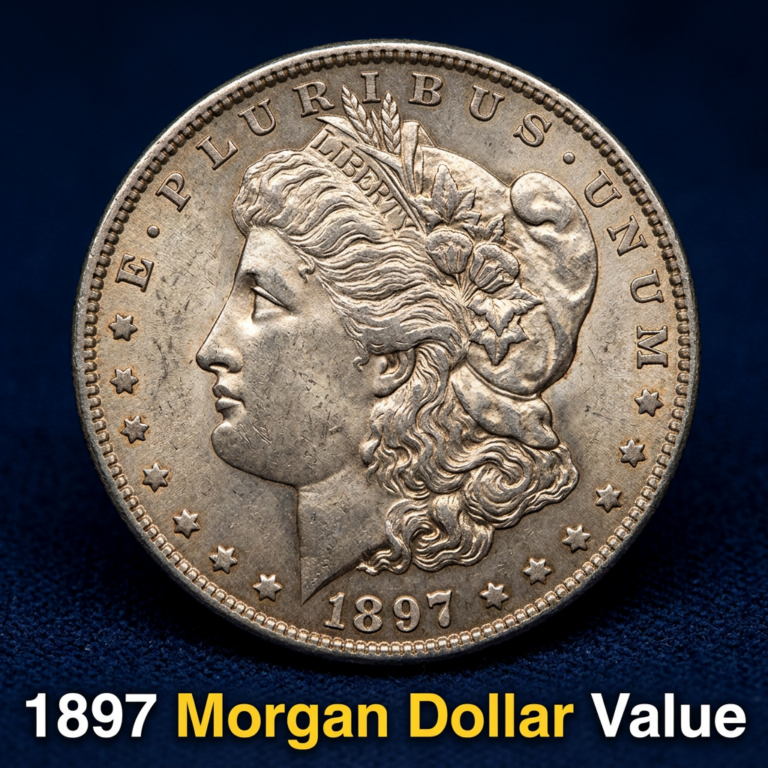
2016-P Kennedy Half Dollar Value: What Is It Worth Today?

Your Old Coin Could Be Valuable!
Identify It & Know Its Real Value — Free Download


The 2016-P Kennedy Half Dollar is worth anywhere from its $0.50 face value in circulated condition to over $150 in high-grade mint state. While these modern coins aren’t found in your daily pocket change as often as quarters, they remain a popular staple for collectors and curious finders alike.
| Condition / Grade | Estimated Market Value |
|---|---|
| Circulated (Average Condition) | $0.50 – $1.00 |
| About Uncirculated (AU58) | $1.50 – $3.00 |
| Mint State (MS63) | $5.00 – $12.00 |
| High Grade (MS67+) | $45.00 – $165.00+ |
Understanding the 2016-P Kennedy Half Dollar Rarity
If you just found a 2016 Kennedy Half Dollar with a small “P” mint mark, you might be wondering if you’ve struck gold. To accurately assess its worth, many collectors use a top coin identifier and value app to distinguish between common business strikes and rare specimens. In 2016, the Philadelphia Mint produced approximately 2.1 million of these coins.
While two million sounds like a high number, it is actually quite low compared to the hundreds of millions of pennies produced annually. Since 2002, the U.S. Mint has primarily produced half dollars for collectors rather than for general circulation. This means most 2016-P coins were sold in rolls or bags at a premium, rather than being released into cash registers.
If you find one in your change, it likely “escaped” from a collector’s set. When evaluating these coins, the CoinKnow app can help you determine if the luster and strike quality are high enough to warrant a professional grading service. A coin that has been rattled around in a pocket loses its “mint frost” quickly, resulting in a lower market value.
The Visual Characteristics of the 2016 Philadelphia Half Dollar
The 2016-P Kennedy Half Dollar features the classic profile of President John F. Kennedy, designed by Gilroy Roberts. On the reverse, you’ll find the Presidential Seal, a powerful eagle clutching an olive branch and arrows. The “P” mint mark is located just above the date on the obverse side, signifying its origin in Philadelphia.
Your Old Coin Could Be Valuable!
Identify It & Know Its Real Value — Free Download
Because these coins were not intended for mass circulation, many 2016-P Kennedy Half Dollars remain in relatively good condition. However, “bag marks”—tiny nicks caused by coins hitting each other during transport—are common. Collectors look for “clean” surfaces with minimal distractions on Kennedy’s cheek or the eagle’s shield.
The current 2016-P Kennedy Half Dollar price guide for mint state grades shows that even a small difference in surface quality can double the price. For example, a coin graded MS65 looks nearly perfect to the naked eye, but a professional magnifier might reveal the microscopic scratches that keep it from a higher value.
Your Old Coin Could Be Valuable!
Identify It & Know Its Real Value — Free Download
| Feature | Description |
|---|---|
| Mint Mark | “P” for Philadelphia (Above the date) |
| Composition | 91.67% Copper, 8.33% Nickel |
| Weight | 11.34 grams |
| Diameter | 30.6 mm |
Grading and Condition: How Much Is Your 2016-P Worth?
In the world of numismatics, condition is everything. A “circulated” 2016-P half dollar—one that shows signs of wear, lost detail in Kennedy’s hair, or scratches—is generally worth only fifty cents. You can spend it at the grocery store without much regret. However, “uncirculated” specimens are where the real value lies for modern coins.
Grading scales run from 1 to 70. A grade of MS60 (Mint State) means the coin has no wear but might have many marks. A grade of MS67 or MS68 is considered “Superb Gem” and is very rare for this year. According to the comprehensive 2016 Kennedy half dollar value charts, prices escalate quickly once you cross the MS66 threshold.
Using a tool like CoinKnow allows you to compare your coin against high-resolution images of certified grades. If your coin looks incredibly shiny with no visible scratches even under a magnifying glass, it might be worth sending to a grading company like PCGS or NGC. These experts will slab the coin in plastic, preserving its condition and value for the future.
Factors That Influence 2016-P Half Dollar Pricing
While the 2016-P Kennedy Half Dollar doesn’t contain silver (the last silver-clad circulation halves were made in 1970), it gains value through collector demand and low “population” counts. Population refers to how many coins have been graded at a specific level. If only 50 coins are graded as MS68, those 50 will be highly expensive because registry set collectors compete for them.
Your Old Coin Could Be Valuable!
Identify It & Know Its Real Value — Free Download
Another factor is the “eye appeal.” A coin might be technically high grade but have “toning”—a natural discoloration caused by oxidation. Some collectors pay a premium for rainbow-colored toning, while others prefer a brilliant, white luster. For modern coins like the 2016-P, most buyers prefer a “blast white” look that makes the coin look like it just came off the press.
Market trends also play a role. When interest in modern U.S. coinage spikes, prices for the “Not Intended For Circulation” (NIFC) years like 2016 tend to rise. Checking the CoinKnow app periodically can help you track these fluctuations so you know the best time to sell or trade your find.
| Grade (PCGS/NGC) | Recent Auction Average |
|---|---|
| MS64 | $8 – $15 |
| MS65 | $20 – $35 |
| MS66 | $40 – $65 |
| MS67 | $110 – $180 |
Potential Mint Errors for the 2016 Kennedy Series
Error coins are the “wild cards” of the hobby. Even in a modern year like 2016, mistakes happen at the Philadelphia Mint. While no major, famous errors have been widely reported for this specific date, collectors always keep an eye out for minor variations that can significantly boost the 2016-P Kennedy Half Dollar value.
Your Old Coin Could Be Valuable!
Identify It & Know Its Real Value — Free Download
Common errors to look for include “Doubled Dies,” where the image appears shifted or blurry, and “Off-Center Strikes,” where the design is not perfectly aligned with the circular planchet. There is also the possibility of “Die Cracks,” which appear as raised lines of metal on the coin’s surface where the stamping tool began to break.
If you believe you have found an error, do not clean the coin! Cleaning a coin can destroy up to 90% of its numismatic value. Instead, use a soft cloth to handle it by the edges and consult a professional. Most errors found in modern 50-cent pieces are subtle, requiring a 10x jeweler’s loupe to identify properly.
Is It Worth Keeping Your 2016-P Half Dollar?
Deciding whether to keep or spend a 2016-P Kennedy Half Dollar depends on your goals. If you are looking for a retirement fund, a single circulated half dollar won’t get you there. However, as an NIFC (Not Intended For Circulation) coin, it is definitely “rarer” than your average quarter or dime.
Many people save these coins simply because they are beautiful and less common. If you have a version that looks like it just came from the mint—shimmering surfaces, sharp details on the eagle’s feathers, and no scratches—it is worth putting in a protective coin flip. Over several decades, even modern NIFC coins can grow in value as older supplies are lost or damaged.
For those who enjoy the hunt, checking rolls of half dollars from the bank (a hobby known as “coin roll hunting”) can be a fun way to find these 2016-P gems. While most hunters are looking for silver, finding a high-grade 2016-P is a nice consolation prize that still holds a premium over its face value.
Your Old Coin Could Be Valuable!
Identify It & Know Its Real Value — Free Download
| Action | Recommendation |
|---|---|
| If Circulated/Worn | Spend it or keep as a curiosity. |
| If Shiny/Uncirculated | Place in a holder; evaluate for grading. |
| If Error Suspected | Consult a professional/use identification app. |
How to Safely Store and Protect Your Coins
Once you’ve identified a valuable 2016-P Kennedy Half Dollar, protection is key. The oils from human skin can eventually cause “fingerprint toning,” which collectors usually dislike. Always hold coins by their edges. For long-term storage, use PVC-free plastic holders or “2×2” cardboard flips.
Avoid storing your coins in high-humidity areas like basements or bathrooms, as moisture can cause the copper-nickel composition to dull or develop spots. A cool, dry closet is usually the best place for a small collection. If you find yourself gathering many of these modern halves, a specialized coin album can be a great way to display them while keeping them safe from scratches.
By taking care of your 2016-P now, you ensure that if it ever reaches a high-demand status in the future, your specimen will be leading the pack in quality. Remember, the difference between a $1 coin and a $100 coin often comes down to how well it was handled by the person who found it.
FAQ
Q: Does the 2016-P Kennedy Half Dollar contain any silver?
A: No. The 2016-P is a copper-nickel clad coin. Silver was removed from circulation half dollars after 1970, though special silver proof sets are minted for collectors separately.
Your Old Coin Could Be Valuable!
Identify It & Know Its Real Value — Free Download
Q: Why is it so hard to find 2016 half dollars in my change?
A: The US Mint stopped producing half dollars for general circulation in 2002. From 2002 to 2020, they were only sold in rolls and bags directly to collectors, making them very rare to find in daily transactions.
Q: What does the “P” stand for on my 50-cent piece?
A: The “P” mint mark stands for the Philadelphia Mint. If your coin had a “D,” it would have been minted in Denver.
Q: Is a 2016-P Kennedy Half Dollar worth getting professionally graded?
A: Only if the coin is in “Mint State 67” or higher condition. For coins in lower grades, the cost of the grading service (often $20-$50) will be more than the actual value of the coin.
Q: Can I use a 2016 half dollar at a vending machine?
A: While they are legal tender, many modern vending machines are not calibrated to accept half dollars. It is better to use them at a bank or with a human cashier.