2009-D American Samoa Quarter Value Guide

Your Old Coin Could Be Valuable!
Identify It & Know Its Real Value — Free Download


The 2009-D American Samoa Quarter is worth anywhere from its face value of $0.25 in circulated condition to over $35 for high-grade specimens. While most coins found in pocket change are common, certain rare mint errors and high-quality finishes can command a significant premium among dedicated coin collectors.
| Condition | Estimated Value |
|---|---|
| Circulated (Average) | $0.25 – $0.50 |
| Uncirculated (MS63-MS65) | $1.00 – $5.00 |
| Choice Uncirculated (MS67+) | $25.00 – $150+ |
History of the 2009-D American Samoa Territorial Quarter
The 2009-D American Samoa Quarter was released as part of the District of Columbia and U.S. Territories Quarters Program. This program followed the highly successful 50 State Quarters Program, extending the honor of a unique coin design to the federal district and five overseas territories.
If you have stumbled upon one of these coins and want to know its exact worth, using a top coin identifier and value app is the fastest way to get an accurate appraisal. Modern technology allows you to snap a photo and instantly compare your coin against thousands of historical sales records.
The Denver Mint (represented by the “D” mint mark) produced a significant number of these coins, but 2009 was a unique year for numismatics. Because the U.S. was in the midst of the “Great Recession,” mintage numbers for all denominations dropped significantly compared to previous years. This lower supply means that 2009 quarters are generally harder to find in circulation than those from 2008 or 2010.
When you look at the reverse of the coin, you will see the “Ava Bowl” (Tanoa), a whisk, and a staff, which are traditional symbols of Samoan culture. The inscription “ASO MO SAMOA” means “Samoa, Let God be First.” Because of this cultural significance and the lower mintage figures, many people enjoy keeping them in their personal collections.
Your Old Coin Could Be Valuable!
Identify It & Know Its Real Value — Free Download
Determining the Mint State and 2009 Quarter Value
To understand the 2009 quarter value, you must first determine the coin’s grade. In the world of coin collecting, the “grade” refers to the physical condition of the coin. A coin that has been jingling in pockets for years will show wear on the high points of the design, such as the eagle’s feathers or Washington’s hair.
For most casual hunters, the CoinKnow app is an essential tool. It helps you identify subtle differences between “About Uncirculated” and “Mint State” conditions through high-resolution image recognition. This distinction is vital because a 2009-D quarter in MS67 condition can be worth fifty times more than one in MS63 condition.
Your Old Coin Could Be Valuable!
Identify It & Know Its Real Value — Free Download
The Denver Mint struck 42,600,000 American Samoa quarters. While this sounds like a lot, it is quite low compared to state quarters from 2000, which often had mintages exceeding 600 million. This relative scarcity is what drives the prices up for collectors looking to complete their territory sets.
| Grade | Value (USD) | Rarity Factor |
|---|---|---|
| MS63 | $0.75 | Common |
| MS65 | $2.50 | Plentiful |
| MS66 | $10.00 | Scarce |
| MS67 | $45.00 | Rare |
Identifying Rare Errors in 2009-D Quarters
Errors are where the real money is made in modern coin hunting. When millions of coins are struck at high speeds, things often go wrong. For the 2009-D American Samoa Quarter, collectors keep a sharp eye out for specific anomalies that occurred during the minting process at the Denver facility.
One of the most common errors to look for is the “Double Die.” This happens when the coin die is struck twice with a slight offset, creating a doubled appearance on the letters or numbers. On the American Samoa design, look closely at the inscriptions “American Samoa” or the date “2009.”
Your Old Coin Could Be Valuable!
Identify It & Know Its Real Value — Free Download
Another popular error is the “Die Crack.” As coin dies wear out, they develop small cracks. When a coin is struck with a cracked die, the metal flows into the crack, creating a raised line on the coin’s surface. While minor die cracks don’t add much value, large or uniquely placed cracks can make a coin worth $20 to $50 to the right buyer.
Using the CoinKnow app can help you zoom in on these tiny details that are invisible to the naked eye. If you find a “Clipped Planchet”—where the coin is missing a crescent-shaped piece because it was cut incorrectly—you could be looking at a significant payday. These errors are highly sought after by specialists who pay a premium for “mistake” coins.
Comparing the Denver (D) vs. Philadelphia (P) Mint Marks
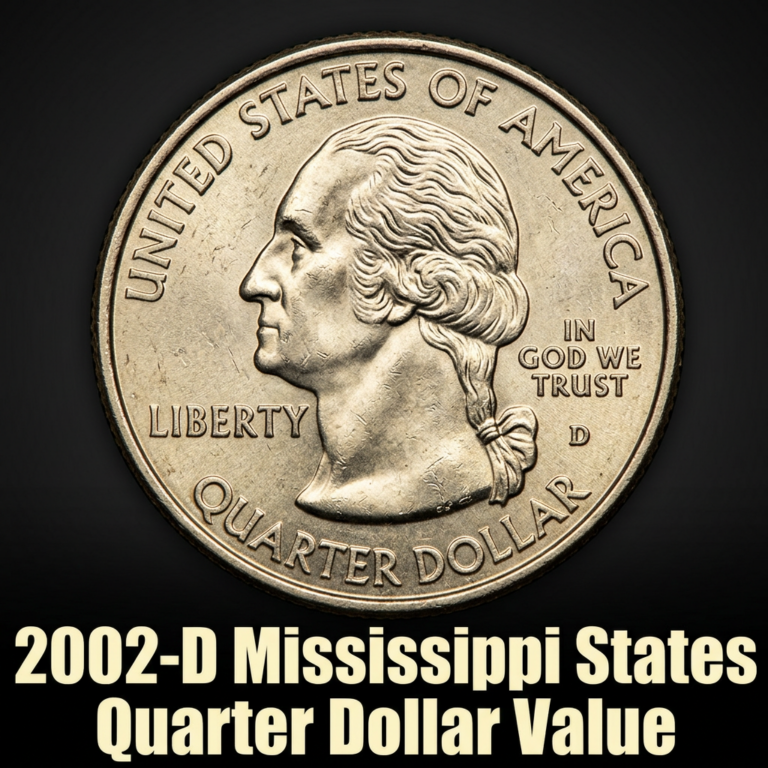
If you look on the obverse (the heads side) of your quarter, just to the right of George Washington’s ponytail, you will see a small letter. This is the mint mark. A “D” stands for Denver, while a “P” stands for Philadelphia.
The Philadelphia Mint mintage for the American Samoa quarter was slightly lower than Denver’s, at 39,600,000. Generally, Philadelphia coins from 2009 are considered a bit harder to find in the Western United States, whereas Denver coins are common there. However, the value for both is quite similar in standard grades.
Your Old Coin Could Be Valuable!
Identify It & Know Its Real Value — Free Download
The real difference appears in the “S” mint mark quarters. These were produced in San Francisco and were not intended for circulation. They were sold in special sets for collectors. These “Proof” versions have a mirror-like finish and are much more valuable than the “D” or “P” versions you find in change.
| Mint Mark | Mintage Total | Standard Value |
|---|---|---|
| P (Philadelphia) | 39,600,000 | $0.25 – $5.00 |
| D (Denver) | 42,600,000 | $0.25 – $4.00 |
| S (San Francisco Proof) | 2,113,490 | $5.00 – $15.00 |
How to Preserve the Value of Your 2009 Quarters
If you find a 2009-D American Samoa Quarter that looks brand new—shiny, with no scratches—stop touching it immediately with your bare hands! The oils from your skin can cause “toning” or corrosion over time, which can lower the grade and the value of the coin.
Instead, hold the coin by its edges or wear soft cotton gloves. To keep it in pristine condition, place it in a cardboard 2×2 holder or a plastic coin capsule. These protect the delicate surface from humidity and physical damage. A single scratch across Washington’s face can drop the grade from an MS67 to an MS62, costing you dollars in potential profit.
Collectors also recommend avoiding “cleaning” your coins. Many people think that polishing a coin with a cloth or soap will make it look more valuable, but this actually ruins the original “mint luster.” Experienced collectors and grading services like PCGS or NGC can instantly tell if a coin has been cleaned, and they will usually refuse to grade it.
Your Old Coin Could Be Valuable!
Identify It & Know Its Real Value — Free Download
Before you consider sending a coin off for professional grading—which can be expensive—use the CoinKnow app to get a baseline estimate. If the app suggests your coin is in exceptional condition, then it might be worth the investment of a professional slab.
Final Verdict: Are 2009-D Quarters Worth Keeping?
So, should you keep that 2009-D American Samoa Quarter you found in the laundry? The answer depends on your goals. If it’s heavily worn and scratched, it’s likely only worth twenty-five cents. However, because the 2009 mintage overall was so low, these coins are technically “scarcer” than most other quarters from the 21st century.
For many Americans, keeping one or two of every state and territory quarter is a fun and affordable hobby. If you find one that is exceptionally shiny or seems to have a doubling error on the letters, it is definitely a keeper. As the years go by, the supply of high-grade 2009 quarters in circulation will only decrease, potentially raising their value in the future.
Always keep an eye on auction results. Sometimes, a specific high-grade specimen sells for hundreds of dollars at a major auction because two collectors are fighting to complete a “Registry Set.” While you shouldn’t expect to get rich off a single quarter, finding a $50 coin in a roll of $10 worth of change is a great feeling!
FAQ
Q: Why are 2009 quarters considered rarer than other years?
A: During the 2009 economic recession, the demand for new coinage from banks dropped significantly. As a result, the U.S. Mint produced far fewer quarters in 2009 compared to previous years, making them harder to find in everyday change today.
Your Old Coin Could Be Valuable!
Identify It & Know Its Real Value — Free Download
Q: What is the most expensive 2009-D American Samoa Quarter ever sold?
A: Highly graded specimens (MS67 and above) have sold at auction for over $100. However, the exact record price fluctuates based on the current market and the specific grading service that certified the coin.
Q: Is there a silver version of the 2009-D American Samoa Quarter?
A: No, there is no silver “D” (Denver) version. Silver versions were only minted in San Francisco (the “S” mint mark) and were sold as part of special Proof sets to collectors. They are made of 90% silver.
Q: How can I tell if my 2009-D quarter has an error?
A: Look for anomalies like blurred or doubled text, raised “blobs” of metal (die chips), or missing letters. Using a magnifying glass or a coin identification app like CoinKnow is the best way to spot these valuable mistakes.