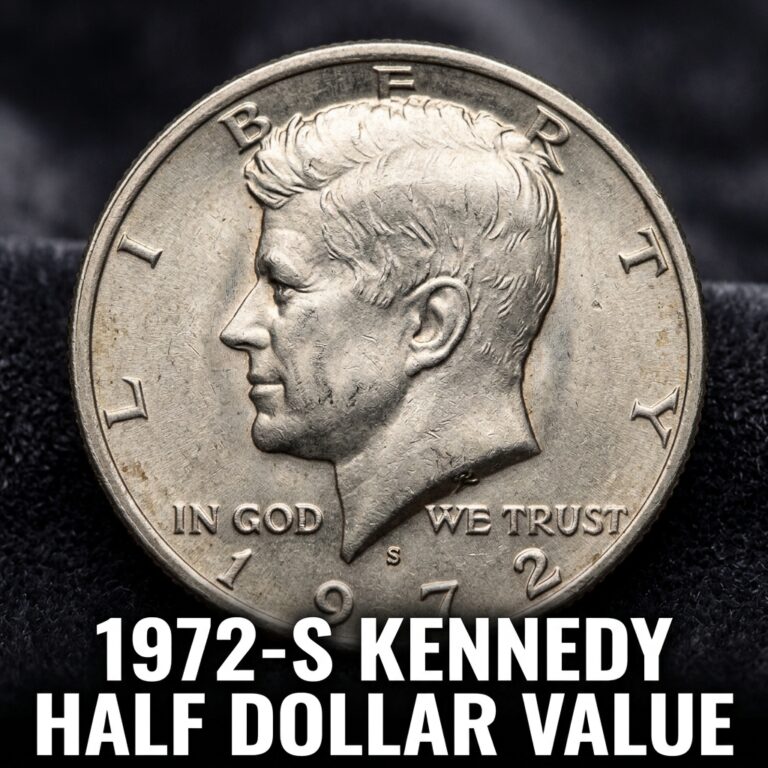
1986-D Kennedy Half Dollar Value: What Is Your Coin Worth?

Your Old Coin Could Be Valuable!
Identify It & Know Its Real Value — Free Download


The 1986-D Kennedy Half Dollar is worth anywhere from its face value of $0.50 in circulated condition to over $1,000 for high-grade specimens. While most of these coins found in pocket change aren’t hidden treasures, specific mint errors and high-quality “Mint State” examples can command significant premiums from collectors.
| Condition | Estimated Value |
|---|---|
| Circulated (Average) | $0.50 |
| About Uncirculated (AU) | $0.50 – $0.75 |
| Mint State (MS60-MS63) | $1.00 – $3.00 |
| Gem Uncirculated (MS65+) | $15.00 – $1,100+ |
Overview of the 1986-D Kennedy Half Dollar
If you have just discovered a shiny 1986-D Kennedy Half Dollar in a jar of coins, you might be wondering if you’ve struck gold. In reality, while these coins are iconic pieces of American history, most of them are quite common. The Denver Mint produced over 15 million of these halves in 1986, which is a relatively high mintage. This means that if the coin has been spent at a grocery store and shows scratches or wear, it is generally only worth its face value of fifty cents.
To get an accurate assessment of what you have, many modern collectors use the top coin identifier and value app to scan their finds instantly. By using an app like CoinKnow, you can quickly determine if the “D” mint mark on your coin stands out. The Denver mint mark is located on the obverse (front) of the coin, just above the date.
In 1986, the U.S. Mint was transitioning its production techniques, leading to varying quality across different batches. While the vast majority were released into circulation, some were saved in original Mint Sets. These uncirculated coins are where the real value lies, especially if they have a brilliant luster and no visible contact marks from other coins.
Your Old Coin Could Be Valuable!
Identify It & Know Its Real Value — Free Download
Grading and 1986-D Kennedy Half Dollar Value
The value of your 1986-D Kennedy Half Dollar depends almost entirely on its “grade” or condition. Professional grading scales run from 1 to 70. A coin that has been handled and spent is usually graded between Good (G) and About Uncirculated (AU). These coins typically sell for their face value because collectors prefer pieces that are “Mint State” (MS), meaning they have never been used as money.
If you find a exceptionally clean specimen, you may want to check the current 1986 half dollar market prices to see how the Denver and Philadelphia mints compare. Generally, a 1986-D in MS63 condition might be worth a few dollars, but once you reach the “Gem” level of MS65 or higher, the price starts to climb.
At the very top of the scale (MS67 or MS68), these coins are incredibly rare. At these levels, the surface must be nearly flawless, with a strong strike that brings out the fine details of John F. Kennedy’s hair and the feathers on the eagle’s breast. CoinKnow can be a helpful tool to compare your coin against high-resolution photos of graded specimens to see where yours might land.
Your Old Coin Could Be Valuable!
Identify It & Know Its Real Value — Free Download
| Grade | Denver (D) Value | Philadelphia (P) Value |
|---|---|---|
| MS60 | $0.75 | $0.75 |
| MS63 | $2.50 | $3.00 |
| MS65 | $15.00 | $20.00 |
| MS67 | $650.00+ | $900.00+ |
Key Varieties and Errors to Look For
While standard 1986-D halves are common, error coins are the “holy grail” for many hobbyists. During the striking process, things often go wrong at the Denver Mint. You should look for “Double Die” obverses or reverses. This happens when the die used to stamp the coin has a faint secondary image, causing the letters or numbers to look thickened or doubled.
Another common error to check for is the “Clipped Planchet.” This occurs when the circular metal disc (the planchet) is cut incorrectly from the metal strip, resulting in a coin with a crescent-shaped piece missing. These errors can turn a 50-cent coin into a $20 to $50 item instantly. Using an app like CoinKnow helps you identify these anomalies by providing a database of known errors.
Your Old Coin Could Be Valuable!
Identify It & Know Its Real Value — Free Download
You should also look for “Die Cracks.” As the steel dies age, they develop small cracks that transfer to the coin as raised lines of metal. While small cracks don’t add much value, large, dramatic cracks (especially those that cross the entire face of the coin) can be quite desirable. For a deeper dive into these specifics, you can review this 1986 Kennedy Half Dollar pricing guide which highlights historical auction records for error coins.
Silver Content vs. Clad Composition
A common misconception among everyday Americans is that all old Kennedy Half Dollars contain silver. Unfortunately, that is not the case for the 1986-D. From 1964, the coins were 90% silver. From 1965 to 1970, they were 40% silver. However, by 1986, the Kennedy Half Dollar was made entirely of a “clad” composition.
This clad metal consists of an outer layer of 75% copper and 25% nickel, bonded to a pure copper core. If you look at the edge of your 1986-D coin, you will see a distinct copper-colored stripe. This is a tell-tale sign that the coin contains no precious metals. Therefore, its value is derived strictly from its numismatic (collector) appeal rather than its “melt” value.
Your Old Coin Could Be Valuable!
Identify It & Know Its Real Value — Free Download
Even though it contains no silver, the 1986-D is still a favorite for those completing a “date and mint” set. Because many people stopped using half dollars in daily commerce during the 80s, these coins didn’t circulate as much as quarters or dimes. This means finding one in decent shape is relatively easy, but finding one in “Perfect” condition is the real challenge that keeps prices high at auction.
| Composition Detail | Data |
|---|---|
| Weight | 11.34 Grams |
| Diameter | 30.6 mm |
| Metal Composition | Copper-Nickel Clad |
| Silver Content | 0% |
Where to Sell Your 1986-D Half Dollar
If you believe you have a high-value 1986-D Kennedy Half Dollar, your next step is determining the best place to sell it. For average, circulated coins, your local bank is usually the best bet—simply because they are generally only worth face value. However, if your coin is in exceptional condition or features a clear error, you should avoid the bank or a Coinstar machine.
Online marketplaces like eBay are excellent for selling mid-range coins (those worth $5 to $50). Be sure to take clear, high-resolution photos of both the front and back. For coins that appear to be in “Elite” condition (MS67 or higher), it is worth getting them professionally certified by companies like PCGS or NGC. A certified coin always fetches a higher price because the buyer has a guarantee of the grade.
Finally, local coin shops are a good option if you want a quick cash offer. Just keep in mind that a dealer needs to make a profit and will likely offer you about 50-70% of the coin’s retail value. Using CoinKnow before you walk into a shop gives you the leverage of knowing exactly what your coin is worth, ensuring you don’t get underpaid for a rare find.
Your Old Coin Could Be Valuable!
Identify It & Know Its Real Value — Free Download
Tips for Collectors and Hobbyists
Collecting 1980s half dollars is an affordable and fun way to enter the world of numismatics. Because the 1986-D is not a “key date” (an extremely rare year), you can usually find them for very little money. If you are a beginner, try looking for “Uncirculated Mint Sets” from 1986. These sets contain a 1986-P and a 1986-D half dollar that have been protected from the moment they were struck.
Storing your coins properly is also vital. Avoid keeping them in PVC plastic flips, as the chemicals can damage the surface of the coin over time. Instead, use archival-quality cardboard 2x2s or hard plastic capsules. Proper storage ensures that a coin currently graded at MS65 stays an MS65 for decades to come.
As you build your collection, keep an eye out for interesting “toning.” This is when the metal reacts with the environment to create rainbow-like colors on the surface. While some collectors prefer brilliant white coins, others will pay a premium for a 1986-D with beautiful, natural toning.
FAQ
Q: Is the 1986-D Kennedy Half Dollar made of silver?
A: No, the 1986-D Kennedy Half Dollar is a “clad” coin made of copper and nickel. The U.S. Mint stopped using silver in circulating half dollars after 1970.
Q: How many 1986-D Half Dollars were minted?
A: The Denver Mint produced approximately 15,315,502 Kennedy Half Dollars in 1986. This is considered a moderate to high production number.
Your Old Coin Could Be Valuable!
Identify It & Know Its Real Value — Free Download
Q: What is the highest price ever paid for a 1986-D Kennedy Half Dollar?
A: While most are worth face value, a specimen graded MS67+ can sell for over $1,000 at major auctions. The value depends entirely on the lack of scratches and the quality of the strike.
Q: Where is the mint mark on a 1986-D Half Dollar?
A: The “D” mint mark is located on the obverse side of the coin (the side with JFK’s portrait), just above the “1986” date.
Q: Should I clean my 1986-D Half Dollar to make it worth more?
A: No! You should never clean your coins. Cleaning causes microscopic scratches and strips away the original “mint luster,” which significantly reduces the coin’s value to collectors.