1999-P Jefferson Nickel Value Guide What It’s Worth and Why

Your Old Coin Could Be Valuable!
Identify It & Know Its Real Value — Free Download


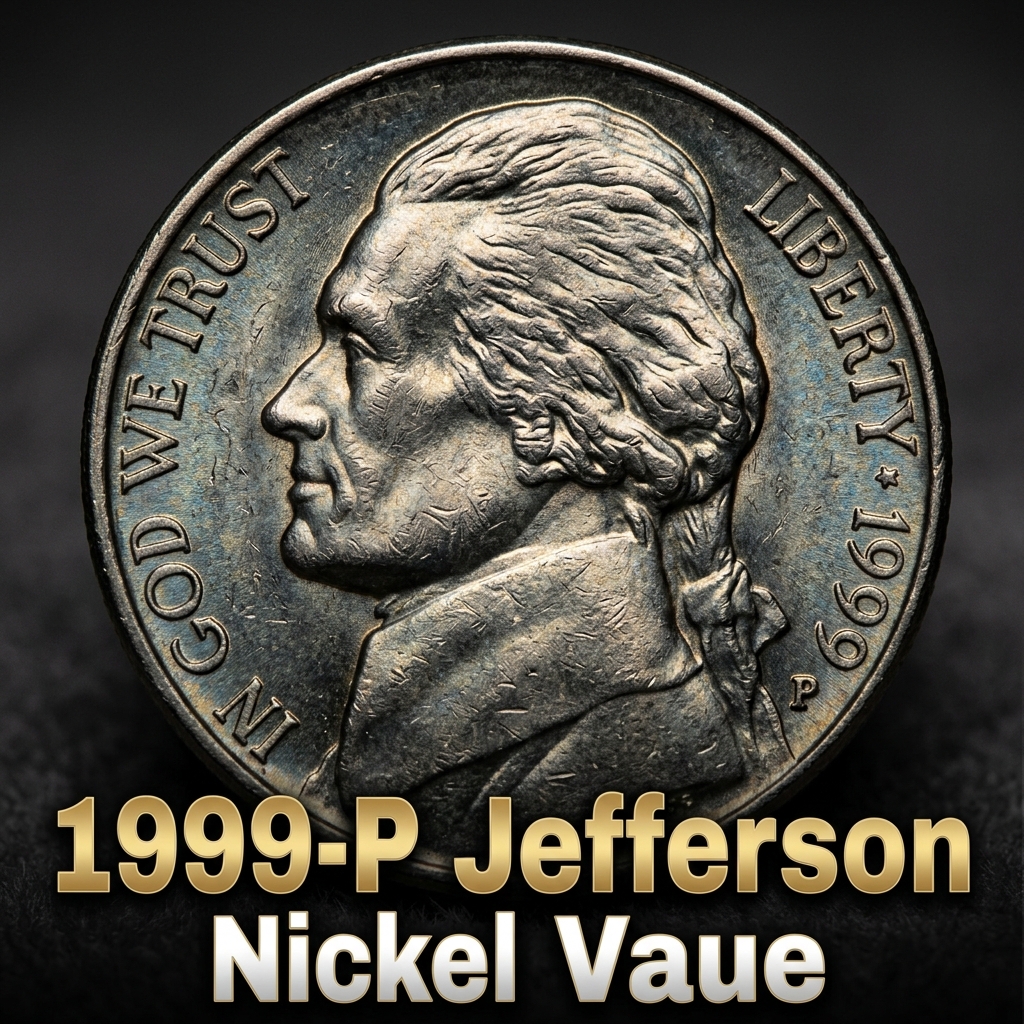
The 1999-P Jefferson Nickel is worth anywhere from face value (5 cents) in heavily worn condition to around $20 or more in pristine, uncirculated grades — and rare high-grade specimens have sold for over $100 at auction. If you found one of these coins in your change jar or inherited it from a collection, you’re in the right place to find out exactly what it’s worth.
How Much Is the 1999-P Jefferson Nickel Worth?
Before diving into the details, it helps to use a reliable coin identifier and value app to get a quick ballpark estimate right from your phone. These tools can save you a lot of guesswork, especially if you’re just starting out with coin collecting.
The 1999-P Jefferson Nickel was struck at the Philadelphia Mint and is considered a common, modern coin. In circulated grades — meaning the coin has been used in everyday commerce and shows wear on the high points — it’s generally only worth face value or a tiny premium.
Where things get interesting is in the uncirculated grades. A coin that never entered circulation and still retains its original mint luster can be worth a few dollars to tens of dollars depending on the specific grade assigned by a professional grading service like PCGS or NGC.
Your Old Coin Could Be Valuable!
Identify It & Know Its Real Value — Free Download
| Condition / Grade | Estimated Value |
|---|---|
| Circulated (Good to Fine) | Face value – $0.10 |
| Extremely Fine (EF-45) | $0.25 – $1 |
| Uncirculated (MS-63) | $1 – $5 |
| Choice Uncirculated (MS-65) | $5 – $15 |
| Gem Uncirculated (MS-67+) | $20 – $100+ |
For a closer look at current auction results and certified coin prices, you can check out this detailed 1999-P Jefferson Nickel price data by grade to see what collectors are actually paying right now.
Key Details About the 1999-P Jefferson Nickel
The 1999-P Jefferson Nickel was part of the standard Jefferson Nickel series that has been running since 1938. Thomas Jefferson’s portrait appears on the obverse, while Monticello — his famous Virginia home — graces the reverse. The coin is composed of 75% copper and 25% nickel, giving it that familiar silvery appearance.
Your Old Coin Could Be Valuable!
Identify It & Know Its Real Value — Free Download
The Philadelphia Mint produced approximately 1,167,950,000 (over one billion) of these coins in 1999. That massive mintage is the main reason why circulated examples are so common and carry no real premium.
However, coins that were saved immediately after minting and never spent can still command decent prices among collectors who are building complete, high-grade Jefferson Nickel sets. The rarity isn’t in the coin itself — it’s in finding one in absolute top condition.
Your Old Coin Could Be Valuable!
Identify It & Know Its Real Value — Free Download
What Makes Some 1999-P Nickels Worth More?
Condition is everything when it comes to the value of the 1999-P Jefferson Nickel. Coins are graded on the Sheldon scale from 1 to 70. A coin graded MS-67 or higher is considered exceptional and represents only a tiny fraction of coins that survive in that condition.
Strike quality also matters. Some 1999-P Jefferson Nickels display a particularly sharp, full strike — where every detail on Monticello’s steps and Jefferson’s hair is crisp and well-defined. Coins with “Full Steps” designation from PCGS or NGC typically sell for significantly higher prices than average examples.
Surface quality is another factor. Even the tiniest marks, called “bag marks” or contact marks, from when coins jangle together at the mint can lower a coin’s grade significantly. A truly flawless coin with no distracting marks in the fields is a prized find.
Your Old Coin Could Be Valuable!
Identify It & Know Its Real Value — Free Download
CoinKnow is a great tool to help you understand what these grading terms mean and whether your coin might qualify for a professional grading submission.
Should You Get Your 1999-P Nickel Professionally Graded?
For most circulated 1999-P Jefferson Nickels, professional grading isn’t worth the cost. Grading fees typically start around $20–$30 per coin, which would exceed the value of a common circulated example.
That said, if you have a coin that appears absolutely pristine — bright, lustrous, no visible marks or spots — it might be worth having it evaluated. An MS-67 or MS-67+ example could be worth $50 to over $100, making the grading investment worthwhile.
You can use CoinKnow or check out this complete 1999 nickel value breakdown to help you decide whether your specific coin warrants that extra step. A second opinion from a local coin dealer can also be helpful before spending money on grading.
Your Old Coin Could Be Valuable!
Identify It & Know Its Real Value — Free Download
Where to Buy or Sell the 1999-P Jefferson Nickel
If you’re looking to sell your 1999-P Jefferson Nickel, the best venues depend on its condition. Common circulated examples are best added to a coin roll or simply kept as pocket change — dealers typically won’t pay above face value for them.
For uncirculated examples, eBay and major coin auction platforms like Heritage Auctions or Great Collections are solid options. Certified high-grade coins (MS-67 and above) will attract the most collector interest and competition.
If you’re a buyer looking to add a 1999-P nickel to a Jefferson set, you’ll find plenty of affordable options online. CoinKnow can help you track pricing trends so you don’t overpay.
—
Your Old Coin Could Be Valuable!
Identify It & Know Its Real Value — Free Download
FAQ
Q: Is the 1999-P Jefferson Nickel rare?
A: No, it is not rare. Over one billion were minted in Philadelphia in 1999, making it one of the more common modern nickels. However, high-grade uncirculated examples in MS-67 or better can be scarce and valuable to collectors.
Q: Does the “P” mint mark affect the value of the 1999-P Jefferson Nickel?
A: The Philadelphia Mint began adding the “P” mint mark to nickels in 1980. Both the 1999-P and 1999-D (Denver) nickels are common, though high-grade certified examples of each can bring different premiums depending on population reports from grading services.
Q: Where is the mint mark on the 1999-P Jefferson Nickel?
A: The “P” mint mark is located on the obverse (heads side) of the coin, just to the right of Jefferson’s portrait. It’s small but visible with the naked eye or a basic magnifying glass.