1932 Wheat Penny Value No Mint Mark What It’s Worth Today

Your Old Coin Could Be Valuable!
Identify It & Know Its Real Value — Free Download


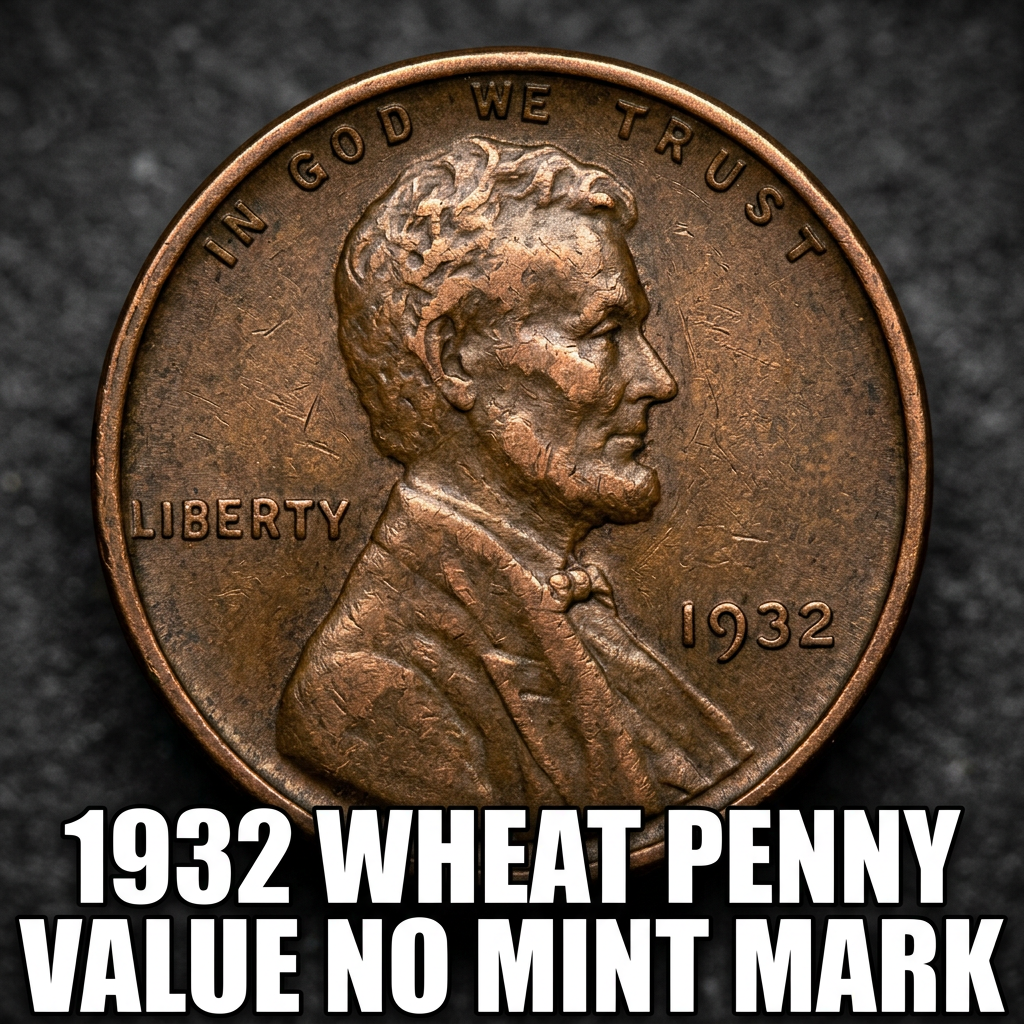
The 1932 Wheat Penny with no mint mark is worth anywhere from $0.15 in heavily worn condition to over $40 or more in pristine mint state grades. If you found one of these old Lincoln cents in a jar, drawer, or inherited coin collection, you’re in the right place to find out exactly what it’s worth.
The 1932 Philadelphia Mint penny is a classic piece of American history that most collectors and everyday folks overlook. It was struck during the depths of the Great Depression, a time when money was tight and even pennies mattered. Using a coin identifier and value app is one of the easiest ways to quickly assess whether your coin is in good shape or something more special. Read on and we’ll walk you through everything you need to know.
History and Background of the 1932 No Mint Mark Wheat Penny
The 1932 Lincoln Wheat Penny was produced at the Philadelphia Mint, which is why it carries no mint mark at all. Philadelphia coins never bore a mint mark during this era, so a blank space below the date is perfectly normal and does not mean anything is missing.
That year, the U.S. Mint struck just 9,062,000 pennies in Philadelphia — a surprisingly low mintage compared to other years. The Great Depression had dramatically reduced demand for coinage, and the mint scaled back production accordingly. This lower mintage is actually one reason why higher-grade examples can command a solid premium today.
Your Old Coin Could Be Valuable!
Identify It & Know Its Real Value — Free Download
The coin features Victor D. Brenner’s iconic portrait of Abraham Lincoln on the obverse, with two wheat stalks framing the words “ONE CENT” on the reverse. This design ran from 1909 to 1958, making the series beloved among collectors of all levels.
1932 Wheat Penny Value by Grade
The condition of your 1932 penny — known as its “grade” — is the single biggest factor in determining its value. A coin pulled from circulation for decades will look very different from one that was carefully saved from the day it was minted.
Here’s a straightforward breakdown of typical values for the 1932 no mint mark Wheat Penny:
Your Old Coin Could Be Valuable!
Identify It & Know Its Real Value — Free Download
| Grade | Description | Estimated Value |
|---|---|---|
| Good (G-4) | Heavy wear, outline visible | $0.15 – $0.50 |
| Fine (F-12) | Moderate wear, details clear | $0.75 – $1.50 |
| Extremely Fine (EF-40) | Light wear on high points | $3.00 – $6.00 |
| About Uncirculated (AU-55) | Slight wear, nearly full luster | $8.00 – $15.00 |
| Mint State Red (MS-63+) | Uncirculated, original red color | $25.00 – $50.00+ |
For a deeper look at 1932 Wheat Penny MS Red auction prices and certified coin data, it’s worth checking what professionally graded examples have actually sold for at major coin auctions.
What Makes a 1932 Penny More Valuable
Not every 1932 no mint mark penny is worth the same. A few key factors can push the value significantly higher.
Your Old Coin Could Be Valuable!
Identify It & Know Its Real Value — Free Download
Color is a big one. Uncirculated Lincoln cents are graded by color — Red (RD), Red-Brown (RB), or Brown (BN). A coin that has retained its original bright copper-red color is far more valuable than one that has turned brown over the decades.
Eye appeal also matters. Coins with sharp strikes, no spots, and no cleaning will always outperform dull or damaged examples. If your coin looks like someone polished it with a rag, that cleaning can actually reduce its value significantly — even collectors and dealers shy away from cleaned coins.
Strike quality and luster play a role too. Some 1932 pennies were struck with more precision than others. A coin with full, sharp details on Lincoln’s hair and the wheat stalks on the reverse will be more desirable to serious collectors.
Your Old Coin Could Be Valuable!
Identify It & Know Its Real Value — Free Download
How to Check the Value of Your 1932 Penny
If you’re not sure where to start, don’t worry. There are easy tools available to help everyday people figure out what their old coins are worth.
CoinKnow is a popular app that lets you scan and identify coins right from your phone. It gives you an instant value estimate along with grading tips, making it a great starting point even if you’ve never collected coins before.
You can also explore detailed price guides online. For a comprehensive overview of 1932 penny value across all grades and mint marks, there are dedicated resources that break everything down in plain language.
If you think your coin might be worth more than a few dollars, consider getting it professionally graded by PCGS or NGC. A third-party grade from one of these services adds credibility and can significantly increase what a buyer is willing to pay.
Your Old Coin Could Be Valuable!
Identify It & Know Its Real Value — Free Download
CoinKnow also has a community feature where experienced collectors can help beginners identify unusual coins or potential errors, which brings us to our next point.
1932 Wheat Penny Errors and Varieties
Error coins are always exciting, and the 1932 no mint mark penny is no exception. While it doesn’t have as many well-documented varieties as some other dates, there are still things to look for.
Doubled die errors, where part of the design appears doubled or slightly offset, can add real value. These are best viewed under a magnifier or jeweler’s loupe. Look closely at the lettering in “LIBERTY” and the date.
Off-center strikes occur when the coin blank wasn’t properly centered in the press. If your 1932 penny looks like the design is shifted significantly to one side, that could be a collector error worth anywhere from $10 to $50 or more depending on severity.
Die cracks and cuds — raised lines or blobs on the coin’s surface — are other things to watch for. They’re remnants of damage to the die used to strike the coin and are collectible in their own right.
Your Old Coin Could Be Valuable!
Identify It & Know Its Real Value — Free Download
Frequently Asked Questions
Q: Is a 1932 penny with no mint mark rare?
A: It’s not considered rare in lower grades since millions were made, but it is scarcer than many other Lincoln Wheat Penny dates due to its low Depression-era mintage. High-grade examples in red uncirculated condition are genuinely hard to find and can be worth $30 to $50 or more.
Q: How can I tell if my 1932 penny has been cleaned?
A: Cleaned coins often have an unnaturally bright or shiny surface with tiny hairline scratches under magnification. They may also lack the natural luster and toning that an original coin would show. A cleaned 1932 penny is generally worth less than a problem-free circulated example.
Q: Should I get my 1932 no mint mark penny graded?
A: If your coin appears to be in Extremely Fine or better condition, professional grading can be worthwhile. For well-worn examples worth under a dollar or two, the grading fee wouldn’t make financial sense. Apps like CoinKnow can help you get a quick estimate before you decide whether to invest in formal grading.