1938 Mercury Dime Value No Mint Mark What Is It Worth Today

Your Old Coin Could Be Valuable!
Identify It & Know Its Real Value — Free Download


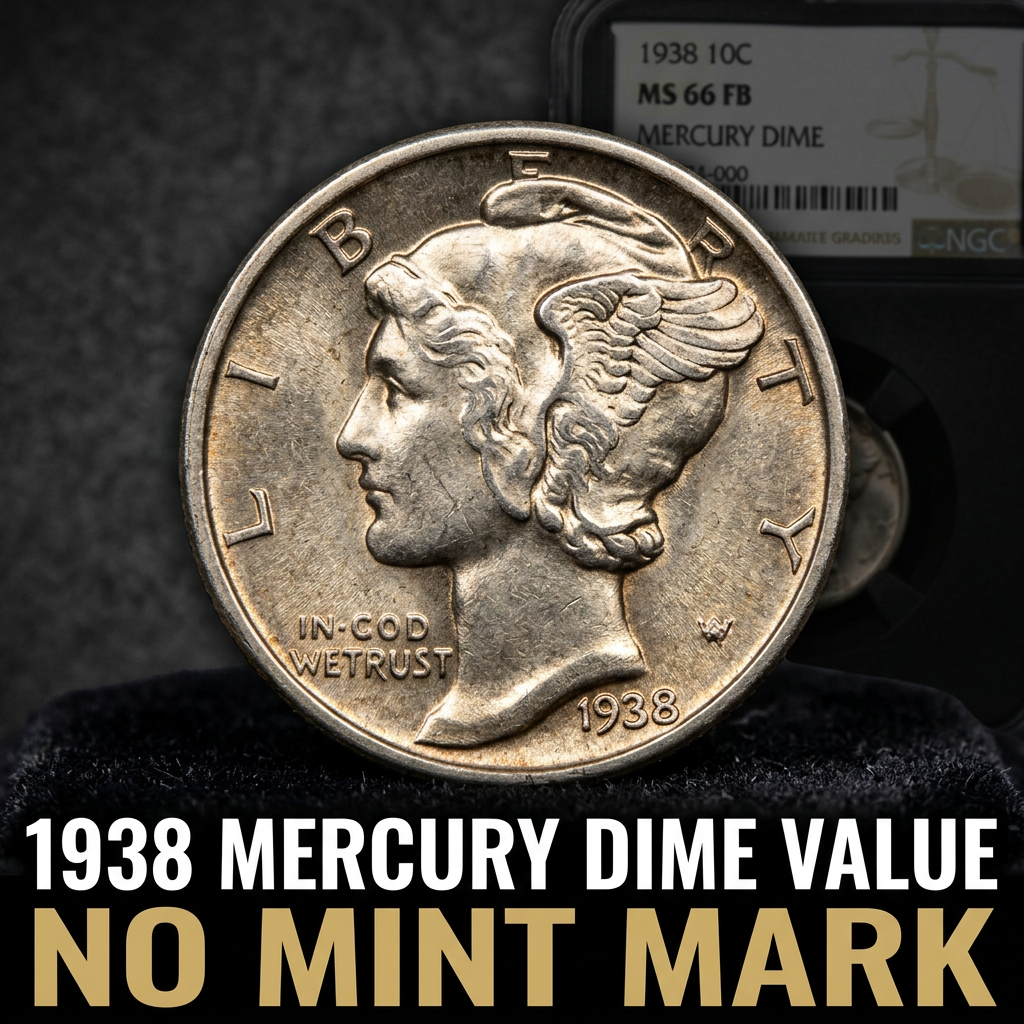
The 1938 Mercury Dime with no mint mark is worth anywhere from $2 to $3 in well-worn condition, up to $30 or more in uncirculated grades — and high-quality examples graded MS-67 or above can fetch several hundred dollars at auction. If you just found one of these old silver dimes, you’re in the right place to learn exactly what it’s worth.
If you want a quick and reliable estimate before diving into the details, try using a coin identifier and value app — it can help you identify the coin and get a real-time value estimate right from your phone. No experience needed.
What Is the 1938 Mercury Dime with No Mint Mark?
The 1938 Mercury Dime was minted at the Philadelphia Mint, which traditionally did not place a mint mark on its coins. That’s why your coin shows no “D” or “S” — it simply came from Philadelphia, the main facility of the U.S. Mint at the time.
The coin features Adolph Weinman’s iconic design of Liberty wearing a winged cap, often mistaken for the Roman god Mercury — hence the nickname. The reverse shows a fasces wrapped in an olive branch.
Your Old Coin Could Be Valuable!
Identify It & Know Its Real Value — Free Download
In 1938, the Philadelphia Mint struck 22,190,000 of these dimes, making it a relatively common date in the Mercury Dime series. Common doesn’t mean worthless, though. Since these coins are made of 90% silver, even a worn example carries melt value based on the silver content.
How Much Is the 1938 Mercury Dime Worth by Grade?
The value of your 1938 Mercury Dime depends heavily on its condition, or “grade.” Coins are graded on a scale from 1 (barely identifiable) to 70 (perfect). Here’s a general breakdown:
Your Old Coin Could Be Valuable!
Identify It & Know Its Real Value — Free Download
| Grade | Condition Description | Estimated Value |
|---|---|---|
| G-4 (Good) | Heavy wear, major details visible | $2 – $3 |
| VG-8 (Very Good) | Moderate wear, design clear | $3 – $4 |
| F-12 (Fine) | Light wear on high points | $4 – $5 |
| VF-20 (Very Fine) | Slight wear, most details sharp | $5 – $7 |
| EF-40 (Extremely Fine) | Minimal wear, full details | $8 – $12 |
| MS-63 (Uncirculated) | No wear, some bag marks | $20 – $35 |
| MS-65 (Gem Uncirculated) | Sharp strike, minimal contact marks | $40 – $75 |
| MS-67+ (Superb Gem) | Near perfect, exceptional luster | $300+ |
For a more detailed breakdown of 1938 Mercury Dime prices by grade and auction results, you can explore certified coin price databases that track real sales data.
Silver Melt Value and Why It Matters
Even if your 1938 no mint mark Mercury Dime is heavily worn, it still has inherent value because it contains real silver. Each Mercury Dime is composed of 90% silver and 10% copper, weighing 2.5 grams. That means each coin contains approximately 0.07234 troy ounces of pure silver.
Your Old Coin Could Be Valuable!
Identify It & Know Its Real Value — Free Download
With silver prices fluctuating around $28–$32 per troy ounce in recent years, your coin’s melt value alone is roughly $2.00 to $2.30. This is considered the floor — what the coin is worth at minimum based purely on its metal content.
Even common-date Mercury Dimes like the 1938 Philadelphia issue rarely sell below melt. That’s good news if you’ve come across a handful of them in an old jar or inherited collection.
Full Bands Detail and Its Impact on Value
One special designation that dramatically affects the 1938 Mercury Dime value is the “Full Bands” (FB) distinction. This refers to the horizontal bands on the fasces (the bundle of rods) on the reverse of the coin being fully struck and separated.
Your Old Coin Could Be Valuable!
Identify It & Know Its Real Value — Free Download
Coins that earn the FB designation from grading services like PCGS or NGC command a significant premium. For example, an MS-65 example without Full Bands might sell for $50, while an MS-65 FB could fetch $100 or more — sometimes double the standard price.
This makes the Full Bands detail one of the most important things to look for when evaluating a 1938 Mercury Dime. CoinKnow can help you understand grading distinctions like this with easy-to-follow visual guides right on your phone, making it ideal for beginner collectors.
You can also check out a comprehensive guide to 1938 Mercury Dime values including Full Bands pricing to see how this feature affects what buyers are willing to pay.
Tips for Selling or Holding Your 1938 Mercury Dime
If you’ve found a 1938 Mercury Dime with no mint mark and you’re thinking about selling it, here are a few practical tips.
Your Old Coin Could Be Valuable!
Identify It & Know Its Real Value — Free Download
First, don’t clean the coin. Cleaning removes original luster and can dramatically reduce its numismatic value. A cleaned coin in MS-63 condition might be worth less than an uncleaned VF example in some cases.
Second, consider getting it professionally graded if it looks uncirculated. A coin graded MS-65 or above by PCGS or NGC will always sell for more than a raw (ungraded) coin, because buyers trust the certification.
Third, compare recent sold listings on eBay or Heritage Auctions before accepting any offer. Many dealers will offer 50–60% of retail value, so knowing the market price protects you.
CoinKnow is a great tool for beginners who want quick appraisals and guidance on whether a coin is worth grading or selling as-is. Download it and snap a photo — it does a lot of the heavy lifting for you.
Your Old Coin Could Be Valuable!
Identify It & Know Its Real Value — Free Download
FAQ About the 1938 Mercury Dime No Mint Mark
Q: Is the 1938 Mercury Dime with no mint mark rare?
A: No, the 1938 Philadelphia Mint dime is one of the more common dates in the Mercury Dime series with over 22 million minted. It’s easy to find in circulated grades, though high-grade examples with Full Bands are scarcer and more valuable.
Q: How do I know if my 1938 Mercury Dime is silver?
A: All Mercury Dimes (1916–1945) were made with 90% silver. If the coin says “ONE DIME” on the back and shows the winged Liberty head on the front, it is silver — no exceptions. You can verify this by checking the edge, which should be solid silver with no copper stripe.
Q: Should I get my 1938 Mercury Dime graded by PCGS or NGC?
A: It depends on the condition. If your coin shows no wear and has strong luster, professional grading is worth considering — especially if it might qualify for the Full Bands designation. For worn circulated examples, the cost of grading typically exceeds the coin’s added value, so selling raw is usually more practical.