2016-D Theodore Roosevelt Quarter Worth More Than You Think

Your Old Coin Could Be Valuable!
Identify It & Know Its Real Value — Free Download


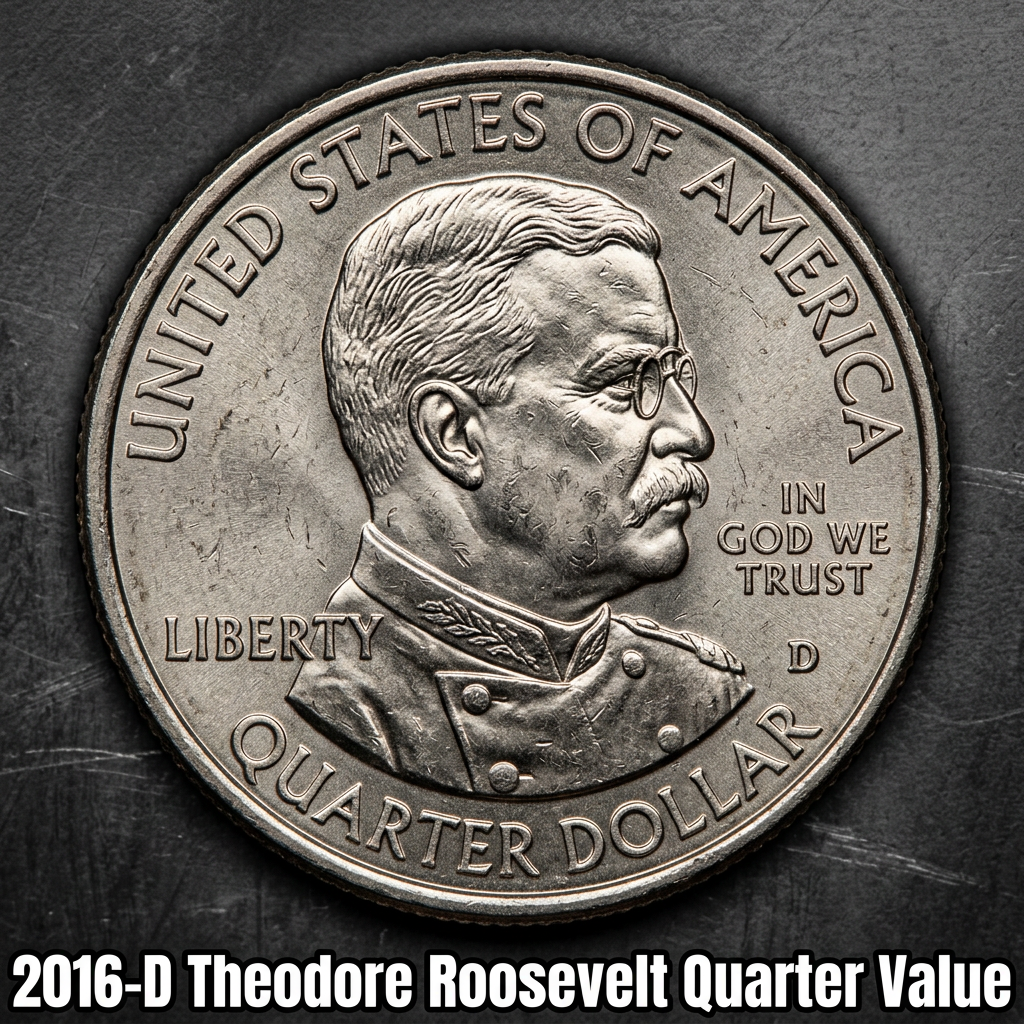
The 2016-D Theodore Roosevelt Quarter is worth anywhere from 25 cents in circulated condition to $10 or more in pristine mint state grades — and a few special specimens have sold for significantly higher. If you just found one in your change or came across it in an old coin jar, you’re in the right place to find out exactly what it’s worth.
Before we dig into the details, it helps to have a reliable tool in your pocket. A good coin identifier and value app can help you quickly scan and identify coins like this one, saving you hours of research. Whether you’re a first-time coin hunter or a seasoned collector, having that kind of resource on your phone makes the whole process much easier.
What Is the 2016-D Theodore Roosevelt Quarter?
The 2016-D Theodore Roosevelt Quarter is part of the America the Beautiful Quarters Program, a series launched by the U.S. Mint in 2010. Each year, five new designs are released, each honoring a national park or federal landmark. The “D” in the coin’s name tells you it was minted at the Denver Mint, which struck hundreds of millions of these coins for general circulation.
Theodore Roosevelt National Park, located in the badlands of western North Dakota, is the landmark celebrated on this quarter. The reverse design features a bison standing on a rugged landscape, with the park’s name and the inscription “North Dakota” above and below.
Your Old Coin Could Be Valuable!
Identify It & Know Its Real Value — Free Download
This coin is still relatively modern, which means most examples you find in everyday change are going to be worth face value. But condition is everything in coin collecting — and that’s where things get interesting.
2016-D Theodore Roosevelt Quarter Value by Grade
Like any coin, the value of a 2016-D Roosevelt Quarter depends heavily on its grade. Coins that have been circulating in pockets and cash registers will show wear marks, scuffs, and loss of detail. Coins kept in original mint packaging or rolls will look sharp and bright, earning higher grades and higher prices.
Your Old Coin Could Be Valuable!
Identify It & Know Its Real Value — Free Download
Here’s a quick look at typical market values based on condition:
| Grade | Condition Description | Estimated Value |
|---|---|---|
| Circulated (F–VF) | Visible wear, details still clear | $0.25 – $0.50 |
| Extremely Fine (EF-40) | Light wear on high points | $0.50 – $1.00 |
| Mint State (MS-63) | Uncirculated, minor contact marks | $1.00 – $3.00 |
| Mint State (MS-65) | Gem uncirculated, strong luster | $3.00 – $8.00 |
| Mint State (MS-67+) | Near-perfect, exceptional strike | $10.00 – $50.00+ |
For the most up-to-date market data on this coin, you can check out detailed 2016 quarter value information that breaks down pricing across multiple grades and mint marks.
Your Old Coin Could Be Valuable!
Identify It & Know Its Real Value — Free Download
How Many Were Minted and Does It Matter?
The Denver Mint produced approximately 287 million 2016-D Theodore Roosevelt Quarters. That’s a huge number, which is one reason why circulated examples are easy to come by and generally worth face value. High mintage coins simply don’t develop scarcity the way low-mintage issues do.
That said, mintage numbers don’t tell the whole story. What matters for collectors is finding examples in exceptional condition — MS-67 or higher — that weren’t damaged during the minting or handling process. Those are the coins that stand out at auction.
The CoinKnow app is a great resource if you want to quickly look up mintage data, historical auction results, and current market trends without having to dig through multiple websites. It puts everything in one place, right on your phone.
Your Old Coin Could Be Valuable!
Identify It & Know Its Real Value — Free Download
What Makes a 2016-D Roosevelt Quarter More Valuable
Beyond standard grade, there are a few things that can bump up the value of your 2016-D Theodore Roosevelt Quarter.
Errors and varieties are the big ones. Coins with doubled dies, off-center strikes, or planchet errors can be worth many times face value — sometimes hundreds of dollars — to the right collector. Inspect your coin closely under good light and a magnifying glass. Look for any doubling on the lettering or design elements on either side of the coin.
Strike quality also plays a role. A coin that was struck with exceptional sharpness and full detail will grade higher than one with a weak or mushy strike. The Denver Mint generally produces well-struck coins, but there’s natural variation in any production run.
Your Old Coin Could Be Valuable!
Identify It & Know Its Real Value — Free Download
You can also cross-reference current Roosevelt coin price data by grade to see how similar coins are moving in today’s market. It’s a helpful benchmark when you’re trying to set realistic expectations.
Should You Get Your Coin Graded?
If your 2016-D Theodore Roosevelt Quarter looks like it’s never been touched — sharp details, brilliant luster, no visible marks — it might be worth sending to a professional grading service like PCGS or NGC. Certified coins sell more reliably and often command a premium over raw, ungraded examples.
For most circulated coins, though, professional grading isn’t cost-effective. The grading fee alone could exceed what the coin would sell for. Use your judgment: if the coin looks exceptional to your eye, it might be worth the investment.
The CoinKnow app can help you do a preliminary self-assessment at home before you decide whether to spend money on formal grading. It’s a smart first step that many new collectors skip — but shouldn’t.
Your Old Coin Could Be Valuable!
Identify It & Know Its Real Value — Free Download
FAQ
Q: Is the 2016-D Theodore Roosevelt Quarter rare?
A: No, it’s not considered rare. With nearly 287 million minted, it’s widely available. However, coins in high mint state grades (MS-67 or above) can be harder to find and worth collecting.
Q: What does the “D” mint mark mean on a 2016 Roosevelt Quarter?
A: The “D” stands for the Denver Mint, one of the primary U.S. minting facilities. It’s located just below “IN GOD WE TRUST” on the obverse of the coin.
Q: Can I find a 2016-D Theodore Roosevelt Quarter in circulation?
A: Yes, absolutely. These quarters were released into general circulation, so you might still come across one in everyday change, coin rolls from the bank, or old jars of mixed coins at home.