1939-D Reverse of 1940 Jefferson Nickel Value and What Collectors Are Paying Today

Your Old Coin Could Be Valuable!
Identify It & Know Its Real Value — Free Download


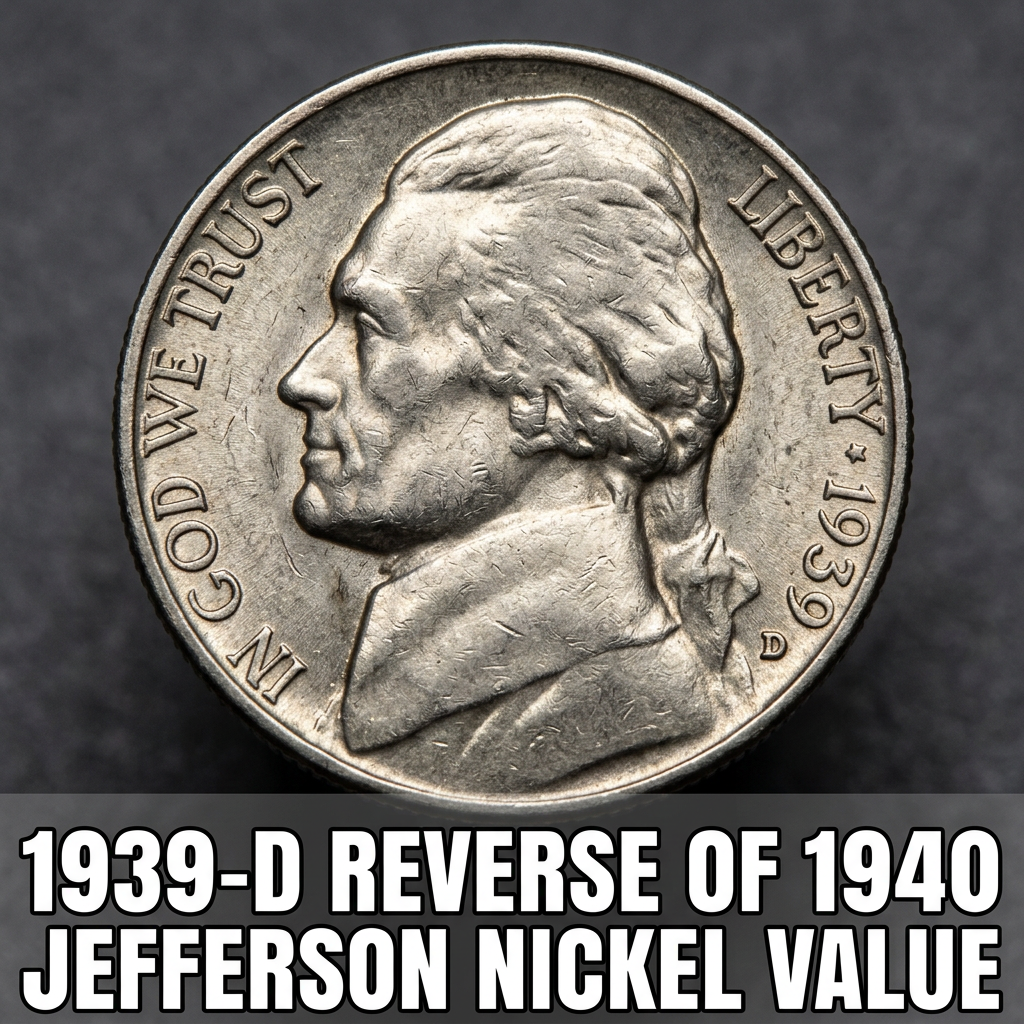
The 1939-D Reverse of 1940 Jefferson Nickel is worth anywhere from $3 in heavily worn condition to well over $100 in high mint state grades, with rare gem examples occasionally fetching even more. If you’ve come across one of these coins in a jar, drawer, or old collection, you’re holding one of the more interesting varieties in the Jefferson nickel series — and it’s worth taking a closer look.
What Makes the 1939-D Reverse of 1940 Special
The Jefferson nickel series launched in 1938, and the early years produced some fascinating die varieties. The 1939-D Reverse of 1940 is exactly what it sounds like — a coin struck at the Denver Mint in 1939 using a reverse die design that was actually intended for 1940 production.
The key visual difference lies in Monticello’s steps and overall design detail. The Reverse of 1940 die shows a more refined, slightly different depiction compared to the earlier reverse. To most casual observers, the coins look nearly identical, but to collectors and variety specialists, this is a genuinely distinct and collectible piece.
If you’re not sure which reverse your coin has, a coin identifier and value app can help you compare design details quickly without needing advanced numismatic knowledge. CoinKnow is one popular option that lets you photograph your coin and get an instant identification.
Your Old Coin Could Be Valuable!
Identify It & Know Its Real Value — Free Download
1939-D Reverse of 1940 Jefferson Nickel Value by Grade
Like most coins, condition is everything when it comes to value. A heavily circulated example — one that’s been worn smooth through years of pocket change use — will bring modest prices. A lightly worn example in Very Fine condition starts to attract more serious collector interest. Uncirculated examples, especially those with sharp luster and full steps on Monticello, command strong premiums.
Your Old Coin Could Be Valuable!
Identify It & Know Its Real Value — Free Download
Here’s a general value guide based on current market trends:
Your Old Coin Could Be Valuable!
Identify It & Know Its Real Value — Free Download
| Grade | Estimated Value |
|---|---|
| Good (G-4) | $3 – $5 |
| Fine (F-12) | $5 – $10 |
| Very Fine (VF-20) | $10 – $20 |
| Extremely Fine (EF-40) | $20 – $40 |
| Mint State (MS-63) | $50 – $90 |
| Mint State Full Steps (MS-65 FS) | $100 – $200+ |
For the most up-to-date figures from recent auction results, you can check 1939 Jefferson Nickel mint state price data and auction records to see what collectors are actually paying right now.
How to Tell If You Have the Reverse of 1940 Variety
Identifying this variety takes a bit of patience and a good magnifying glass. The Reverse of 1940 die on the 1939-D shows slightly crisper architectural details on Monticello, particularly around the steps and the portico area.
Compare your coin side-by-side with reference images — several online coin resources and collector forums have detailed die comparison photos. You can also use CoinKnow to scan your coin’s reverse and match it against known varieties in seconds.
Your Old Coin Could Be Valuable!
Identify It & Know Its Real Value — Free Download
If you’re serious about attribution, consider submitting the coin to a third-party grading service like PCGS or NGC. An officially attributed and slabbed 1939-D Reverse of 1940 Jefferson Nickel carries more value and credibility when selling to other collectors.
Should You Clean or Polish Your Coin?
Please don’t. This is one of the most common mistakes people make when they find old coins. Cleaning removes the original surface and luster, which dramatically lowers a coin’s collector value — sometimes by 50% or more.
Even if your coin looks a little dark or dirty, leave it as-is. Natural toning is part of a coin’s history. Collectors and dealers know the difference between a coin that’s been cleaned and one that hasn’t, and a cleaned coin will always sell for less than an unclean one in the same grade.
Your Old Coin Could Be Valuable!
Identify It & Know Its Real Value — Free Download
Store your coin in a soft flip or a coin holder to protect it from further wear or environmental damage while you decide what to do next.
Where to Sell or Learn More About Your 1939-D Nickel
If you’re thinking about selling, you have several options: online marketplaces like eBay, coin shows, local coin dealers, or auction houses that specialize in numismatics. For a quick ballpark before you approach a buyer, you can review detailed 1939 nickel value information broken down by grade and variety so you walk into any negotiation informed.
CoinKnow is also worth downloading if you want to track your collection and monitor market values over time. It’s a handy tool whether you’re a casual finder or someone building a serious collection.
Your Old Coin Could Be Valuable!
Identify It & Know Its Real Value — Free Download
FAQ
Q: How do I know if my 1939-D nickel is the Reverse of 1940 variety?
A: Look closely at the reverse side under magnification, focusing on the architectural details of Monticello — particularly the steps and columns. The Reverse of 1940 die shows slightly sharper, more refined details. Comparing with reference photos online or using a coin identification app is the easiest way to confirm.
Q: Is the 1939-D Reverse of 1940 Jefferson Nickel rare?
A: It’s considered a recognized variety rather than a major rarity, but it does carry a premium over a standard 1939-D nickel. High-grade examples with Full Steps are genuinely scarce and attract strong collector demand.
Q: What is Full Steps and why does it matter for value?
A: Full Steps (FS) refers to a nickel where Monticello’s front steps are fully separated and clearly defined, with no weakness or merging. It’s a sign of a well-struck coin with strong die quality. Full Steps examples of any Jefferson nickel date are worth significantly more than non-FS examples in the same grade.