2000 Lincoln Penny Value No Mint Mark What It’s Really Worth

Your Old Coin Could Be Valuable!
Identify It & Know Its Real Value — Free Download


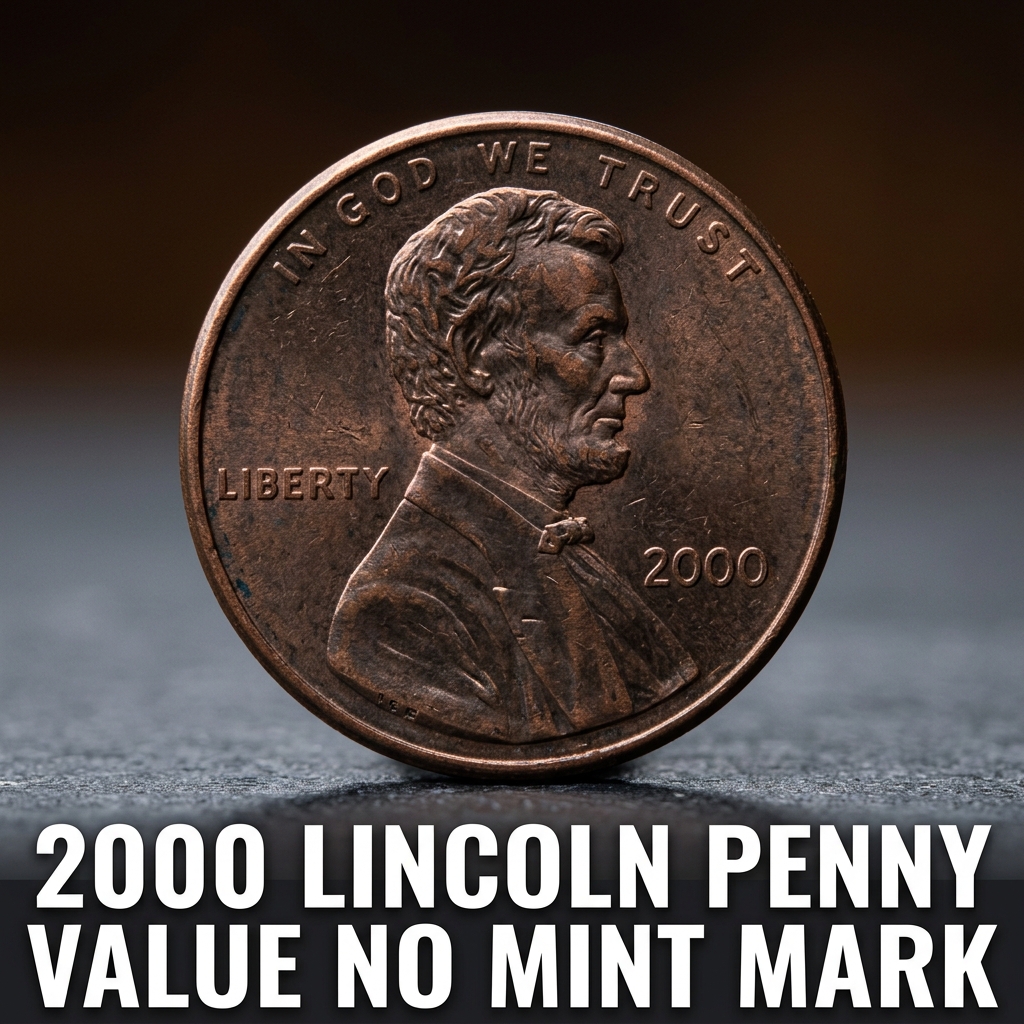
The 2000 Lincoln Penny with no mint mark is worth anywhere from 1 cent in heavily worn condition to around $5 to $15 in high-grade uncirculated condition, with exceptional certified examples occasionally reaching $20 or more. Most of these coins you’ll find in a jar or old wallet aren’t worth a fortune, but a few special ones just might surprise you.
If you’ve recently dug out a handful of old pennies and spotted one from the year 2000 with no mint mark on it, you’re in the right place. A coin identifier and value app can be a great first step to figure out exactly what you’re holding, especially if you’re not sure whether your coin is in good shape or not. In this guide, we’ll walk you through everything you need to know about the 2000 Lincoln Penny with no mint mark — where it was made, how many exist, and most importantly, what it’s worth today.
What Does No Mint Mark Mean on a 2000 Lincoln Penny
The mint mark on a coin tells you which facility produced it. A coin with no mint mark was made at the Philadelphia Mint. This is completely normal — Philadelphia has historically not stamped a “P” on pennies, though they did begin doing so on other denominations.
So if you’re looking at your 2000 penny and wondering why there’s no letter under the date, don’t worry. It’s not a mistake or a rare error. It simply means your coin came out of Philadelphia, which produced over 14 billion Lincoln cents in 2000 alone.
That massive mintage is one reason why the 2000 Lincoln Penny no mint mark isn’t considered rare in circulated grades. But that doesn’t mean every single one is worth face value — condition matters a lot.
Your Old Coin Could Be Valuable!
Identify It & Know Its Real Value — Free Download
2000 Lincoln Penny Value by Grade and Condition
Like all coins, the value of a 2000 penny with no mint mark rises sharply as the grade improves. A coin that’s been rattling around in pockets for decades will show heavy wear and is really only worth its copper-plated zinc face value. But a coin that was saved right from the mint and never circulated — called “mint state” — can be worth real money to collectors.
Here’s a quick look at 2000 Lincoln Penny price data across different grades to help you understand what your coin might be worth:
Your Old Coin Could Be Valuable!
Identify It & Know Its Real Value — Free Download
| Grade | Condition Description | Estimated Value |
|---|---|---|
| Good (G-4) | Heavy wear, design visible | $0.01 |
| Fine (F-12) | Moderate wear, some detail | $0.01 – $0.05 |
| Extremely Fine (EF-40) | Light wear on high points | $0.05 – $0.25 |
| Mint State 63 (MS-63) | Uncirculated, minor blemishes | $1 – $3 |
| Mint State 65 (MS-65) | Gem uncirculated, bright red | $3 – $8 |
| Mint State 67 (MS-67) | Superb gem, nearly perfect | $10 – $20+ |
Keep in mind these are general estimates. Certified coins from PCGS or NGC may bring higher prices at auction, especially in top pop grades where very few examples exist.
Are There Any Valuable Errors on the 2000 No Mint Mark Penny
This is where things get interesting. While the standard 2000 Lincoln Penny no mint mark isn’t rare, error coins from this year can be worth significantly more. Errors happen when something goes wrong during the minting process, and collectors love hunting for them.
Some errors to look for include:
Your Old Coin Could Be Valuable!
Identify It & Know Its Real Value — Free Download
Doubled die obverse — Look at Lincoln’s portrait, the date, and the motto “IN GOD WE TRUST” under magnification. If any of these appear doubled or slightly offset, you may have a doubled die error worth $25 to $100 or more depending on the severity.
Off-center strikes — If the design is noticeably off-center, even by 10-15%, the value jumps. A 50% off-center error coin could be worth $50 or higher.
Die cap errors and cuds — These are rarer and more dramatic, and can fetch hundreds of dollars from the right buyer.
Your Old Coin Could Be Valuable!
Identify It & Know Its Real Value — Free Download
If you think you’ve spotted an error, CoinKnow is a fantastic tool to scan your coin and get an instant assessment. The app uses visual recognition technology to identify potential errors and varieties that the naked eye might miss.
How to Tell If Your 2000 Penny Is Worth More Than Face Value
Here are a few simple steps to evaluate your coin at home before spending money on professional grading:
First, check the mint mark location. On Lincoln cents, the mint mark sits just below the date on the obverse. No letter means Philadelphia. A small “D” means Denver.
Second, look at the luster. A coin that still has its original reddish-gold shine is graded “Red” (RD), the most desirable color designation for copper-plated coins. Dull or brown surfaces lower the grade and value.
Third, examine the surfaces under a magnifying glass. Scratches, cleaning marks, or contact marks lower the grade. A clean, original surface is what collectors want.
Your Old Coin Could Be Valuable!
Identify It & Know Its Real Value — Free Download
You can also check detailed 2000 penny value information by grade and variety to compare your coin against known examples. Having a reference like this makes the process much easier and more accurate.
Is It Worth Getting a 2000 Lincoln Penny Professionally Graded
For most circulated 2000 Lincoln Pennies, professional grading doesn’t make economic sense. If the coin is worth a few cents, paying $20 to $30 for PCGS or NGC grading just doesn’t add up.
However, if you believe your coin is in superb mint state condition — especially MS-66 or MS-67 — or if it appears to have a significant error, grading could absolutely be worthwhile. A professionally graded MS-67 Red coin in a PCGS or NGC slab provides authentication and can sell for $20 or more.
CoinKnow can help you make that decision before you spend money on grading fees. Simply scan your coin with the app, and it will give you an estimated grade range based on the coin’s condition. It’s a smart first step for anyone who thinks they might be sitting on something special.
Your Old Coin Could Be Valuable!
Identify It & Know Its Real Value — Free Download
—
FAQ About the 2000 Lincoln Penny No Mint Mark
Q: Is a 2000 penny with no mint mark rare?
A: No. Over 14 billion pennies were struck at the Philadelphia Mint in 2000, making this one of the most common Lincoln cents in existence. However, high-grade examples and error coins can still carry a premium for collectors.
Q: How much is a 2000 penny worth in mint state condition?
A: A 2000 Lincoln Penny no mint mark in mint state can range from $1 to $3 in MS-63, up to $10 or more in MS-67. The color designation matters too — “Red” coins are worth more than “Brown” examples of the same grade.
Q: What errors on the 2000 penny are worth money?
A: The most valuable errors include doubled die obverse varieties, off-center strikes, and die cap errors. Even a modest doubled die can be worth $25 to $100 or more, while dramatic errors like 50% off-center coins can sell for $50 to $150 depending on the buyer and coin condition.