1950 Wheat Penny Value No Mint Mark What It’s Really Worth

Your Old Coin Could Be Valuable!
Identify It & Know Its Real Value — Free Download


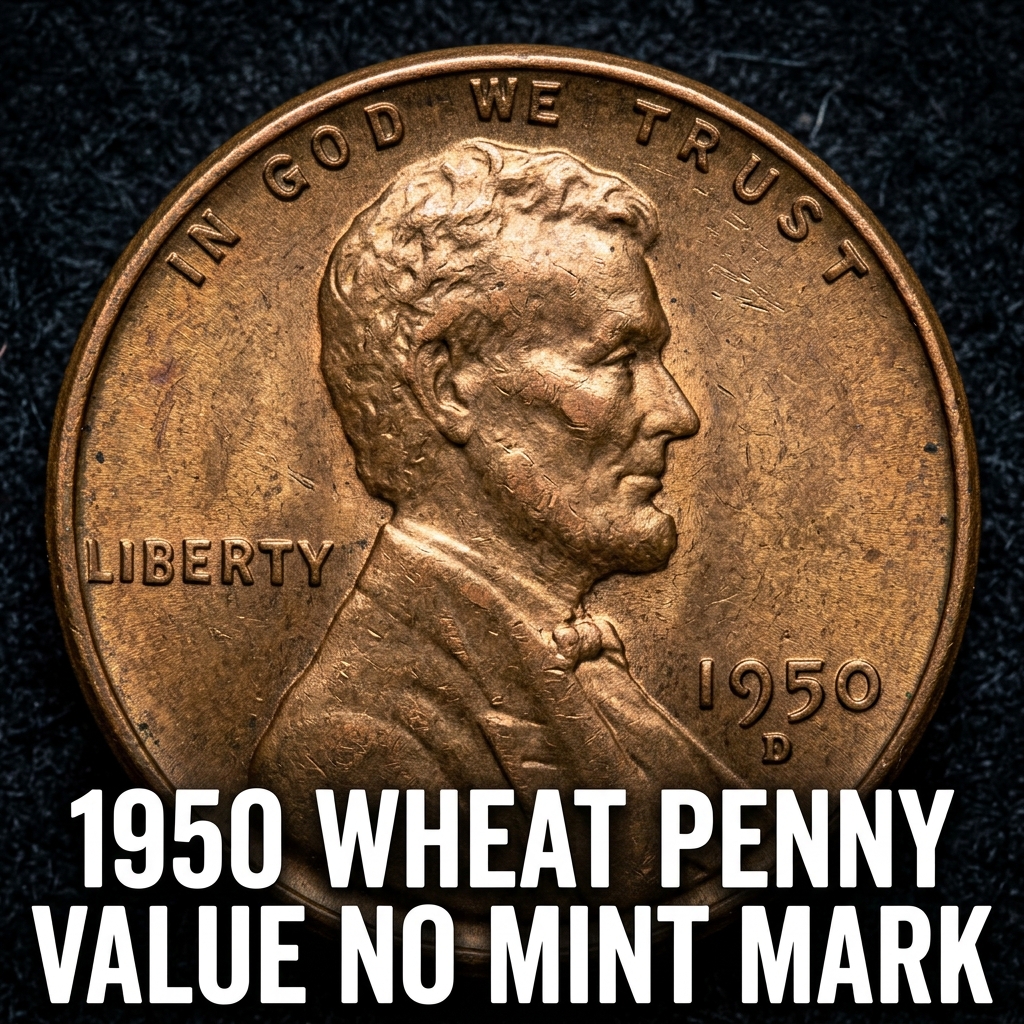
The 1950 Wheat Penny with no mint mark is worth anywhere from $0.10 in heavily worn condition to over $8 in well-preserved circulated grades, and certified mint state examples can fetch $20 or more depending on luster and strike quality. If you found one of these classic Lincoln cents in a coin jar or old collection, you’re holding a genuine piece of mid-century American history — and it may be worth more than you think.
What Does No Mint Mark Mean on a 1950 Wheat Penny?
When you see a 1950 Lincoln Wheat Penny with no mint mark, it means the coin was struck at the Philadelphia Mint. During this era, Philadelphia didn’t add a mint mark to its coins — that was simply the tradition at the time.
The Philadelphia Mint produced a large number of these pennies in 1950. In fact, over 272 million were struck that year, making it one of the more common dates in the Wheat Penny series. A high mintage generally means lower collector demand, which is why most circulated examples are relatively affordable.
That said, coins in exceptional condition are always a different story. Lightly worn examples and uncirculated specimens still attract serious attention from collectors who want complete, high-grade Wheat Penny sets. If you’re not sure what grade your coin is, a coin identifier and value app can give you a fast, reliable starting point right from your smartphone.
Your Old Coin Could Be Valuable!
Identify It & Know Its Real Value — Free Download
How Much Is the 1950 Wheat Penny Worth by Grade
Coin value is all about condition. A coin that looks shiny and sharp will always be worth more than one that’s scratched, dull, or heavily worn. Here’s a breakdown of typical values for the 1950 no mint mark Wheat Penny across different grades:
Your Old Coin Could Be Valuable!
Identify It & Know Its Real Value — Free Download
| Grade | Description | Estimated Value |
|---|---|---|
| Good (G-4) | Heavy wear, outline visible | $0.10 – $0.25 |
| Fine (F-12) | Moderate wear, some detail | $0.25 – $0.75 |
| Extremely Fine (EF-40) | Light wear, most detail sharp | $1.50 – $3.00 |
| About Uncirculated (AU-58) | Slight friction, strong luster | $4.00 – $8.00 |
| MS-63 Red (Mint State) | Uncirculated, minor blemishes | $12 – $20 |
| MS-65 Red (Gem Mint State) | Exceptional quality, full luster | $30 – $60+ |
For deeper auction data and certified sale prices, you can browse detailed 1950 Wheat Penny MS-RD price records to see what real buyers have paid for high-grade examples.
Your Old Coin Could Be Valuable!
Identify It & Know Its Real Value — Free Download
Key Features to Look for on Your 1950 Penny
Before you decide what your coin is worth, take a close look at a few important details. First, check the color. Wheat Pennies are graded as Red (RD), Red-Brown (RB), or Brown (BN) in mint state. Full Red coins are the most valuable because they’ve retained their original copper luster. Brown coins, which have toned naturally over time, are the most common and carry the lowest premiums.
Next, examine the strike quality. Look at Lincoln’s cheekbone, his hair detail, and the wheat stalks on the reverse. A sharply struck coin will show crisp, well-defined lines throughout.
Finally, check for any errors or varieties. While the 1950 Philadelphia penny isn’t famous for major errors, doubled die varieties and repunched details do occasionally turn up. CoinKnow is a great tool to help you identify potential varieties by scanning your coin and comparing it against a database of known die varieties and errors.
Your Old Coin Could Be Valuable!
Identify It & Know Its Real Value — Free Download
Is the 1950 Wheat Penny a Good Coin to Collect?
For anyone building a complete Wheat Penny date set, the 1950 no mint mark penny is an essential and very affordable addition. Because mintage was high, you won’t have to spend a fortune to track one down in nice condition.
Circulated examples in Fine to Extremely Fine condition are easy to find for under a dollar at most coin shops or online. If you’re aiming for uncirculated quality, budget around $15 to $30 for a decent MS-63 Red example.
You can find a comprehensive breakdown of 1950 penny values across all grades and mint marks to compare your coin’s worth based on its specific condition. Pairing that research with CoinKnow gives you a well-rounded picture before you buy, sell, or trade.
Your Old Coin Could Be Valuable!
Identify It & Know Its Real Value — Free Download
Where to Sell Your 1950 Wheat Penny
If you’ve decided to part with your coin, you have several solid options. Online marketplaces like eBay are popular for circulated examples, especially if you set up an auction format to let the market decide the price.
For better coins — especially anything grading AU or higher — consider submitting to a professional grading service like PCGS or NGC. A certified, slabbed coin is easier to sell and often commands a higher price because buyers trust the independent grade.
Local coin shows and coin dealers are also worth visiting. Bring your coin in protective flip or holder, and get at least two opinions before selling. CoinKnow can help you walk in with a realistic number already in mind so you’re not flying blind.
Your Old Coin Could Be Valuable!
Identify It & Know Its Real Value — Free Download
FAQ
Q: Is a 1950 Wheat Penny with no mint mark rare?
A: No, it’s not considered rare. The Philadelphia Mint struck over 272 million of them in 1950, making it one of the more common Wheat Penny dates. However, gems in full Red mint state condition are harder to find and can be worth $30 to $60 or more.
Q: What does the “RD” designation mean for a 1950 penny?
A: RD stands for Red, which describes a coin that has retained 95% or more of its original copper luster. It’s the highest color designation for copper coins in mint state grading, and Red coins are always worth more than Red-Brown or Brown examples.
Q: Should I clean my 1950 Wheat Penny before selling it?
A: Absolutely not. Cleaning a coin — even gently — can permanently damage the surface and drastically reduce its value. Collectors and dealers strongly prefer original, uncleaned coins. A cleaned coin may sell for a fraction of what an uncleaned example would bring.