1894 Barber Dime Value With No Mint Mark What It’s Worth Today

Your Old Coin Could Be Valuable!
Identify It & Know Its Real Value — Free Download


The 1894 Barber Dime with no mint mark is worth anywhere from $4 to $15 in heavily worn condition, while well-preserved examples can fetch $50 to $200 or more — and certified mint state coins have sold for thousands at auction.
What Is the 1894 No Mint Mark Barber Dime?
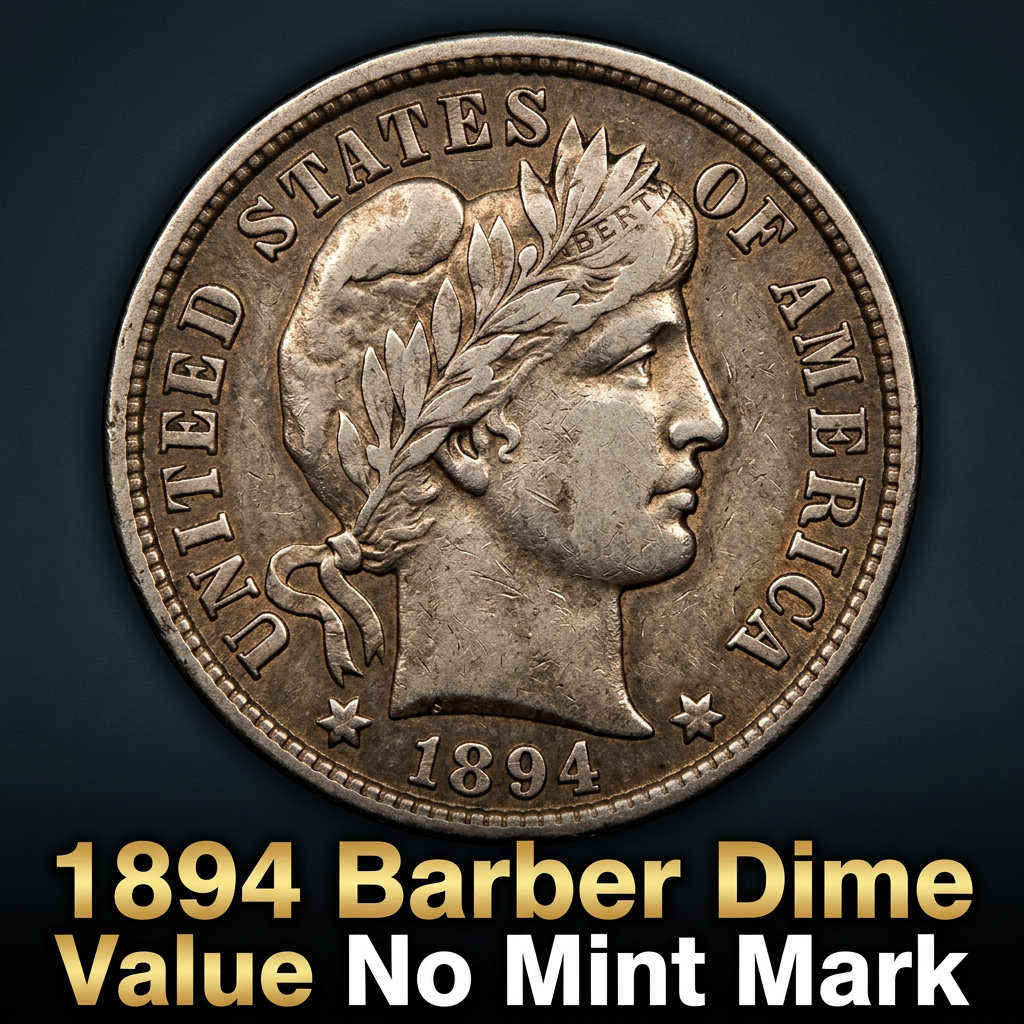
If you’ve got an old dime sitting in a drawer or picked one up at an estate sale, you might be holding a genuine piece of American numismatic history. The 1894 Barber Dime was struck at the Philadelphia Mint — which is why it carries no mint mark — and was designed by Chief Engraver Charles E. Barber.
The obverse features Lady Liberty wearing a laurel wreath and a Phrygian cap, with the inscription “IN GOD WE TRUST” above. The reverse shows a wreath encircling the denomination “ONE DIME.” These coins were made from 90% silver and 10% copper, so even a well-worn example has some melt value.
Using a coin identifier and value app can help you quickly figure out the grade and value of your coin before you sell or trade it.
Your Old Coin Could Be Valuable!
Identify It & Know Its Real Value — Free Download
How Much Is the 1894 Barber Dime Worth Today?
The value of the 1894 no mint mark Barber Dime depends heavily on its condition, or “grade.” Coin collectors use a numeric scale from 1 (barely identifiable) to 70 (perfect uncirculated). Most coins found in old collections or coin jars fall somewhere in the middle.
Here’s a general breakdown of what you might expect:
Your Old Coin Could Be Valuable!
Identify It & Know Its Real Value — Free Download
| Grade / Condition | Description | Estimated Value |
|---|---|---|
| Good (G-4) | Heavy wear, outline visible | $4 – $7 |
| Fine (F-12) | Moderate wear, some detail | $10 – $18 |
| Extremely Fine (EF-40) | Light wear, sharp detail | $45 – $75 |
| About Uncirculated (AU-55) | Slight wear on high points | $80 – $130 |
| Mint State (MS-63) | No wear, minor contact marks | $200 – $450 |
| Mint State (MS-65+) | Gem quality, outstanding luster | $600 – $2,000+ |
The Philadelphia Mint produced 1,330,000 Barber Dimes in 1894, which is a relatively modest mintage — one reason why finer-grade specimens are harder to find and command premium prices. For a deeper look at the complete 1894 Barber Dime value across all mint marks and grades, it’s worth consulting a dedicated resource.
How to Grade Your 1894 Barber Dime at Home
You don’t need to be a professional to get a rough idea of your coin’s grade. Start by examining the coin under good natural light or a loupe magnifier.
Your Old Coin Could Be Valuable!
Identify It & Know Its Real Value — Free Download
Look at Liberty’s hair above her ear and the leaves in the wreath — these are the highest points and show wear first. If the hair detail is completely flat and merged together, you’re probably looking at a Good or Fine grade. If you can still make out individual strands and the wreath is crisp, you might have an Extremely Fine example on your hands.
CoinKnow is a great tool for beginners who want a fast, reliable estimate without having to memorize grading standards. Just snap a photo of your coin and the app gives you an instant condition and value reading.
The 1894-S Barber Dime vs. the No Mint Mark Version
You may have heard about the legendary 1894-S Barber Dime — one of the rarest U.S. coins ever made, with only 24 originally struck in San Francisco. That “S” mint mark makes it an entirely different (and astronomically valuable) coin.
Your Old Coin Could Be Valuable!
Identify It & Know Its Real Value — Free Download
The no mint mark version from Philadelphia is far more common but still collectible in its own right. Don’t confuse the two. If your dime has no mint mark at all, it came from Philadelphia, and its value sits in the range we’ve already outlined above.
If you’re ever unsure about what mint mark your coin has (or doesn’t have), CoinKnow can help you identify the coin instantly by scanning it with your phone camera.
What Affects the Value of a 1894 Barber Dime the Most?
Several factors push the value up or down beyond just the grade:
Strike quality — Some Philadelphia coins from this era were weakly struck, meaning the design didn’t fully press into the planchet. A sharply struck coin is worth more.
Your Old Coin Could Be Valuable!
Identify It & Know Its Real Value — Free Download
Luster and toning — Original mint luster is highly desirable. Coins that have been cleaned with chemicals lose much of their value. Natural, even toning is acceptable; harsh cleaning is not.
Eye appeal — Even within the same grade, two coins can look very different. A coin with attractive surfaces and a pleasing appearance will often sell for more than a technically equal but dull-looking example.
Certification — Having your coin professionally graded and slabbed by PCGS or NGC significantly increases buyer confidence and often results in a higher sale price.
—
Your Old Coin Could Be Valuable!
Identify It & Know Its Real Value — Free Download
FAQ
Q: How do I know if my 1894 dime is the Philadelphia version?
A: If there is no mint mark on the reverse of the coin — look just above the “E” in “ONE” — then it was minted in Philadelphia. The 1894 Philadelphia Barber Dime carries no mint mark by design.
Q: Is a worn 1894 no mint mark Barber Dime worth selling?
A: Even in Good condition, these coins are worth $4 to $7 for the silver content and collector interest. If you have several, it may be worth having them evaluated. Use CoinKnow to get a quick estimate before deciding.
Q: Should I clean my 1894 Barber Dime before selling it?
A: Absolutely not. Cleaning a coin — even gently — removes the original surface and dramatically reduces its numismatic value. Collectors and dealers strongly prefer original, uncleaned coins, even if they look a little dirty or toned.