1916 Wheat Penny Value No Mint Mark What It’s Really Worth Today

Your Old Coin Could Be Valuable!
Identify It & Know Its Real Value — Free Download


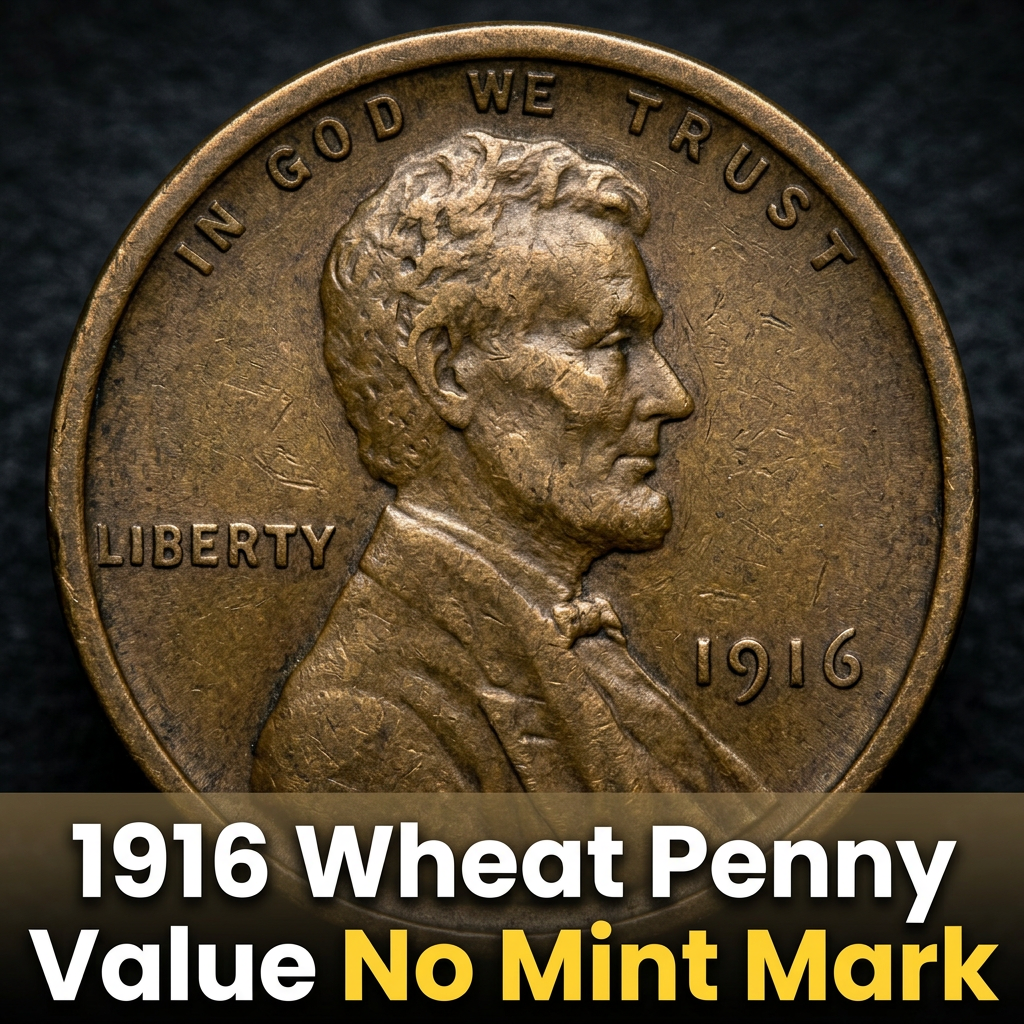
The 1916 Wheat Penny with no mint mark is worth anywhere from $0.25 in heavily worn condition to over $100 or more in higher mint state grades. If you just found one of these old Lincoln cents in a jar or drawer, you’re in the right place — let’s walk through exactly what it could be worth.
What Is the 1916 No Mint Mark Wheat Penny?
The 1916 Lincoln Wheat Penny with no mint mark was struck at the Philadelphia Mint. Back then, the Philadelphia Mint didn’t stamp a mint mark on its coins — so if you see a 1916 penny with nothing under the date, it came from Philly.
In 1916, the U.S. Mint produced over 131 million of these coins, making it one of the more common early Lincoln cents. That said, finding one in good condition after more than 100 years is far from guaranteed, and well-preserved examples can still command solid prices among collectors.
If you’re not sure how to identify your coin or read its grade, a coin identifier and value app can be a huge help. These tools let you scan your coin with your phone and get an instant estimate — great for beginners. CoinKnow is one of the best options out there, giving you detailed value breakdowns and variety identification all in one place.
Your Old Coin Could Be Valuable!
Identify It & Know Its Real Value — Free Download
1916 Wheat Penny Value by Grade
Coin value depends almost entirely on condition (called “grade” in the hobby). A coin that looks nearly new is worth far more than one that’s been worn smooth from years of circulation. Here’s a general look at what the 1916 Wheat Penny with no mint mark is worth at different grades:
| Grade | Description | Estimated Value |
|---|---|---|
| Poor / Fair (P-1 / F-2) | Heavily worn, date barely visible | $0.25 – $0.50 |
| Good (G-4 to G-6) | Outlines visible, design mostly flat | $0.50 – $2 |
| Fine (F-12 to F-15) | Moderate wear, some detail remains | $2 – $5 |
| Extremely Fine (EF-40) | Light wear on high points | $10 – $20 |
| About Uncirculated (AU-55) | Slight wear, nearly full luster | $25 – $45 |
| MS-63 (Mint State) | Uncirculated, some contact marks | $50 – $80 |
| MS-65 Red (Gem) | Brilliant, original red luster | $100 – $200+ |
For a deeper look at auction results and graded sale prices, you can check out this detailed 1916 Wheat Penny MS-RD price data from recent market sales — it’s a great resource to see what real buyers are actually paying.
Your Old Coin Could Be Valuable!
Identify It & Know Its Real Value — Free Download
What Makes a 1916 Penny More Valuable
Color plays a major role in mint state coins. Uncirculated Lincoln cents are graded not just by sharpness but also by how much original copper color they retain. The three color designations are:
Red (RD) — over 95% original red copper luster. These are the most valuable.
Red-Brown (RB) — a mix of red and brown toning. Still attractive and collectible.
Your Old Coin Could Be Valuable!
Identify It & Know Its Real Value — Free Download
Brown (BN) — the most common on older coins. Less desirable but still valuable in top grades.
A 1916 no mint mark penny graded MS-65 Red can sell for $150 or more. The same coin graded MS-65 Brown might bring only $40–$60. That’s a big difference, so color matters a lot when you’re buying or selling.
CoinKnow can help you understand color grades and what they mean for your specific coin’s value — it’s one of the easiest ways to get educated before you sell or trade.
Your Old Coin Could Be Valuable!
Identify It & Know Its Real Value — Free Download
How to Tell If Your 1916 Penny Is Worth More
Start by looking at the coin under good light — natural sunlight or a desk lamp works well. Check for these things:
Original luster: Does the coin have any reddish-orange shine? That’s a sign of higher grade.
Sharp details: Look at Lincoln’s hair, his bow tie, and the wheat stalks on the reverse. Are they well-defined or worn flat?
No cleaning: Cleaned coins lose significant value. A coin that looks unnaturally shiny or has hairline scratches has likely been polished, which collectors dislike.
Your Old Coin Could Be Valuable!
Identify It & Know Its Real Value — Free Download
If you want a trusted second opinion, CoinKnow lets you photograph your coin and get a professional-style assessment right from your phone. It’s especially useful if you’re new to grading and want to avoid underselling a nice coin.
You can also explore a comprehensive 1916 penny value guide with full grade and variety breakdowns to compare your coin’s features before making any decisions.
Should You Get It Graded?
If your 1916 Wheat Penny looks uncirculated or close to it, professional grading through PCGS or NGC could be worth the cost. Graded coins sell for more because buyers trust the condition has been verified. Submitting a coin costs around $30–$50, so it only makes financial sense if the coin is worth at least $75–$100 raw.
For circulated examples in Good to Fine condition, grading isn’t necessary. Just hold onto it, research the value, and decide if you’d rather keep it or sell it at a local coin show or online.
Your Old Coin Could Be Valuable!
Identify It & Know Its Real Value — Free Download
Frequently Asked Questions
Q: How do I know if my 1916 penny is from Philadelphia?
A: If there’s no mint mark under the date on the obverse (front) of the coin, it was made at the Philadelphia Mint. Denver coins show a “D” and San Francisco coins show an “S.” No letter means Philadelphia.
Q: Is a 1916 Wheat Penny with no mint mark rare?
A: Not particularly. Over 131 million were minted in Philadelphia, making it one of the most common early Lincoln cents. However, examples in uncirculated condition with original red color are genuinely scarce and worth real money.
Q: What’s the most a 1916 no mint mark penny has ever sold for?
A: Top-grade examples in MS-67 Red have sold at auction for $1,000 or more. These are exceptional coins with virtually no flaws — most 1916 pennies you’ll find in the wild will be worth considerably less, but it’s exciting to know the ceiling is high for perfect specimens.