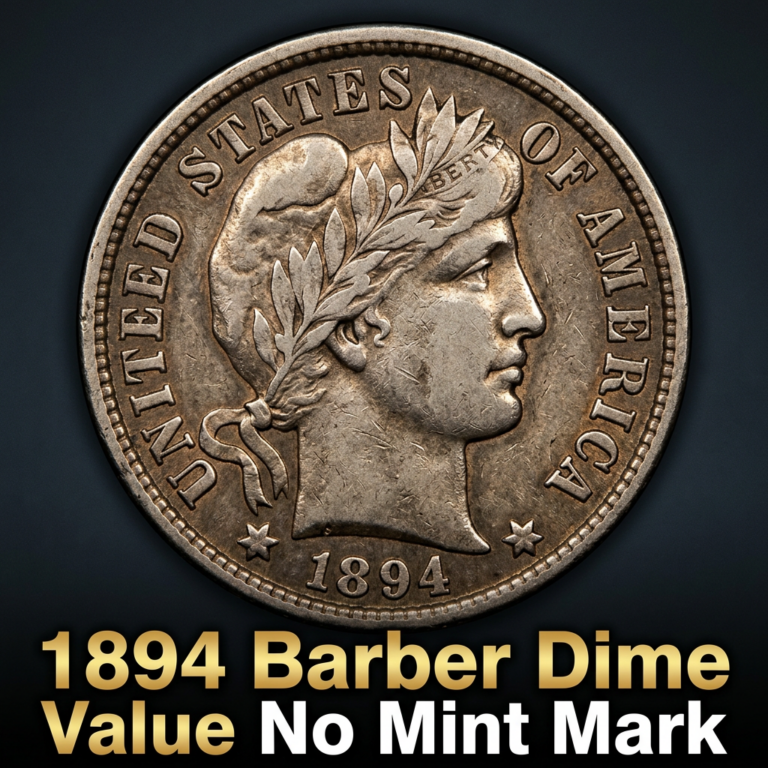
1950-S Roosevelt Dime Value: Most Recent Prices and Rarities

Your Old Coin Could Be Valuable!
Identify It & Know Its Real Value — Free Download


The 1950-S Roosevelt Dime is worth anywhere from $2.50 in worn condition to over $35 in mint state, with rare proofs and varieties fetching much higher prices. Because all dimes minted in 1950 are composed of 90% silver, they carry an intrinsic “melt value” that keeps them popular with everyday collectors and investors alike.
| Condition | Estimated Value (1950-S) |
|---|---|
| Good to Very Fine (Circulated) | $2.40 – $3.50 |
| About Uncirculated (AU) | $4.00 – $6.50 |
| Uncirculated (MS-63) | $8.00 – $12.00 |
| Gem Uncirculated (MS-65+) | $25.00 – $65.00+ |
Identifying the 1950-S Silver Roosevelt Dime
If you have stumbled upon an old dime dated 1950 with a small “S” on the back, you are holding a piece of American history from the San Francisco Mint. In the mid-20th century, the Roosevelt Dime was still a relatively new design, having been introduced in 1946 to honor President Franklin D. Roosevelt.
Finding these coins in your pocket change is becoming increasingly rare because they are made of 90% silver and 10% copper. Most silver coinage was pulled from circulation after 1964. If you aren’t sure if your coin is a “San Francisco” strike, you can use a top coin identifier and value app to get an instant visual confirmation.
The 1950-S is particularly interesting because it had a lower mintage compared to the Philadelphia and Denver issues of the same year. While it isn’t a “key date” in the rarest sense, its silver content ensures it will never be worth just ten cents. Whether you are a casual hunter or a serious numismatist, checking your 1950-S dimes for high-grade luster is always worth the effort. By using the CoinKnow app, you can quickly log your finds and see how the market fluctuates.
Your Old Coin Could Be Valuable!
Identify It & Know Its Real Value — Free Download
Understanding the Silver Value of 1950 Dimes
The primary driver for the price of an average 1950-S Roosevelt Dime is its bullion content. Each of these dimes contains roughly 0.07234 troy ounces of pure silver. When silver prices rise, the baseline value of these “junk silver” coins rises with it.
Even if the coin is heavily worn and the details are smoothed out, it will still sell for its weight in silver. This makes the 1950-S a favorite for people looking to hedge against inflation. However, if the coin has a shiny, original surface, its collector value will quickly outpace its silver melt value.
Your Old Coin Could Be Valuable!
Identify It & Know Its Real Value — Free Download
For those tracking their portfolio, the 1950 dime value info shows that even “common” years have specific tiers of worth based on the current spot price of silver. It is always wise to separate your silver dimes from modern copper-nickel dimes to ensure you don’t spend them by mistake at the grocery store.
| Mint Mark | Mintage Quantity | Rarity Level |
|---|---|---|
| 1950 (Philadelphia) | 117,350,000 | Common |
| 1950-D (Denver) | 46,803,000 | Common/Scarce |
| 1950-S (San Francisco) | 20,440,000 | Better Date |
Grading and Condition: How to Spot a Winner
The difference between a $3 dime and a $300 dime is almost entirely based on “grade.” Professional graders look at the amount of wear on Roosevelt’s cheek and the clarity of the torch flames on the reverse side. Coins that have never been used in trade are called “Uncirculated” or “Mint State.”
If your 1950-S dime has full, crisp lines on the torch (often called Full Bands or FB), the price can skyrocket. These “Full Band” designations signify a perfect strike, which is very hard to find for the San Francisco mint in 1950. You can compare your coin’s luster with the CoinKnow database to see if your specimen qualifies as a high-grade investment piece.
Your Old Coin Could Be Valuable!
Identify It & Know Its Real Value — Free Download
According to the latest current Roosevelt Dime price data, a coin graded MS-67 with Full Bands can sell for hundreds or even thousands of dollars at auction. Always handle your coins by the edges to avoid getting finger oils on the surface, which can degrade the grade over time.
The 1950-S S/S Re-punched Mint Mark Variety
One of the most exciting things for “cherrypickers”—collectors who look for errors—is the 1950-S/S Re-punched Mint Mark (RPM). During the production process in 1950, a mint worker may have punched the “S” into the die twice, resulting in a doubled appearance of the mint mark.
To see this, you will usually need a jeweler’s loupe or a high-powered magnifying glass. Look closely at the small “S” located to the left of the torch base on the reverse. If you see a faint second “S” offset from the primary one, you have found a variety that carries a significant premium over the standard 1950-S.
Your Old Coin Could Be Valuable!
Identify It & Know Its Real Value — Free Download
Identifying these nuances is much easier when you use tools like CoinKnow, which provides high-resolution images of known errors. While these errors are not found every day, they represent the “hidden treasure” aspect of coin collecting that keeps the hobby exciting for everyday Americans.
| Variety Type | Avg. Market Value (MS-60) | Auction Record |
|---|---|---|
| Standard 1950-S | $7.50 | $3,200 (MS-68 FB) |
| 1950-S/S (RPM) | $25.00 | $400+ (High Grade) |
Why the San Francisco Mint Matters
The San Francisco Mint has a reputation for producing coins with distinct characteristics. In the 1950s, “S” mint coins often had lower mintage numbers than those from Philadelphia or Denver. This naturally creates a supply-and-demand imbalance that favors the collector.
In 1950, the San Francisco Mint produced only about 20 million dimes. While that sounds like a large number, it is less than a fifth of what Philadelphia produced that year. Over decades, many of these coins were melted down or lost, making the surviving “S” mint dimes a smart addition to any silver collection.
Collectors often try to complete “date and mint mark” sets. Because the 1950-S is one of the more elusive entries for that specific year, it remains highly liquid. This means if you decide to sell your 1950-S dime, you will likely find a buyer much faster than you would for a common 1964 dime.
Your Old Coin Could Be Valuable!
Identify It & Know Its Real Value — Free Download
Where to Sell and Buy 1950-S Dimes
If you’ve checked your coins and believe you have a high-value 1950-S Roosevelt Dime, your next step is determining the best place to sell. For common circulated silver dimes, local coin shops are great because they pay cash based on the daily silver spot price. You don’t have to worry about shipping or eBay fees.
However, if you have an uncirculated coin or a re-punched mint mark, you should consider specialized auctions or online marketplaces. Before selling, always use a reputable app or website to confirm the current “Ask” price. Knowing the market value prevents you from leaving money on the table.
Always remember that the “Full Band” (FB) designation is the king of Roosevelt Dime collecting. If the horizontal lines on the torch on the back of the coin are fully separated and distinct, the coin is worth a professional appraisal.
FAQ
Q: Is a 1950-S dime real silver?
A: Yes, all Roosevelt Dimes minted from 1946 through 1964 are made of 90% silver and 10% copper. The 1950-S is part of this silver era and is highly valued for its precious metal content.
Your Old Coin Could Be Valuable!
Identify It & Know Its Real Value — Free Download
Q: Where is the mint mark on a 1950-S Roosevelt Dime?
A: On 1950 dimes, the mint mark is located on the reverse (back) of the coin. Look at the bottom of the torch; the “S” will be located just to the left of the torch’s base, above the “E” in the word “ONE.”
Q: What makes a 1950-S dime “Full Band”?
A: A “Full Band” (FB) dime is one where the horizontal sets of bands holding the torch together are clearly defined and separated. This indicates a very strong, high-quality strike from the mint and significantly increases the coin’s value to collectors.
Q: Can I find a 1950-S dime in my pocket change today?
A: While it is technically possible, it is extremely rare. Most silver coins were removed from circulation in the late 1960s. Today, most 1950-S dimes are found in estate sales, coin rolls, or inherited collections.