1976-D Type 1 Eisenhower Dollar Value and What Collectors Are Paying Today

Your Old Coin Could Be Valuable!
Identify It & Know Its Real Value — Free Download


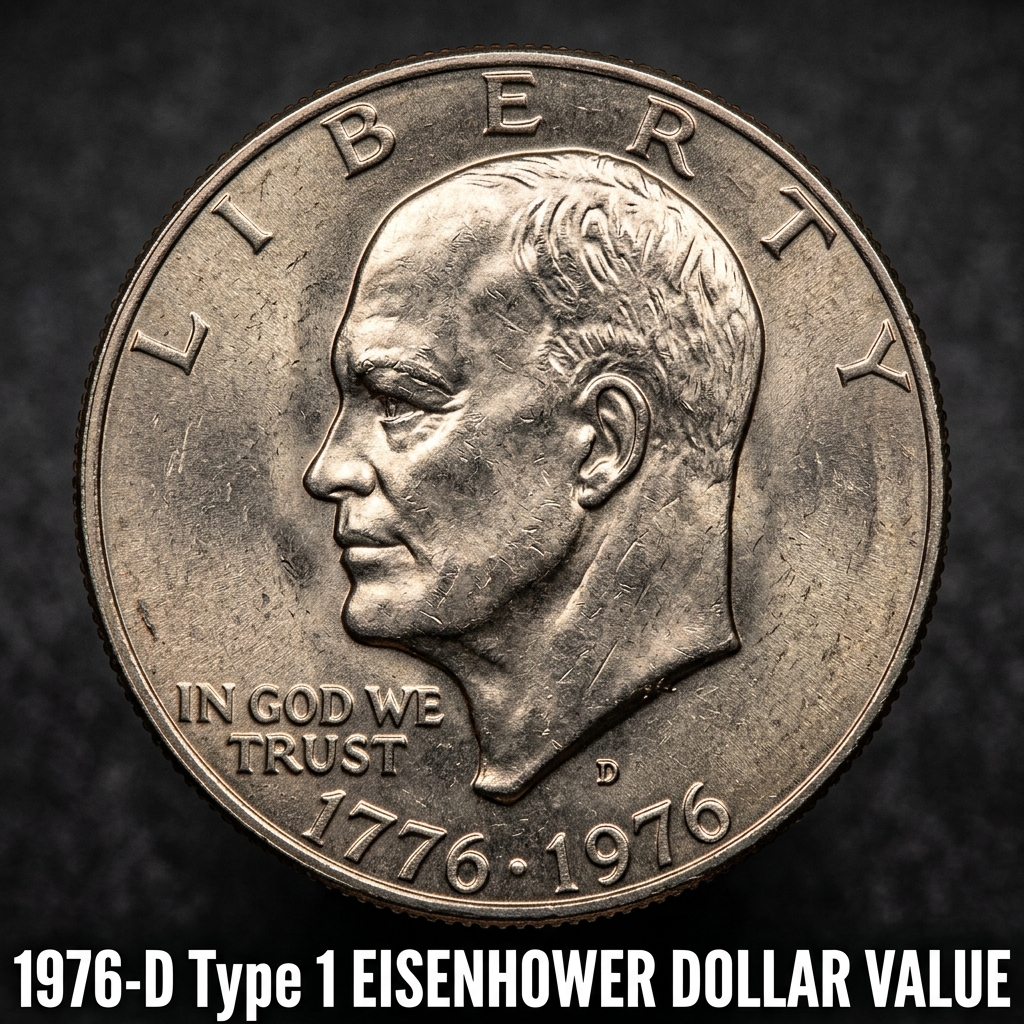
The 1976-D Type 1 Eisenhower Dollar is worth anywhere from $1.25 in heavily circulated condition to $25 or more in high-grade mint state. If you’ve got one sitting in a drawer or found it in an old coin jar, you might be surprised by what it could fetch — especially in better condition.
If you’re just getting started figuring out what your old coins are worth, a coin identifier and value app can be a huge help. These tools let you scan your coin with your phone and get an instant identification and estimated value — no coin shop visit required.
What Makes the 1976-D Type 1 Eisenhower Dollar Special
The year 1976 was a big deal for American coinage. To celebrate the United States Bicentennial, the U.S. Mint redesigned the reverse of the Eisenhower Dollar, featuring the Liberty Bell superimposed over the moon. Coins dated 1776–1976 were struck in both 1975 and 1976, making them some of the most widely recognized commemorative-style coins in circulation.
The “D” in 1976-D means this coin was minted at the Denver Mint. The Type 1 designation refers to the style of lettering on the reverse — specifically, the bold, thicker font used on the design. A Type 2 version with thinner lettering was released later the same year. Knowing which type you have matters, because collectors treat them as separate coins entirely.
Your Old Coin Could Be Valuable!
Identify It & Know Its Real Value — Free Download
This distinction is subtle but important. If the lettering on the reverse looks bold and chunky, you’ve got a Type 1. Type 2 coins have a more refined, thinner font. Both were produced in large quantities, but collectors and condition graders still track them separately.
How Much Is the 1976-D Type 1 Worth in Different Grades
Condition is everything in coin collecting. Even a common coin like the 1976-D Type 1 Eisenhower Dollar can jump significantly in value when it’s in pristine, uncirculated condition. Most of the ones you’ll find in circulation are worn and worth close to face value or just a slight premium.
Your Old Coin Could Be Valuable!
Identify It & Know Its Real Value — Free Download
Here’s a general breakdown of estimated values by grade:
| Grade | Condition | Estimated Value |
|---|---|---|
| Good (G-4) | Heavy wear, design visible | $1.25 – $2.00 |
| Fine (F-12) | Moderate wear, details clear | $1.50 – $3.00 |
| Extremely Fine (EF-40) | Light wear on high points | $3.00 – $6.00 |
| Mint State (MS-63) | Uncirculated, minor marks | $8.00 – $15.00 |
| Gem Mint State (MS-65) | Near perfect, strong luster | $20.00 – $30.00+ |
For the most current auction results and price trends, you can check out real-time market data for the 1976-D Type 1 Eisenhower Dollar in mint state grades — it’s a great way to see what collectors are actually paying right now.
Your Old Coin Could Be Valuable!
Identify It & Know Its Real Value — Free Download
Key Factors That Affect the Value of Your 1976-D Eisenhower Dollar
Beyond grade, a few other things can influence what your coin is worth. Luster is huge — an uncirculated coin that still has its original mint shine will command a better price than one that looks flat or has been cleaned. Cleaning is actually a major red flag for collectors. A cleaned coin, even if technically uncirculated, will lose a substantial portion of its collector value.
Strike quality also matters. Some 1976-D Type 1 Eisenhowers were struck with weak dies, meaning the details lack sharpness. A well-struck example with crisp details on the eagle and the Liberty Bell will always be more desirable.
Storage history plays a role too. Coins that have been kept in soft plastic flips, coin albums with PVC content, or exposed to humidity may have developed toning or spotting that reduces their appeal to buyers. Always store your coins in archival-quality holders if you want to preserve their value.
Your Old Coin Could Be Valuable!
Identify It & Know Its Real Value — Free Download
CoinKnow is an excellent tool for beginners who want to quickly assess these factors without having to memorize grading standards. Just take a photo of your coin and the app walks you through what to look for.
Is the 1976-D Type 1 Eisenhower Dollar Rare
Honestly, no — this is one of the most common Eisenhower Dollars ever made. The Denver Mint produced over 21 million 1976-D Eisenhower Dollars that year. That means you’ll find them in change rolls, estate sales, and old piggy banks all across the country. Rarity isn’t this coin’s strong suit.
That said, high-grade examples — especially those grading MS-65 and above — are considerably harder to find. Most of the coins that entered circulation took hits and handling marks quickly. A gem-quality example that somehow survived all these years in perfect condition is genuinely uncommon and worth seeking out.
Your Old Coin Could Be Valuable!
Identify It & Know Its Real Value — Free Download
If you’re curious about the broader Bicentennial dollar market and how the 1976-D compares to other varieties and years, take a look at detailed value information covering the complete 1776 to 1976 Bicentennial dollar series. It puts this coin in great context alongside related issues.
CoinKnow also helps you compare your coin against similar ones in their database, so you can get a realistic sense of where yours falls on the spectrum before you decide to sell or hold.
Should You Hold On to Your 1976-D Type 1 Eisenhower Dollar
For most people, a circulated 1976-D Type 1 Eisenhower Dollar is more of a keepsake than a major financial find. At face value-level prices for worn examples, it’s not going to change your life. But if you happen to have one in uncirculated condition — especially if it was stored well — it’s worth getting a second opinion from a reputable dealer or having it graded by PCGS or NGC.
Even if it’s worth just a few dollars, Eisenhower Dollars are genuinely interesting pieces of American history. They were the last large-size dollar coins produced for circulation, and the Bicentennial design makes the 1976 issues especially meaningful. CoinKnow can give you a fast, reliable estimate if you just want a quick answer without the hassle of visiting a coin shop.
Your Old Coin Could Be Valuable!
Identify It & Know Its Real Value — Free Download
Frequently Asked Questions
Q: How do I tell if my 1976-D dollar is Type 1 or Type 2?
A: Look closely at the lettering on the reverse of the coin. Type 1 has bold, thick lettering that appears slightly blocky or heavy. Type 2 has a thinner, more refined font. The difference is subtle but visible to the naked eye if you compare them side by side.
Q: Is a 1976-D Type 1 Eisenhower Dollar made of silver?
A: No. The standard 1976-D Eisenhower Dollar struck for circulation is made of copper-nickel clad — the same material used in modern quarters. Only special collector versions sold directly by the Mint in proof and uncirculated sets were made with 40% silver, and those don’t carry the “D” mintmark.
Q: Where is the best place to sell a 1976-D Type 1 Eisenhower Dollar?
A: For circulated examples, eBay or local coin dealers are your best bet. For higher-grade pieces, consider getting the coin professionally graded first through PCGS or NGC — a certified MS-65 or better will always attract more serious buyers and fetch a higher price at auction.