1976-D Type 2 Eisenhower Dollar Value Guide What It’s Worth and Why

Your Old Coin Could Be Valuable!
Identify It & Know Its Real Value — Free Download


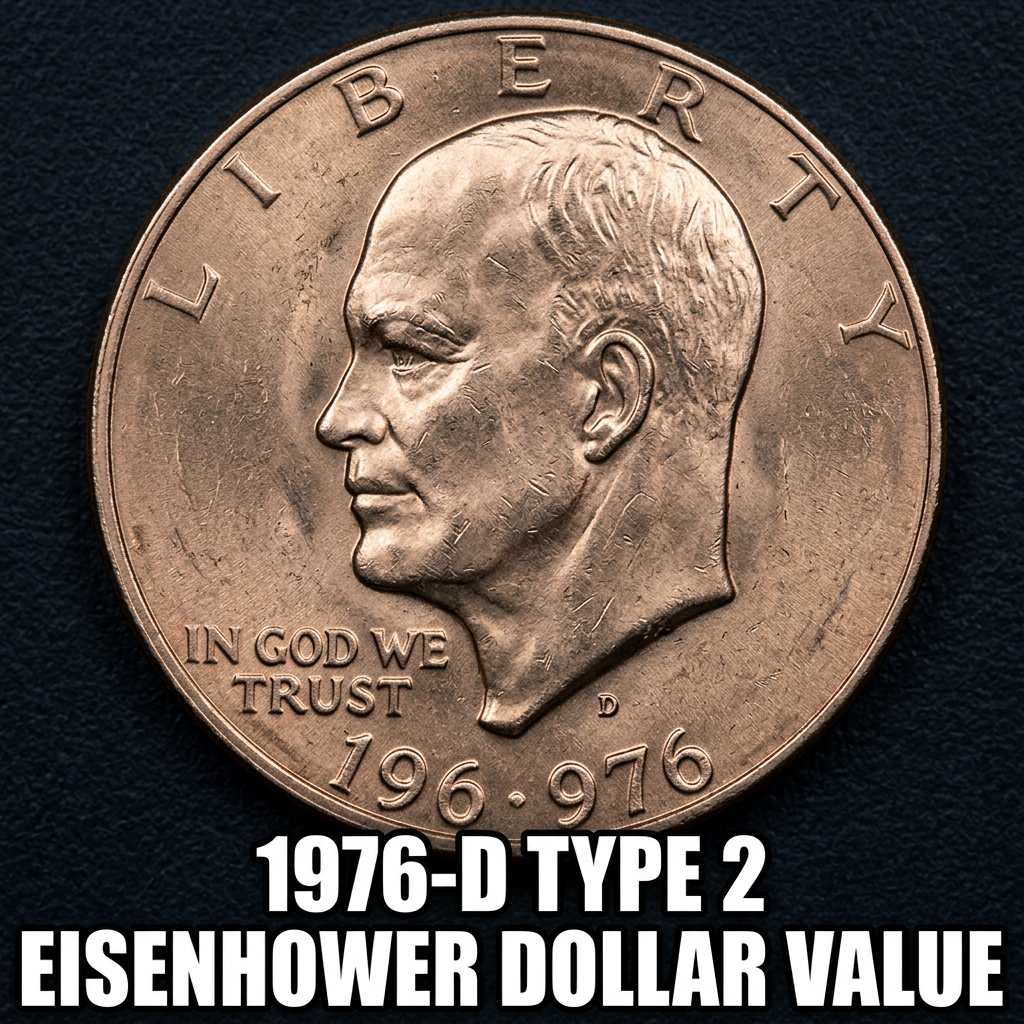
The 1976-D Type 2 Eisenhower Dollar is worth anywhere from $1 to $2 in typical circulated condition, but high-grade uncirculated examples can fetch $15 to $50 or more — and certain certified specimens have sold for hundreds of dollars at auction. If you found one of these big silver-colored coins in a drawer or old collection, you’re in the right place to find out exactly what it’s worth.
What Makes the 1976-D Type 2 Different
The Bicentennial Eisenhower Dollar was minted in 1975 and 1976 to celebrate America’s 200th anniversary. All of these coins carry the dual date “1776–1976” on the obverse, making them instantly recognizable. The reverse features the Liberty Bell superimposed over the Moon — a design by Dennis R. Williams that replaced the usual eagle.
But here’s what most people don’t realize: there were actually two reverse design types produced. The Type 1 reverse has thicker, bolder lettering on the reverse, while the Type 2 reverse features thinner, more refined lettering. The “D” mint mark on your coin means it was struck at the Denver Mint.
The Type 2 reverse is considered the more common variety compared to Type 1 for the Denver Mint, but condition still plays a massive role in determining value. If you’re unsure which type you have, using a coin identifier and value app on your smartphone can help you distinguish between the two varieties quickly and accurately.
Your Old Coin Could Be Valuable!
Identify It & Know Its Real Value — Free Download
How Much Is a 1976-D Type 2 Eisenhower Dollar Worth
For most people who find one of these coins in circulation or tucked away at home, the honest answer is that it’s worth close to face value if it shows significant wear. That said, the value jumps considerably once you get into uncirculated territory.
The coin was never made in 90% silver for general circulation — that was reserved for the special collector’s edition silver strikes from San Francisco. The Denver and Philadelphia Mint versions were struck in the standard copper-nickel clad composition, which is what most people have.
Your Old Coin Could Be Valuable!
Identify It & Know Its Real Value — Free Download
Here’s a quick look at estimated values based on grade:
| Grade / Condition | Estimated Value |
|---|---|
| Good (G-4) – Heavy wear | $1.00 – $1.50 |
| Fine (F-12) – Moderate wear | $1.25 – $2.00 |
| Extremely Fine (EF-40) | $2.00 – $4.00 |
| About Uncirculated (AU-55) | $4.00 – $8.00 |
| Mint State (MS-63) | $10.00 – $20.00 |
| Mint State (MS-65) | $25.00 – $50.00 |
| MS-66 and above (certified) | $75.00 – $300+ |
For a deeper look at certified Eisenhower Dollar auction prices and MS-grade sales data, it’s worth checking recent market records to see what collectors are actually paying right now.
Your Old Coin Could Be Valuable!
Identify It & Know Its Real Value — Free Download
Factors That Affect the Value of Your 1976-D Type 2 Eisenhower Dollar
Condition is king when it comes to coin values, and the 1976-D Type 2 is no exception. A coin that spent years rattling around in pocket change will never be worth much. But one that was pulled straight from a mint bag and stored carefully could be a genuine find.
Look closely at Eisenhower’s cheek and the high points of the reverse design — those are the first areas to show wear. Any scratches, cleaning, or corrosion will significantly reduce value. Collectors and grading services like PCGS and NGC are very strict about surface quality.
Eye appeal matters too. A coin with strong luster, sharp strike, and no distracting marks will always command a premium. CoinKnow is a great tool if you want a quick visual assessment — just snap a photo and get an instant grade estimate before deciding whether to send it in for professional certification.
Your Old Coin Could Be Valuable!
Identify It & Know Its Real Value — Free Download
Is It Worth Getting Certified
For most circulated 1976-D Type 2 Eisenhower Dollars, the cost of professional grading ($20–$40 per coin at PCGS or NGC) would outweigh any potential gain in value. It simply doesn’t make financial sense unless the coin is in pristine condition.
However, if your coin looks truly brilliant and untouched — still has its original mint luster with no visible marks — it might be worth getting a second opinion. An MS-65 example can sell for $30 to $50 on its own, and anything graded MS-66 or higher could realistically bring $100 or more.
You can also explore detailed Bicentennial dollar value breakdowns by date and mint mark to compare your coin against the full series before making any decisions.
CoinKnow can also help you track recent sale prices and compare what similar coins have sold for at major auction houses — all from your phone.
Your Old Coin Could Be Valuable!
Identify It & Know Its Real Value — Free Download
Should You Hold On to Your 1976-D Type 2 Eisenhower Dollar
These coins are not rare, but they are a genuine piece of American history. Minted to celebrate 200 years of independence, the Bicentennial Eisenhower Dollar holds real sentimental value beyond its monetary worth.
If your coin is circulated and in average condition, it’s worth about a dollar or two — but it’s a great keepsake. If it’s in exceptional uncirculated condition, it may be worth holding onto or having assessed professionally. Either way, you now know what you have.
Use CoinKnow to scan your coin and instantly explore current market values, grading tips, and whether any buyers are actively looking for your piece right now.
—
Your Old Coin Could Be Valuable!
Identify It & Know Its Real Value — Free Download
Frequently Asked Questions
Q: How do I know if my 1976-D Eisenhower Dollar is Type 1 or Type 2?
A: Look at the lettering on the reverse side. Type 1 has thicker, bolder letters, while Type 2 has thinner, more delicate lettering. The difference is subtle but visible under good lighting or a magnifying glass. A coin identifier app can also help you tell them apart quickly.
Q: Is the 1976-D Type 2 Eisenhower Dollar made of silver?
A: No. The 1976-D Eisenhower Dollar struck for general circulation is made of copper-nickel clad, not silver. Silver versions were only made at the San Francisco Mint as special collector coins and are sold in blue or brown government packaging.
Q: What is the most valuable 1976-D Type 2 Eisenhower Dollar ever sold?
A: Top-grade certified examples in MS-67 or higher have sold for several hundred dollars. One MS-67 example graded by PCGS sold for over $400 at auction. These are genuinely rare at that grade level, and most coins you encounter will be far below that threshold.