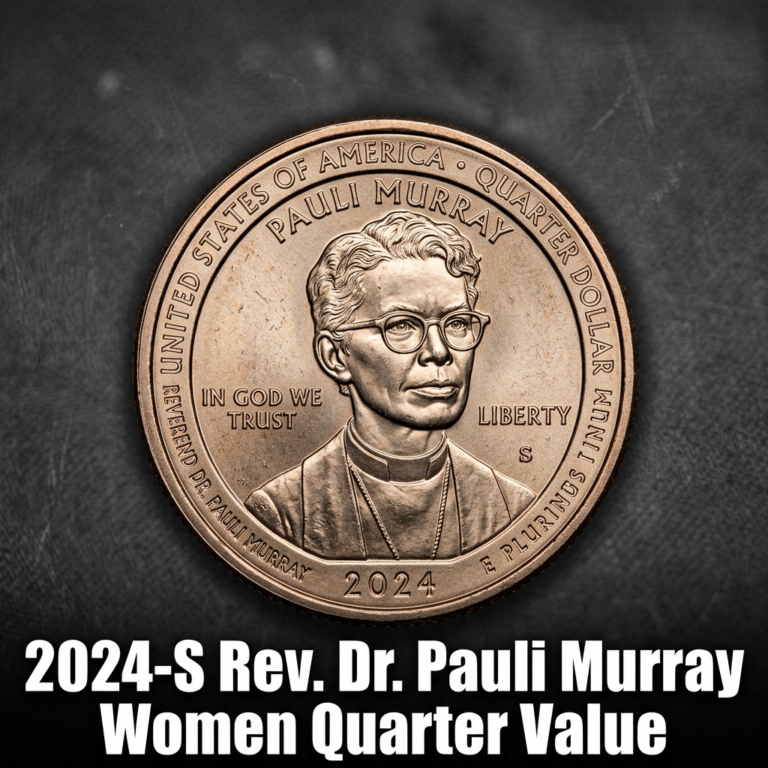
2020-S Sacagawea Dollar Value: Are These Worth Big Money?

Your Old Coin Could Be Valuable!
Identify It & Know Its Real Value — Free Download


The 2020-S Sacagawea Dollar is worth anywhere from $1 in circulated condition to over $1,200 in a perfect “Reverse Proof” grade. While most examples found in change are common bullion coins, the San Francisco “S” mint mark indicates specialized coins made specifically for collectors that can command a significant premium.
| Condition / Variety | Estimated Value |
|---|---|
| Circulated (Average Grade) | $1.00 – $1.50 |
| Proof (PR69 Deep Cameo) | $15.00 – $25.00 |
| Proof (PR70 Perfect Grade) | $40.00 – $65.00 |
| Reverse Proof (Special Finish) | $100.00 – $1,250.00+ |
Understanding the 2020-S Native American Dollar
The 2020-S Sacagawea Dollar, technically known as the Native American $1 Coin, features a unique “Elizabeth Peratrovich” reverse design. If you have found one of these in your pocket change or a coin jar, you are likely looking at a piece of American history that highlights the fight for civil rights. To find out if yours is a rarity, many collectors turn to a top coin identifier and value app to scan the surface details quickly.
Unlike the common circulating quarters or dimes, the “S” mint mark near the date signifies that the coin was struck at the San Francisco Mint. These are generally not released into general circulation. Most “S” coins from 2020 are Proof coins, meaning they were struck twice using special polished dies to create a mirror-like finish.
If you aren’t sure how to tell a Proof apart from a regular strike, CoinKnow can help you identify finish types. Because these weren’t intended for vending machines or grocery stores, finding one in high-quality condition is much more common than finding an older, beaten-up coin. However, the true value lies in the “MS” or “PR” numerical grade assigned by professional services.
Your Old Coin Could Be Valuable!
Identify It & Know Its Real Value — Free Download
The 2020-S Proof vs. Reverse Proof Variations
There are two primary types of “S” mint coins for this year. The standard Proof coin has a mirror-like background and frosted foreground characters. The other, much more valuable variety, is the “Reverse Proof.” In this version, the background is frosted and the raised details are polished to a brilliant shine. This creates a striking visual contrast that collectors adore.
Your Old Coin Could Be Valuable!
Identify It & Know Its Real Value — Free Download
The Reverse Proof was part of the “American Innovation” and special “Coin and Currency” sets. Because these sets are limited in production, the 2020-S Sacagawea dollar price for high-grade specimens can soar into the hundreds or even thousands of dollars if they are graded as PR70—the highest possible grade.
| Mint Mark & Finish | Mintage Type | Typical Value (High Grade) |
|---|---|---|
| 2020-S Standard Proof | Mirror Background | $25 |
| 2020-S Reverse Proof | Frosted Background | $150 – $1,200 |
How to Identify a Valuable 2020-S Dollar
To determine the value of your coin, you must look at the edge lettering. Since 2009, the Sacagawea dollar has featured the year, the mint mark, and the motto “E Pluribus Unum” engraved into the side (edge) of the coin rather than the face. Look closely for the letter “S.” If you see a “P” (Philadelphia) or “D” (Denver), the coin is generally worth closer to its face value unless it is in pristine condition.
Your Old Coin Could Be Valuable!
Identify It & Know Its Real Value — Free Download
The condition of the coin’s surface is the most important factor. Scratches, nicks, or oil from fingerprints can significantly lower the grade. For those trying to evaluate their collection at home, using tools like CoinKnow can provide a baseline for what to look for before paying for professional grading.
In terms of market trends, the current market data for the 2020 Sacagawea dollar suggests that enthusiasts are willing to pay a premium for coins that have been kept in their original US Mint packaging. Once a coin is removed and handled, its collector value usually drops toward the lower end of the spectrum.
Your Old Coin Could Be Valuable!
Identify It & Know Its Real Value — Free Download
Grading and Its Impact on Price
The value of the 2020-S Sacagawea Dollar is largely determined by the numeric scale from 1 to 70. A coin with a PR69 grade (nearly perfect) might sell for $20, but a PR70 (flawless) could sell for significantly more. This tiny difference is indistinguishable to the naked eye but makes a world of difference to a professional investor.
The Reverse Proof is particularly sensitive to grading. Because the frosted fields catch dust and fingerprints easily, finding a “Perfect 70” is quite difficult. If you believe your coin is flawless, it may be worth the investment to have it encased in plastic (slabbed) by a company like PCGS or NGC.
| Grade Designation | Standard Proof Value | Reverse Proof Value |
|---|---|---|
| PR/MS 65 (Gem) | $7.00 | $55.00 |
| PR/MS 69 (Near Perfect) | $18.00 | $85.00 |
| PR/MS 70 (Perfect) | $50.00 | $1,100.00+ |
Collecting the Native American Series
The 2020 design is just one part of a larger series that began in 2009. The 2020 design honors Elizabeth Peratrovich, a Tlingit woman who was a pivotal figure in the civil rights movement in Alaska. Her work led to the passage of the Anti-Discrimination Act of 1945. Collectors often seek out the “S” mint versions of these coins to complete “year sets.”
Because these coins are beautiful and educational, they have a strong following among thematic collectors. If you enjoy the history behind the coins, CoinKnow offers a great way to track your collection and see how the value of your set grows over time. Most beginners start with the P and D mint marks, which are cheaper, before moving onto the more expensive San Francisco Proofs.
Your Old Coin Could Be Valuable!
Identify It & Know Its Real Value — Free Download
2020-S Dollar Errors to Look For
While modern minting processes are highly efficient, errors still happen. An error on a 2020-S coin could make it worth significantly more than a standard proof. Look for “Struck Through” errors, where a piece of debris gets caught between the die and the coin, or edge lettering errors where the date is missing or doubled.
Double dies are less common on modern Proofs, but they are not impossible. If you notice any doubling in the fine lines of Elizabeth Peratrovich’s hair or the Alaskan Raven design, you might have a valuable rarity. Always use a magnifying glass or a high-resolution camera to inspect the details.
FAQ
Q: Is the 2020-S Sacagawea Dollar made of real gold?
A: No, the coin is not made of gold. It is composed of a pure copper core with an outer layer of manganese brass, which gives it its golden color. There is no actual gold content in these dollars.
Your Old Coin Could Be Valuable!
Identify It & Know Its Real Value — Free Download
Q: Where can I find the mint mark on a 2020-S Dollar?
A: You won’t find the mint mark on the front (obverse) or back (reverse) of the coin. You must look at the thin edge of the coin. The year “2020” and the mint mark “S” are laser-etched into the rim.
Q: Can I spend a 2020-S Sacagawea Dollar at a store?
A: Yes, it is legal tender and worth exactly $1.00 at any business. However, because most 2020-S coins have a collector value of $5 to $50, spending it for face value would result in a financial loss.
Q: How many 2020-S Reverse Proof Sacagawea dollars were made?
A: The mintage for the Reverse Proof variety is typically much lower than standard proofs, often limited to the number of special collector sets sold by the US Mint, making them the “key” coin for many modern collectors.