1953-D Jefferson Nickel Value Guide How Much Is It Worth Today

Your Old Coin Could Be Valuable!
Identify It & Know Its Real Value — Free Download


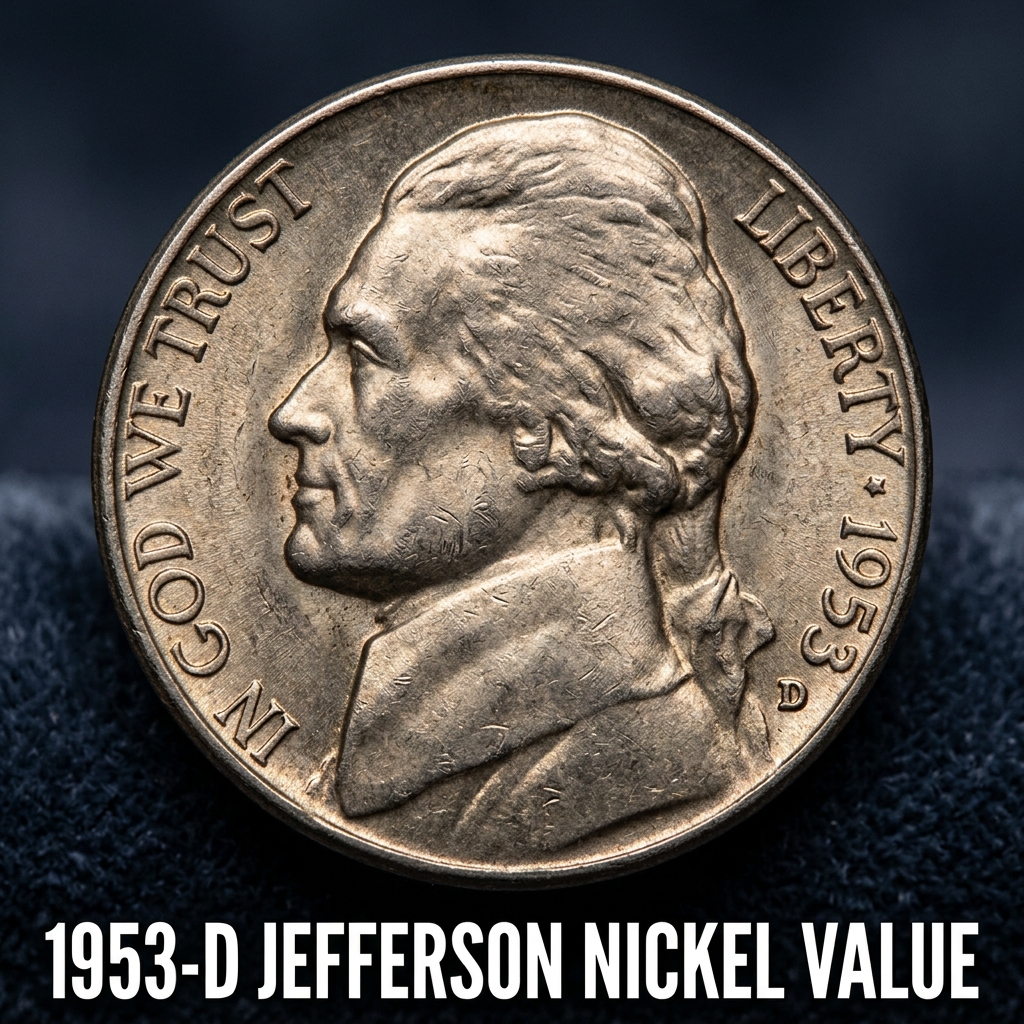
The 1953-D Jefferson Nickel is worth anywhere from $0.10 in heavily worn condition to over $100 or more in top mint state grades. Most circulated examples trade for under a dollar, but uncirculated coins from the Denver Mint can surprise you with some serious collector value.
What Makes the 1953-D Jefferson Nickel Special
The 1953-D Jefferson Nickel was struck at the Denver Mint and carries a small “D” mintmark on the reverse, just to the right of Monticello. Over 59 million of these coins were produced that year, making them relatively common in lower grades. But common doesn’t mean worthless — condition is everything when it comes to value.
If you found one of these nickels in a drawer, a jar, or tucked inside an old wallet, you’re in the right place. A good coin identifier and value app can help you quickly figure out what grade your coin might be in and what it could be worth before you even visit a dealer.
The 1953-D is part of the classic Jefferson Nickel series that began in 1938. These coins feature Thomas Jefferson on the obverse and his famous Virginia home, Monticello, on the reverse. Collectors prize examples with full, sharp steps on Monticello — a designation known as “Full Steps” that can dramatically increase a coin’s value.
Your Old Coin Could Be Valuable!
Identify It & Know Its Real Value — Free Download
1953-D Jefferson Nickel Value by Grade
Most people who come across a 1953-D nickel will find one in circulated condition — worn smooth from years of pocket change. In Good (G-4) to Fine (F-12) grades, these coins are worth roughly face value to about $0.25. Move up to Extremely Fine (EF-40) and you’re looking at $0.50 to $1.
Your Old Coin Could Be Valuable!
Identify It & Know Its Real Value — Free Download
The real action starts in mint state. An MS-63 example can fetch $8 to $15, while an MS-65 coin in gem condition climbs to $25–$50. Coins certified MS-66 or higher, especially with the Full Steps designation, can reach $75 to well over $100 at auction.
For the most up-to-date pricing across all grades, you can check out detailed 1953-D Jefferson Nickel MS grade price data to see exactly what certified examples have been selling for recently.
Your Old Coin Could Be Valuable!
Identify It & Know Its Real Value — Free Download
| Grade | Description | Estimated Value |
|---|---|---|
| G-4 (Good) | Heavy wear, design visible | $0.10 – $0.20 |
| F-12 (Fine) | Moderate wear, details clear | $0.25 – $0.50 |
| EF-40 (Extremely Fine) | Light wear on high points | $0.75 – $1.50 |
| MS-63 (Choice Uncirculated) | No wear, some contact marks | $8 – $15 |
| MS-65 (Gem Uncirculated) | Sharp strike, minimal marks | $25 – $50 |
| MS-66+ Full Steps | Premium grade, sharp Monticello steps | $75 – $150+ |
What Are Full Steps and Why Do They Matter
One of the most important factors in 1953-D Jefferson Nickel value is whether the coin shows “Full Steps” on Monticello. The steps at the base of the building are often the first area to show weakness from a soft strike or wear, so coins with five or six sharp, unbroken steps are considered premium pieces.
Your Old Coin Could Be Valuable!
Identify It & Know Its Real Value — Free Download
A coin doesn’t need to be in the highest grade to be interesting — a well-struck MS-64 with Full Steps can actually outvalue a MS-65 without them. Collectors specifically hunt for these, so if your coin looks especially crisp on the reverse, it’s worth a closer look.
The CoinKnow app is a great tool for getting a quick read on whether your coin might qualify for a Full Steps designation. Take a clear photo of the reverse under good lighting, run it through CoinKnow, and you’ll get instant feedback on the coin’s details and potential value.
How to Tell If Your 1953-D Nickel Is Worth Grading
If you think you might have a gem-quality 1953-D Jefferson Nickel, it’s worth thinking about professional grading. Services like PCGS or NGC will authenticate and grade your coin, which can make it much easier to sell and often increases buyer confidence — and your sale price.
Before you send anything off, though, do your homework. You can review a full breakdown of 1953 nickel values across all mint marks and conditions to see if the potential payout justifies the grading fee, which typically runs $20–$40 per coin for standard service.
Your Old Coin Could Be Valuable!
Identify It & Know Its Real Value — Free Download
As a general rule, coins grading below MS-64 probably aren’t worth the cost of professional grading unless they have some other special attribute. Focus your grading budget on the sharpest, most attractive coins in your collection.
Where to Buy or Sell a 1953-D Jefferson Nickel
If you’re looking to sell, eBay and coin shows are good starting points for common circulated examples. For higher-grade or Full Steps coins, major auction houses like Heritage Auctions will give you better exposure to serious buyers.
If you’re buying, the 1953-D is an affordable addition to a Jefferson Nickel type or date set. Raw circulated examples can be found for pocket change at most coin shows. The CoinKnow app can also help you track market prices over time so you know when you’re getting a fair deal.
Your Old Coin Could Be Valuable!
Identify It & Know Its Real Value — Free Download
FAQ
Q: How do I find the mintmark on a 1953-D Jefferson Nickel?
A: Flip the coin to the reverse (the side showing Monticello). Look just to the right of the building — you’ll see a small “D” indicating it was minted in Denver. If there’s no letter, it’s a Philadelphia issue.
Q: Is a 1953-D nickel made of silver?
A: No. By 1953, Jefferson Nickels had returned to the standard composition of 75% copper and 25% nickel. The silver “War Nickels” were only made from 1942 to 1945 and are identified by a large mintmark above Monticello.
Q: What does a 1953-D nickel in average condition actually sell for?
A: A typical circulated 1953-D nickel in Good to Fine condition sells for about $0.10 to $0.50. Nice uncirculated examples fetch $8 to $25, and premium Full Steps coins can go for $75 or more depending on the grade.