1986-D Washington Quarter Value What Is It Worth and Why It Matters

Your Old Coin Could Be Valuable!
Identify It & Know Its Real Value — Free Download


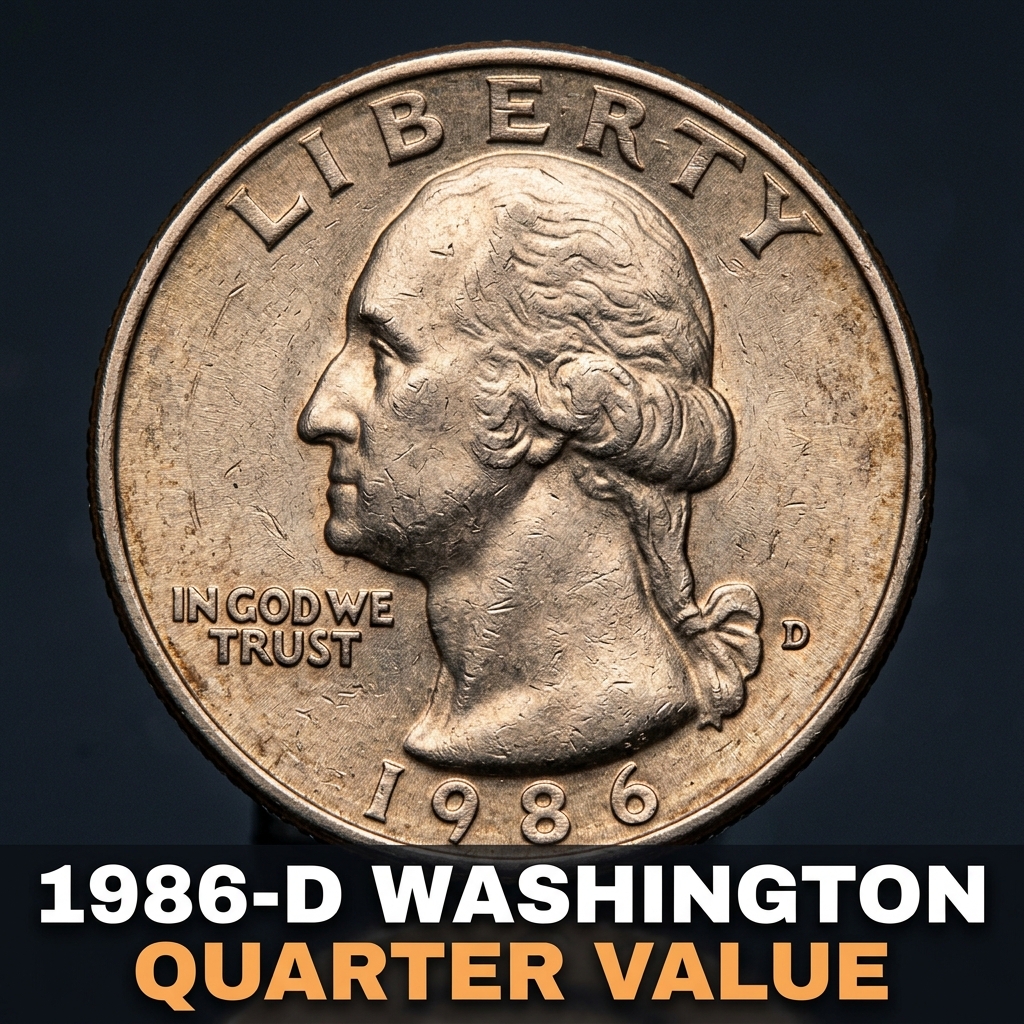
The 1986-D Washington Quarter is worth anywhere from 25 cents in heavily worn condition to around $10 or more in uncirculated grades, with top certified mint state examples occasionally fetching $50 or higher at auction. If you found one of these in a coin jar or old wallet, you’re in the right place to find out exactly what you’ve got.
What Makes the 1986-D Quarter Different
The “D” in 1986-D tells you this coin was struck at the Denver Mint, one of the two main facilities producing quarters that year alongside Philadelphia. Denver quarters from this era are common in circulation, but condition makes all the difference in determining real value.
If you’re not sure which mint your coin came from, flip it over and look just below the ribbon on Washington’s portrait on the obverse side. A small “D” mintmark confirms Denver production.
For a quick and reliable identification at home, many collectors use a coin identifier and value app to scan their coins and get instant details on mint marks, grades, and estimated values — no coin expertise required.
Your Old Coin Could Be Valuable!
Identify It & Know Its Real Value — Free Download
How Much Is a 1986-D Washington Quarter Worth
Most 1986-D quarters you pull from a pocket or coin jar are going to be worth face value or just slightly above — around 25 to 50 cents. That’s because millions were struck and many circulated heavily through the 1980s and 1990s.
However, coins that were saved early and never spent — often called “brilliant uncirculated” or BU coins — start to pick up real numismatic value. A well-preserved example grading MS-65 or higher under professional standards can be worth several dollars to tens of dollars.
Your Old Coin Could Be Valuable!
Identify It & Know Its Real Value — Free Download
Here’s a quick value breakdown by condition:
| Condition / Grade | Estimated Value |
|---|---|
| Good (G-4) – Heavy Wear | Face Value ($0.25) |
| Fine (F-12) – Moderate Wear | $0.25 – $0.50 |
| Extremely Fine (EF-40) | $0.50 – $1.50 |
| Mint State (MS-63) | $3 – $6 |
| Mint State (MS-65) | $8 – $20 |
| Mint State (MS-67 or Higher) | $50 – $100+ |
For collectors who want to dig into certified auction results and grade-by-grade price data, this detailed breakdown of 1986 Washington Quarter MS grade pricing is a great reference to bookmark.
Your Old Coin Could Be Valuable!
Identify It & Know Its Real Value — Free Download
How Condition and Grading Affect the 1986-D Quarter’s Value
Grading is everything in coin collecting. Two 1986-D quarters that look similar to the naked eye could have drastically different values depending on tiny details — surface luster, contact marks, strike quality, and eye appeal all play a role.
Professional grading services like PCGS and NGC assign numeric grades from 1 to 70. For modern coins like this one, MS-65 or better is where things get interesting for collectors.
If your coin has no visible wear, original shine, and no big scratches, it could be worth getting professionally graded — especially if you believe it’s a gem example. CoinKnow is a popular tool among casual collectors for getting a preliminary idea of grade and value before spending money on professional certification.
Your Old Coin Could Be Valuable!
Identify It & Know Its Real Value — Free Download
Mintage Numbers and Why the 1986-D Isn’t Rare
The Denver Mint produced approximately 473 million Washington quarters in 1986. That’s nearly half a billion coins — which is part of why these are so common in circulation and at coin shows.
High mintage numbers mean the coin isn’t rare in typical circulated grades. However, finding a truly pristine, untouched example in MS-67 or MS-68 is still a challenge because most coins were spent and worn down over decades.
Rarity at the top of the grading scale is what gives even common coins like the 1986-D quarter some collector appeal. If you’ve got one that’s been sitting in an old collection since the 1980s and never touched, it’s worth taking a close look.
For a comprehensive overview of 1986 quarter values across all grades and mint marks, including comparison data for Philadelphia and Denver issues, that guide covers the full picture in plain language.
Your Old Coin Could Be Valuable!
Identify It & Know Its Real Value — Free Download
Should You Hold On to Your 1986-D Quarter
For most people, the 1986-D Washington Quarter is a fun find but not a life-changing one. If it’s circulated, it’s essentially face value. If it’s uncirculated and in beautiful condition, it might fetch a few dollars from a collector.
That said, it’s always worth checking before you spend it or toss it in a jar. Rare varieties, error coins, or unusually high-grade examples do exist — and those are the ones that can surprise you.
Using CoinKnow to scan and identify your coins takes just a few seconds and can tell you whether you’ve got something ordinary or something that deserves a closer look. It’s one of the easiest ways for beginners to start understanding what their old coins might really be worth.
—
Your Old Coin Could Be Valuable!
Identify It & Know Its Real Value — Free Download
Frequently Asked Questions
Q: Is the 1986-D Washington Quarter made of silver?
A: No. The 1986-D quarter is made of a copper-nickel clad composition — 91.67% copper and 8.33% nickel. Washington quarters switched from 90% silver to clad metal after 1964, so any quarter dated 1965 or later contains no silver.
Q: What does the D mintmark mean on a 1986 quarter?
A: The “D” mintmark stands for the Denver Mint in Colorado. You’ll find it on the obverse (front) of the coin, just to the right of Washington’s portrait below the ribbon. A coin with no mintmark was made in Philadelphia.
Q: How do I know if my 1986-D quarter is worth getting graded?
A: If your coin shows no signs of wear, has original luster, and no major scratches or contact marks, it might grade MS-65 or higher — and that’s when professional grading starts to make financial sense. A quick scan with CoinKnow can give you a good starting estimate before you invest in a professional submission.