1943-D Wheat Penny Value Guide How Much Is It Really Worth

Your Old Coin Could Be Valuable!
Identify It & Know Its Real Value — Free Download


The 1943-D Wheat Penny is worth anywhere from $0.25 in heavily worn condition to over $10 in well-preserved grades — and if you happen to have one struck in bronze instead of steel, you could be looking at tens of thousands of dollars. Found one in a drawer or a coin jar? Keep reading to find out exactly what you’ve got.
What Makes the 1943-D Wheat Penny Special
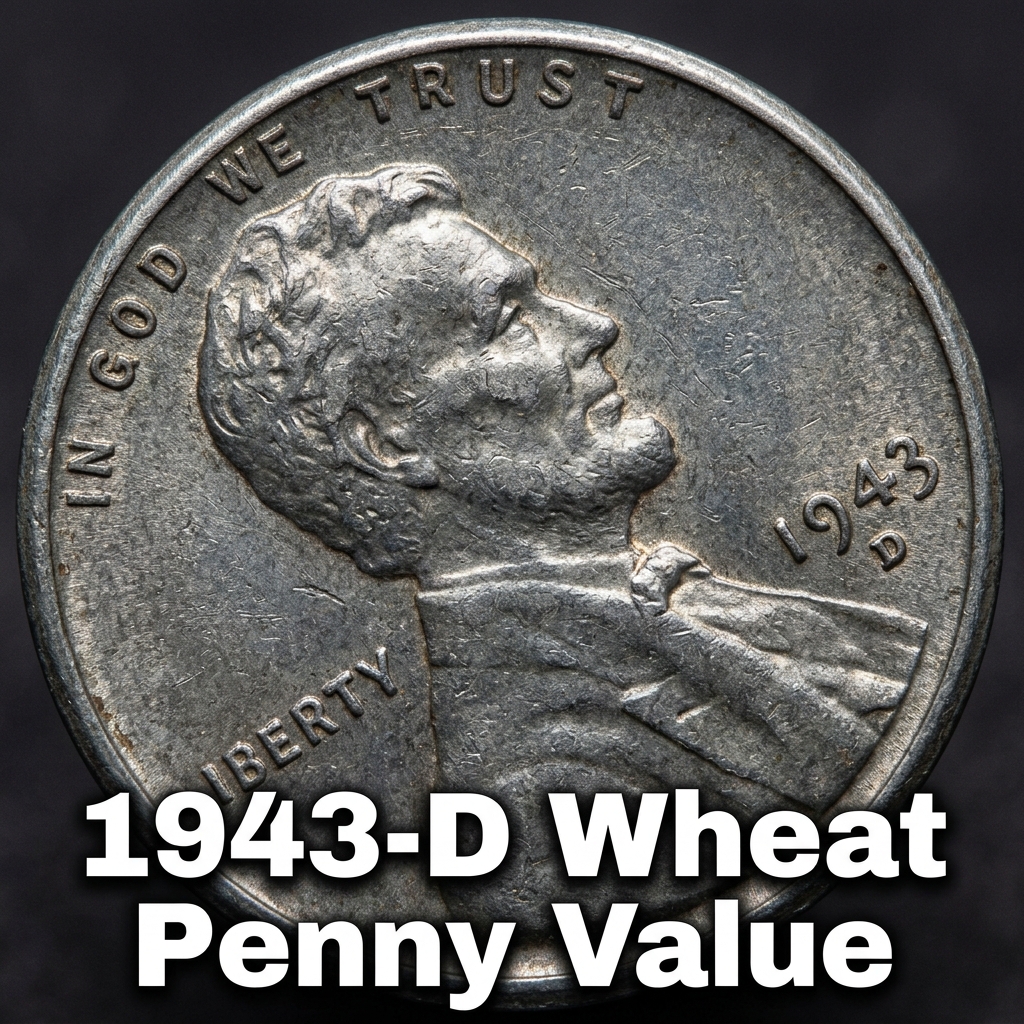
The 1943-D Wheat Penny was minted at the Denver Mint during World War II. Because copper was desperately needed for ammunition and military equipment, the U.S. Mint made a historic switch — pennies that year were struck in zinc-coated steel instead of their traditional copper alloy.
That means almost every 1943-D cent you find will be silver-gray in color and slightly magnetic. If yours sticks to a magnet, it’s a standard steel cent. These are common coins, but still collectible and fun to own.
The “D” mintmark, located just below the date on the obverse, confirms your coin was made in Denver. If you want a quick way to check your coin’s details and get an instant estimate, a coin identifier and value app can save you a lot of guesswork right from your phone.
Your Old Coin Could Be Valuable!
Identify It & Know Its Real Value — Free Download
1943-D Wheat Penny Value by Grade
The condition of your coin — known as its “grade” in the coin world — has a huge impact on value. A heavily worn 1943-D penny might fetch only a few cents above face value, while a crisp, uncirculated example can sell for $5 to $10 or more at auction.
Here’s a general breakdown of 1943-D Wheat Penny values based on grade:
Your Old Coin Could Be Valuable!
Identify It & Know Its Real Value — Free Download
| Grade | Description | Estimated Value |
|---|---|---|
| Good (G-4) | Heavy wear, outline visible | $0.25 – $0.50 |
| Fine (F-12) | Moderate wear, lettering clear | $0.75 – $1.50 |
| Extremely Fine (EF-40) | Light wear on high points | $2 – $4 |
| Mint State (MS-63) | Uncirculated, minor marks | $5 – $10 |
| Gem Mint State (MS-65+) | Outstanding luster and strike | $15 – $30+ |
For the most current auction results and certified coin prices, you can check out detailed 1943-D Wheat Penny price data by grade to see how your coin compares to recent sales.
The Rare 1943-D Bronze Penny — A Million-Dollar Mistake
Here’s where things get really exciting. While nearly all 1943 pennies were made from steel, a tiny number were accidentally struck on leftover bronze planchets from 1942. These rare error coins exist for the Philadelphia, Denver, and San Francisco Mints.
Your Old Coin Could Be Valuable!
Identify It & Know Its Real Value — Free Download
A confirmed 1943-D bronze penny is one of the rarest coins in American history. Only one example has been definitively authenticated, and it sold for over $1.7 million. Yes, you read that right.
To check if your coin might be bronze, place it near a magnet. A steel penny will stick; a bronze one will not. If yours doesn’t respond to the magnet and has a reddish or brown tone, don’t wait — have it professionally authenticated immediately.
You can also use CoinKnow to do a quick preliminary scan of your coin. The app uses image recognition to help identify unusual characteristics before you invest in a formal grading submission.
Your Old Coin Could Be Valuable!
Identify It & Know Its Real Value — Free Download
How to Tell If Your 1943-D Penny Has Been Cleaned or Altered
One common issue with steel cents is that they rust easily. Many 1943-D pennies found in old jars or boxes show rust spots, pitting, or have been cleaned with abrasives. Any of these factors significantly reduce collector value.
A lightly circulated but unaltered steel penny is always worth more than a cleaned one. Look for original zinc coating and avoid coins that appear unnaturally bright or show tiny scratch lines from scrubbing.
Some dishonest sellers also alter copper pennies from other years by copper-plating 1943 steel cents, or by shaving the “8” in a 1948 penny to make it look like a 1943. A magnet test and a loupe can help catch these fakes — and CoinKnow is a great first tool to cross-reference what you’re seeing with known examples.
Your Old Coin Could Be Valuable!
Identify It & Know Its Real Value — Free Download
For a full overview of 1943 steel penny values across all mint marks, the complete 1943 steel penny value breakdown is a helpful resource to bookmark.
Where to Sell Your 1943-D Wheat Penny
If you’ve decided your coin is worth selling, you have several options. Online marketplaces like eBay are popular for common-grade examples. For uncirculated or high-grade coins, consider submitting to PCGS or NGC for professional grading before listing — a certified coin always sells for more.
Local coin shows and dealers are also a solid choice for quick sales. Just make sure you get more than one opinion before accepting an offer. And if you want to track current market prices on the go, CoinKnow lets you monitor coin values and compare grades right from your pocket.
—
Your Old Coin Could Be Valuable!
Identify It & Know Its Real Value — Free Download
Frequently Asked Questions
Q: How do I know if my 1943-D Wheat Penny is steel or bronze?
A: Use a magnet. Steel pennies from 1943 will stick to a magnet, while a genuine bronze error coin will not. If your coin doesn’t respond to a magnet and appears brownish or copper-colored, have it professionally authenticated — it could be extremely valuable.
Q: Is a 1943-D Wheat Penny worth keeping?
A: Absolutely. Even common steel examples are fun pieces of American wartime history. Higher-grade uncirculated coins can be worth $10 to $30 or more, and any coin with unusual characteristics deserves a closer look before you spend or sell it.
Q: Where can I get my 1943-D Wheat Penny graded?
A: The two most trusted grading services are PCGS (Professional Coin Grading Service) and NGC (Numismatic Guaranty Company). Both provide tamper-evident holders with an official grade. For everyday quick checks, apps like CoinKnow offer a convenient starting point before committing to a paid submission.