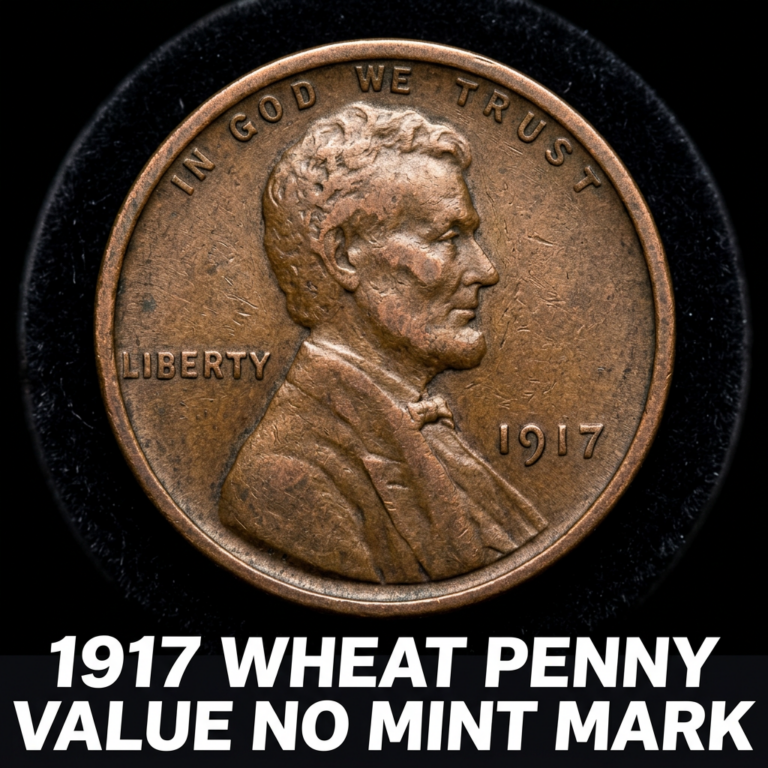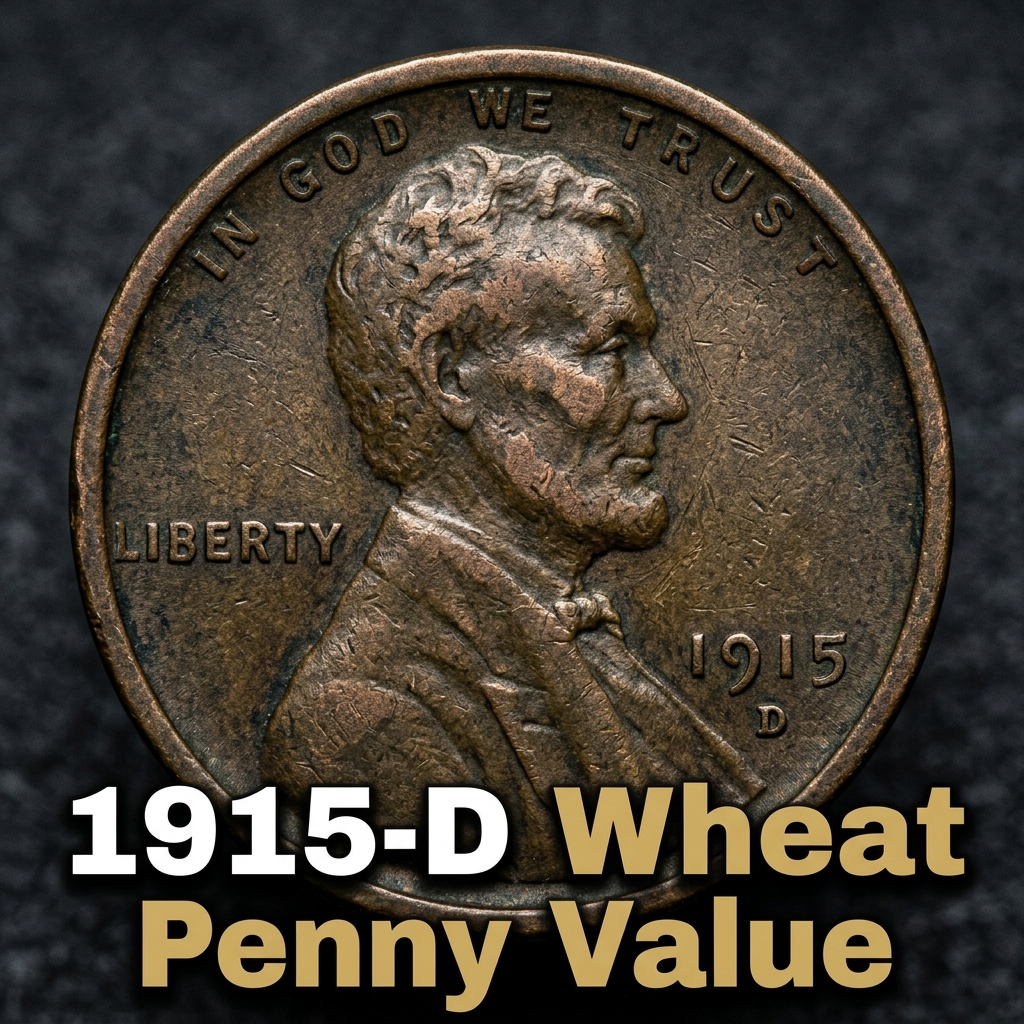
1915-D Wheat Penny Value Guide What This Denver Mint Coin Is Worth Today

Your Old Coin Could Be Valuable!
Identify It & Know Its Real Value — Free Download


The 1915-D Wheat Penny is worth anywhere from $2 in heavily worn condition to well over $150 in uncirculated grades — and in top mint state examples, it can fetch $500 or more. If you’ve got one of these old Lincoln cents sitting in a jar or an inherited collection, you’re holding a piece of early American coinage history that’s definitely worth a closer look.
What Makes the 1915-D Wheat Penny Special
The “D” in 1915-D stands for Denver, meaning this coin was struck at the Denver Mint during the early years of the Lincoln Wheat Penny series, which began in 1909. With a mintage of around 22.05 million coins, the 1915-D isn’t considered rare in the absolute sense — but finding one in nice condition is a different story entirely.
Most of these coins spent decades rattling around in pockets, cash registers, and piggy banks. That heavy circulation wore down the fine details on Lincoln’s portrait and the wheat stalks on the reverse.
If you’ve recently found an old penny and aren’t sure what you’ve got, using a coin identifier and value app can help you quickly figure out the mint mark, date, and estimated value before you do anything else with it.
Your Old Coin Could Be Valuable!
Identify It & Know Its Real Value — Free Download
Collectors and dealers pay close attention to the “D” mint mark located just below the date on the obverse side. Even a moderately circulated example in VF (Very Fine) grade can be worth $15 to $30 — solid returns for a coin that originally cost one cent.
1915-D Wheat Penny Value by Grade
Coin values depend heavily on condition, also known as “grade.” The better the coin looks — meaning less wear, sharper details, and stronger luster — the more it’s worth. Here’s a general breakdown of what you can expect:
Your Old Coin Could Be Valuable!
Identify It & Know Its Real Value — Free Download
| Grade | Description | Estimated Value |
|---|---|---|
| Good (G-4) | Heavy wear, outline visible | $2 – $4 |
| Fine (F-12) | Moderate wear, some detail | $8 – $14 |
| Very Fine (VF-20) | Light wear on high points | $15 – $30 |
| Extremely Fine (EF-40) | Slight wear, strong details | $35 – $65 |
| Mint State (MS-63) | No wear, some blemishes | $100 – $175 |
| Gem Mint State (MS-65+) | Near perfect, full luster | $400 – $700+ |
For the most current auction results and certified sale prices, you can check out detailed 1915-D Wheat Penny price data in mint red grades to see how top-condition examples have performed at major coin auctions.
How to Identify Your 1915-D Wheat Penny
Identification is your first step before worrying about value. Flip your coin over and look for the date “1915” on the front (obverse) near the bottom. Just below the date, you should see a small “D” — that’s the Denver Mint mark.
Your Old Coin Could Be Valuable!
Identify It & Know Its Real Value — Free Download
The obverse shows Abraham Lincoln’s profile facing right, with “IN GOD WE TRUST” above and “LIBERTY” to the left. The reverse has two stalks of wheat framing the words “ONE CENT” and “UNITED STATES OF AMERICA.”
CoinKnow is a handy app that many everyday collectors use to snap a photo of their coin and instantly get a grade estimate and value range. It takes the guesswork out of identifying mint marks and spotting condition issues that affect price.
One thing to watch for: the color designation on mint state examples matters a lot. Coins graded “Red” (RD) — meaning they still show original copper luster — are worth significantly more than “Brown” (BN) examples that have toned over time. A gem red coin can be worth three to four times more than a gem brown coin of the same grade.
Your Old Coin Could Be Valuable!
Identify It & Know Its Real Value — Free Download
Are There Any Rare 1915-D Varieties Worth More?
While the 1915-D Wheat Penny doesn’t have a famous major error like a doubled die or off-metal strike that dramatically spikes its value, there are minor die varieties that dedicated collectors hunt for. These include subtle repunched mint marks (RPM) where the “D” was stamped slightly off-center and then corrected, leaving a ghost of the original impression.
These varieties typically add a small premium — maybe 10–30% above the standard value — but they’re exciting for variety collectors who love the hunt.
If you’re serious about figuring out whether your coin has any variety, CoinKnow and professional resources like PCGS or NGC’s online databases can help you compare die characteristics side by side.
For a broader look at 1915 Penny values across all three mint marks — Philadelphia, Denver, and San Francisco — it’s worth comparing your coin’s value in context with its siblings from that year.
Your Old Coin Could Be Valuable!
Identify It & Know Its Real Value — Free Download
Should You Get Your 1915-D Penny Graded?
If your coin looks like it’s never been circulated — bright copper color, sharp details, and no scratches — professional grading by PCGS or NGC is almost always worth the investment. A certified MS-64 or MS-65 coin is far easier to sell and commands a higher price than a raw, ungraded coin of the same quality.
For coins in lower grades (Good through Very Fine), the cost of grading usually isn’t worth it. You’re better off selling or trading those through local coin shops, coin shows, or online platforms like eBay.
And if you’re just starting out and want a simple way to assess what you have before spending money on grading, CoinKnow gives you a solid baseline estimate right from your phone.
—
Your Old Coin Could Be Valuable!
Identify It & Know Its Real Value — Free Download
Frequently Asked Questions
Q: How do I know if my 1915 penny is from Denver?
A: Look just below the date on the front of the coin. If you see a small “D” mint mark, it was struck at the Denver Mint. No mint mark means Philadelphia, and an “S” means San Francisco.
Q: Is a 1915-D Wheat Penny worth cleaning before selling?
A: No — never clean old coins. Cleaning removes the natural patina and actually destroys value in the eyes of collectors and graders. Even a dark, oxidized coin is worth more untouched than one that’s been polished.
Q: What’s the most a 1915-D Wheat Penny has ever sold for?
A: High-grade examples in MS-65 Red have sold at auction for $500 to over $700. Exceptional examples grading MS-66 or above can push past $1,000, though those are extremely rare survivors from more than a century ago.