
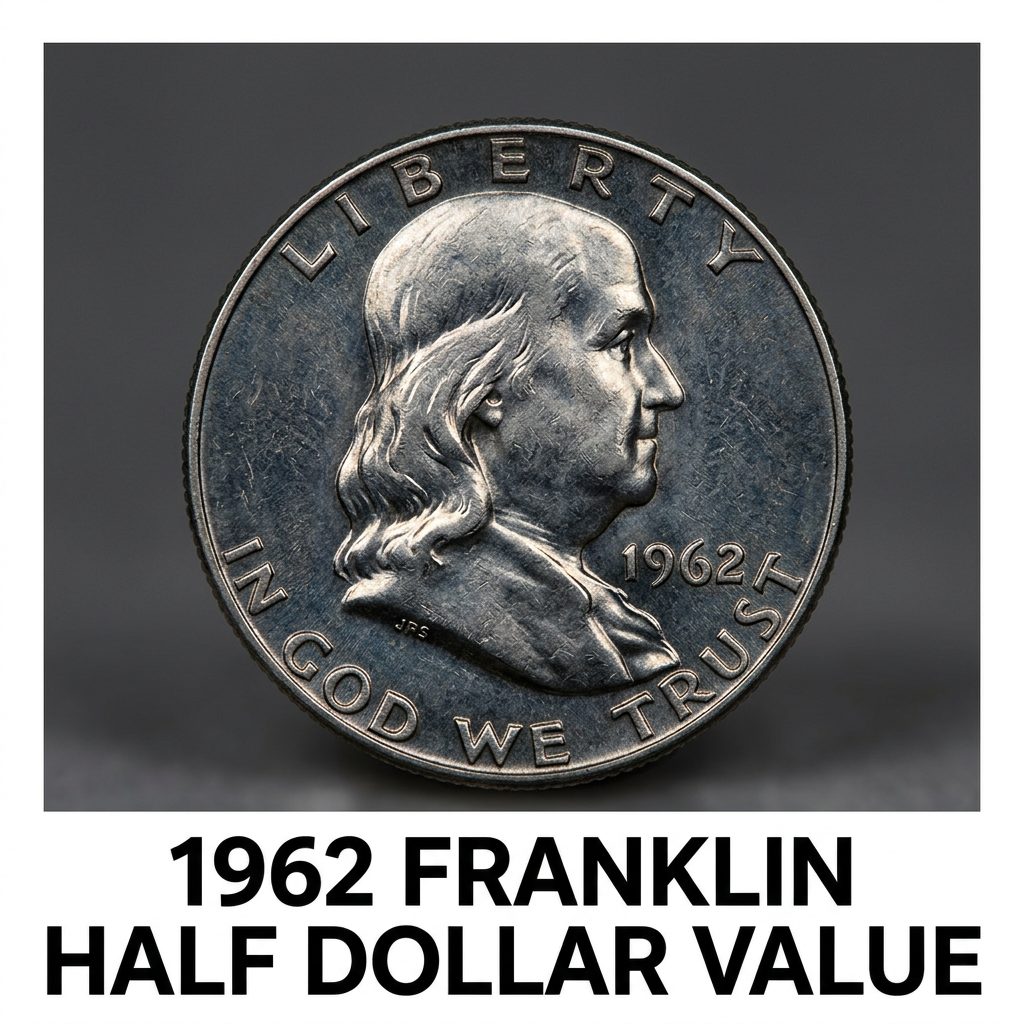
1962 Franklin Half Dollar Value What Is It Worth Today

Your Old Coin Could Be Valuable!
Identify It & Know Its Real Value — Free Download


The 1962 Franklin Half Dollar is worth anywhere from $8 in worn condition to over $200 or more in top mint state grades. If you’ve come across one of these classic silver coins in an old jar or inherited collection, you’re in the right place to find out exactly what it’s worth.
What Makes the 1962 Franklin Half Dollar Special
The 1962 Franklin Half Dollar holds a unique place in American coinage history. It was one of the final years of production for this beloved series, which ran from 1948 to 1963. Designed by John R. Sinnock, the coin features a portrait of Benjamin Franklin on the obverse and the Liberty Bell on the reverse — a combination that collectors still admire today.
These coins are composed of 90% silver, which means even a heavily circulated example carries real melt value based on the current silver spot price. As of recent silver prices hovering around $25–$28 per ounce, a single 1962 Franklin Half Dollar contains about 0.3617 troy ounces of silver, giving it a base melt value of roughly $9 to $10.
If you want a quick and accurate reading on what your specific coin is worth, you can use a coin identifier and value app to scan and evaluate your coin right from your smartphone. It’s one of the easiest ways to get started without any numismatic experience.
Your Old Coin Could Be Valuable!
Identify It & Know Its Real Value — Free Download
1962 Franklin Half Dollar Value by Grade and Mint Mark
The value of a 1962 Franklin Half Dollar varies significantly depending on its condition (grade) and where it was minted. In 1962, coins were struck at two facilities: the Philadelphia Mint (no mint mark) and the Denver Mint (D mint mark on the reverse).
Your Old Coin Could Be Valuable!
Identify It & Know Its Real Value — Free Download
Coins in circulated grades — worn from everyday use — typically fetch prices close to their silver melt value. But uncirculated examples, especially those graded MS-65 or higher by PCGS or NGC, can command serious premiums. The Full Bell Lines (FBL) designation, which indicates sharp, complete strike lines on the Liberty Bell, adds even more value to higher-grade specimens.
Your Old Coin Could Be Valuable!
Identify It & Know Its Real Value — Free Download
Here’s a general value table to help you understand the price range:
| Grade | 1962 (Philadelphia) | 1962-D (Denver) |
|---|---|---|
| Good (G-4) | ~$9 | ~$9 |
| Fine (F-12) | ~$10 | ~$10 |
| Extremely Fine (EF-40) | ~$12–$14 | ~$12–$14 |
| Mint State (MS-63) | ~$20–$35 | ~$20–$35 |
| Mint State (MS-65) | ~$60–$120 | ~$60–$120 |
| MS-65 FBL | ~$150–$300+ | ~$150–$300+ |
For a deeper breakdown of 1962 Franklin Half Dollar prices by mint state grade, including certified auction results, it’s worth checking dedicated numismatic price resources that track real market sales.
Proof Coins and Special Strikes
In 1962, the U.S. Mint also produced Proof Franklin Half Dollars for collectors. These coins were struck multiple times with polished dies to create a mirror-like finish and exceptional detail. Proof sets from 1962 are relatively common, but individual coins in high grades like PR-67 or PR-68 can still sell for $50 to $150 or more.
Your Old Coin Could Be Valuable!
Identify It & Know Its Real Value — Free Download
Proof coins will have a sharp, reflective appearance and were never intended for circulation. If your coin looks unusually shiny with a cameo contrast between the fields and design elements, it may be a proof. CoinKnow can help you distinguish a proof coin from a business strike just by analyzing the photo you take with your phone.
How to Check Your Coin’s Condition
Grading your coin accurately is the most important step in determining its true value. Look for signs of wear on Franklin’s cheekbone and hair above the ear — these are the first areas to show circulation marks. The Liberty Bell’s horizontal lines are also a telltale feature: the sharper and more complete they appear, the higher the potential value.
You don’t need to be a professional numismatist to get a good sense of your coin’s grade. CoinKnow offers an easy-to-use platform where you can photograph your coin and receive an instant estimate, making it a great starting point before you visit a dealer or submit for professional grading.
Your Old Coin Could Be Valuable!
Identify It & Know Its Real Value — Free Download
For a complete overview of 1962 Half Dollar value information across all grades and varieties, including tips on spotting high-value examples, resources like CoinValueApp provide clear and accessible guides even for beginners.
Is It Worth Getting Your 1962 Franklin Half Dollar Graded?
Professional grading through PCGS or NGC costs money — typically $20 to $50 per coin or more depending on the tier. For common circulated examples worth $9–$15, grading doesn’t make financial sense. However, if your coin looks truly uncirculated, original, and shows strong bell lines, professional grading could unlock significant additional value and make it far easier to sell.
As a general rule: if your coin looks like it was never spent and retains full luster, it’s worth having a knowledgeable collector or dealer take a look before you decide. CoinKnow is a smart first step — it gives you a ballpark estimate so you know whether professional grading is worth pursuing.
Your Old Coin Could Be Valuable!
Identify It & Know Its Real Value — Free Download
FAQ
Q: How much silver is in a 1962 Franklin Half Dollar?
A: The 1962 Franklin Half Dollar contains 90% silver and 10% copper. It has a total silver content of approximately 0.3617 troy ounces, which gives it a melt value of around $9–$10 based on current silver prices.
Q: What does FBL mean on a Franklin Half Dollar?
A: FBL stands for Full Bell Lines. It’s a special designation given by grading services like PCGS and NGC to coins that show complete, sharp horizontal lines at the bottom of the Liberty Bell. FBL coins are rarer and typically worth significantly more than standard examples of the same grade.
Q: Is a 1962-D Franklin Half Dollar worth more than a 1962 Philadelphia coin?
A: In most grades, the 1962 and 1962-D are similarly valued. However, in high mint state grades with Full Bell Lines, auction results can vary depending on population reports and collector demand. Always check recent certified sales to get the most accurate current market value.