2004-D Texas State Quarter Value and What It’s Worth Today

Your Old Coin Could Be Valuable!
Identify It & Know Its Real Value — Free Download


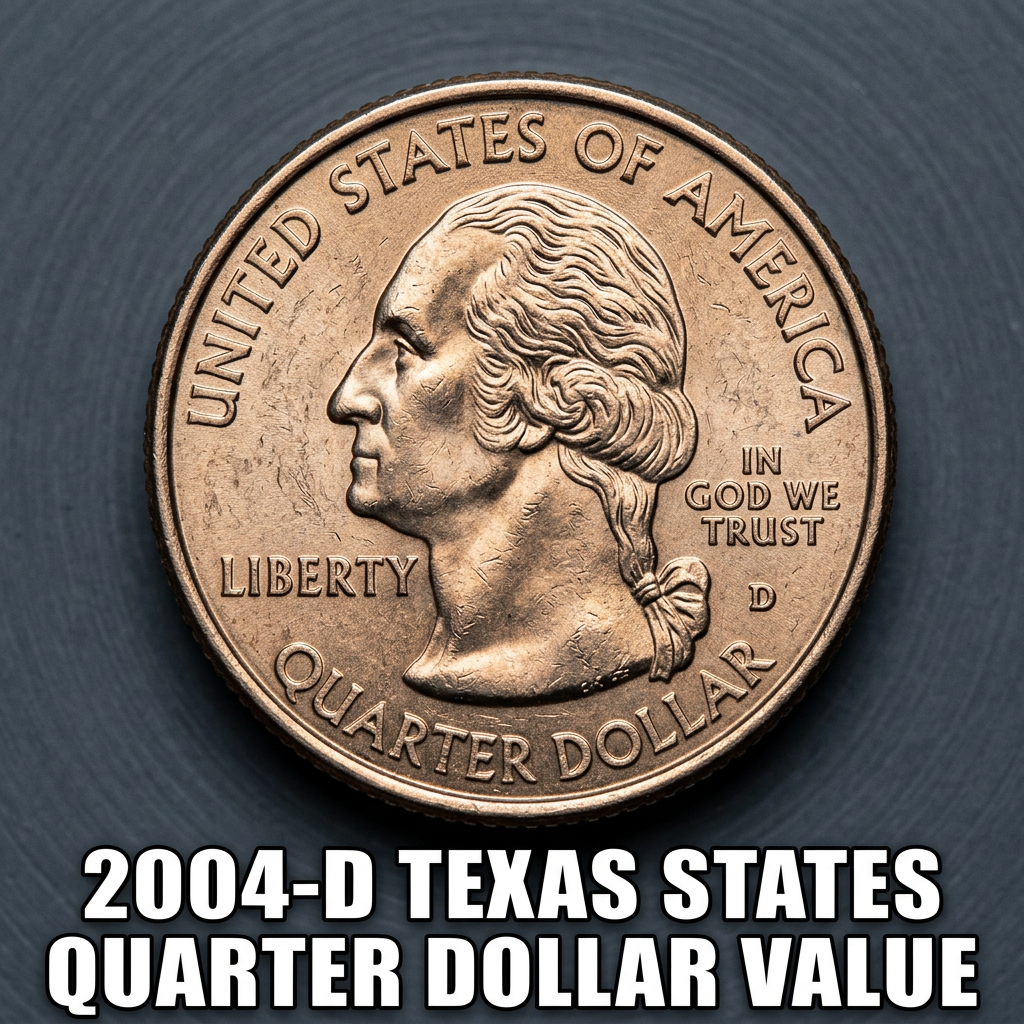
The 2004-D Texas State Quarter is worth anywhere from face value to around $10 in uncirculated condition, with top-grade examples occasionally reaching $20 or more at auction. If you found one in your change jar or inherited a collection, you’re in the right place to find out exactly what it’s worth.
What Is the 2004-D Texas State Quarter?
The 2004-D Texas State Quarter was struck at the Denver Mint as part of the U.S. Mint’s popular 50 State Quarters Program, which ran from 1999 to 2008. Texas was the 28th coin released in the series, honoring the Lone Star State with a design featuring a bold five-pointed star, a rope outline of the state’s borders, and a lariat encircling the design. The reverse was designed by Norman E. Nemeth and quickly became a collector favorite.
The “D” mintmark on the coin means it came from the Denver Mint, as opposed to the “P” mintmark coins from Philadelphia. Both versions were produced in enormous quantities for circulation, making them easy to find — but that also means most circulated examples aren’t worth much more than 25 cents.
If you’re not sure which version you have or want a quick identification, using a coin identifier and value app on your phone can help you confirm the mintmark and grade in seconds. Tools like CoinKnow are especially popular for beginners who want fast, reliable results without digging through price guides.
Your Old Coin Could Be Valuable!
Identify It & Know Its Real Value — Free Download
How Much Is the 2004-D Texas Quarter Worth?
The value of your 2004-D Texas State Quarter depends almost entirely on its condition, also called “grade” by collectors. Coins that have been circulated — meaning they’ve been used as everyday money — typically show wear on the high points of the design. These are generally worth face value or just a small premium.
Your Old Coin Could Be Valuable!
Identify It & Know Its Real Value — Free Download
Coins that were never circulated and still have their original mint luster are called “uncirculated” or “mint state” coins. These can fetch anywhere from $1 to $10 depending on the grade, and exceptional examples graded MS-67 or higher by professional grading services like PCGS or NGC can be worth significantly more.
Here’s a general value breakdown:
Your Old Coin Could Be Valuable!
Identify It & Know Its Real Value — Free Download
| Condition | Grade | Estimated Value |
|---|---|---|
| Circulated (worn) | G–EF | Face value ($0.25) |
| About Uncirculated | AU-50–AU-58 | $0.50–$1.50 |
| Mint State | MS-60–MS-65 | $1–$10 |
| Gem Mint State | MS-66–MS-67 | $10–$25 |
| Superb Gem | MS-68+ | $50–$100+ |
For the most up-to-date market prices, you can check recent auction records and certified coin price data for State Quarters to see what buyers are actually paying right now.
Mintage Numbers and Why They Matter
The Denver Mint produced approximately 651,400,000 of the 2004-D Texas State Quarters — that’s over 651 million coins. The Philadelphia Mint struck a similarly massive number. Because so many were made, the coin is extremely common in circulated grades and even in lower uncirculated grades.
High mintage generally keeps values low for everyday finds. However, coins at the very top of the grading scale — MS-68 and above — are genuinely rare even among high-mintage issues, because achieving a perfect strike with no contact marks is statistically unlikely when hundreds of millions of coins are tumbling through production machinery.
Your Old Coin Could Be Valuable!
Identify It & Know Its Real Value — Free Download
This is what makes top-pop registry coins so valuable despite the enormous overall mintage.
Error Coins and Special Varieties to Watch For
One area where the 2004-D Texas Quarter can surprise you is error coins. While no major dramatic errors are widely documented for this issue, keep an eye out for die cracks, doubled dies, and off-center strikes, all of which can add meaningful premiums to an otherwise common coin.
A doubled die error, where design elements appear slightly doubled due to a misaligned hub impression, is one of the most sought-after varieties for State Quarter collectors. Even a minor doubling on the date or lettering can push the value into the $25–$100 range for strong examples.
Your Old Coin Could Be Valuable!
Identify It & Know Its Real Value — Free Download
Always examine your coins under a loupe or magnifying glass before spending them. You’d be surprised how often errors turn up in ordinary pocket change. Apps like CoinKnow now include error recognition features that can help flag potential varieties using your smartphone camera.
Is It Worth Grading Your 2004-D Texas Quarter?
If your coin looks like it came straight from the mint — brilliant luster, sharp details, no visible marks — it might be worth the cost of professional grading. PCGS and NGC both charge fees in the $20–$40 range per coin for standard submissions, so it only makes financial sense if you believe your coin could grade MS-67 or higher.
For most people, the coin they found in a drawer or change cup is a circulated example worth face value. But if you’ve got a roll of original bank-wrapped quarters from 2004 or a coin that’s clearly never seen the inside of a register, it’s worth taking a closer look.
You can also browse detailed 2004 quarter value information to compare your coin against known examples before deciding whether professional grading makes sense. And if you’re building a full 50 State Quarters set, CoinKnow can help you track which coins you have and which grades you still need to complete your collection.
Your Old Coin Could Be Valuable!
Identify It & Know Its Real Value — Free Download
FAQ
Q: Is the 2004-D Texas State Quarter rare?
A: No, it is not considered rare. With over 651 million minted, it is one of the more common State Quarters in the series. Most circulated examples are worth face value. Only coins graded MS-67 or higher by PCGS or NGC carry meaningful collector premiums.
Q: How do I tell if my 2004-D Texas Quarter is uncirculated?
A: Look for original mint luster — a frosty or cartwheel shine that shifts as you tilt the coin under light. Circulated coins will show flat, dull areas on the high points of the design where metal has worn away from contact. If the coin looks like it just came out of the mint, it may be uncirculated.
Q: Where is the mintmark on the 2004-D Texas State Quarter?
A: The mintmark is located on the obverse (heads side) of the coin, just to the right of Washington’s portrait, below the date. A “D” mintmark means it was struck at the Denver Mint, while a “P” means it came from Philadelphia.