Barber Dime Values That Will Surprise You and How Much They Are Really Worth

Your Old Coin Could Be Valuable!
Identify It & Know Its Real Value — Free Download


The Barber Dime, officially known as the Liberty Head Dime, is worth anywhere from $3 in heavily worn condition to well over $5,000 or more for rare dates and mint state examples. If you’ve found one of these classic silver coins in an old collection or inherited a coin jar, you might be sitting on more than you think.
What Is a Barber Dime and Why Do Collectors Love It
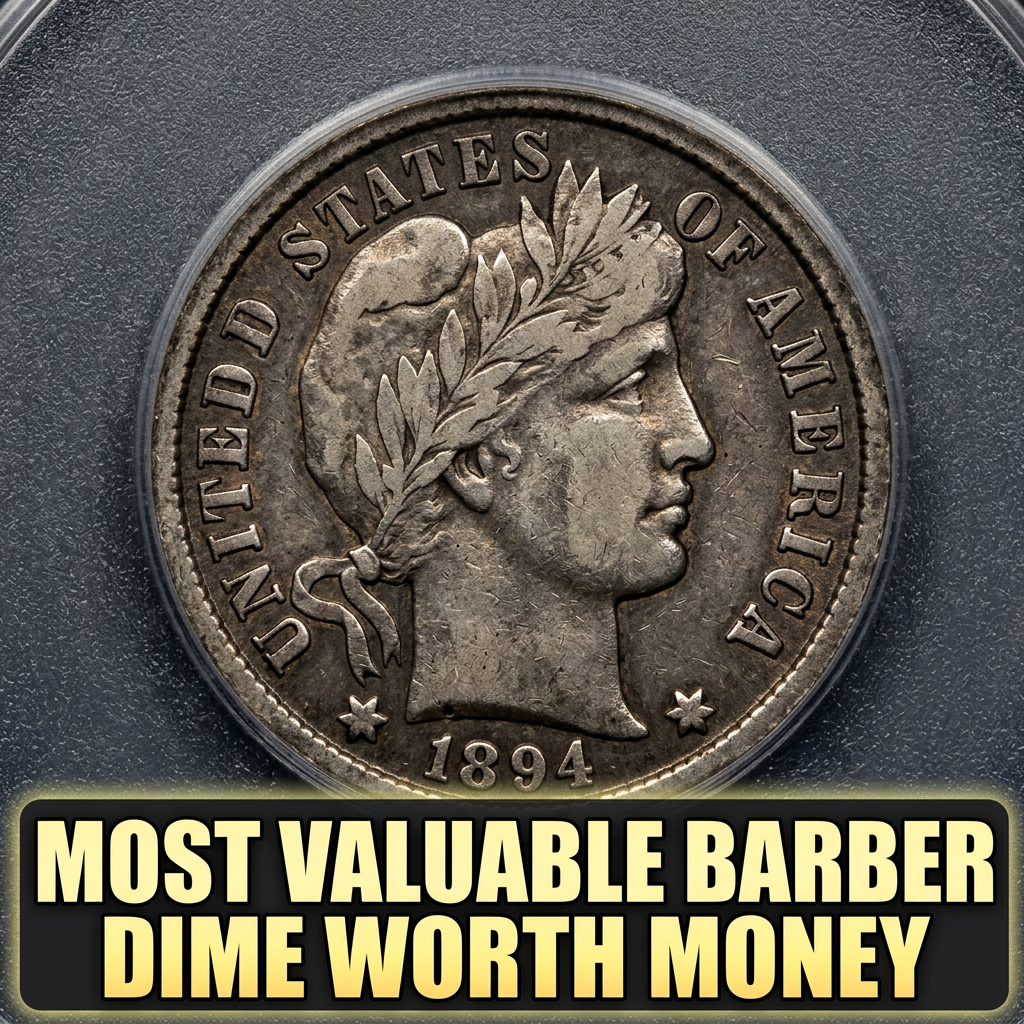
The Barber Dime was minted from 1892 to 1916, designed by Chief Engraver Charles E. Barber. It features Lady Liberty wearing a laurel wreath on the obverse and a simple eagle on the reverse. These coins were made of 90% silver, which already gives them a baseline melt value, but their true worth goes far beyond just the metal content.
Collectors prize Barber Dimes because they represent a long, unbroken series with many mintmarks and date combinations. Finding a problem-free circulated example is rewarding enough, but landing a mint state coin — especially from a low-mintage year — can be genuinely exciting.
If you’re not sure whether the coin in your hand is a Barber Dime or something else entirely, try using a coin identifier and value app to get a quick, accurate read on what you’ve got before heading to a dealer.
Your Old Coin Could Be Valuable!
Identify It & Know Its Real Value — Free Download
Most Valuable Barber Dime Dates and Mintmarks to Watch For
Not all Barber Dimes are created equal. The series runs over 24 years and includes coins from Philadelphia, San Francisco, New Orleans, and Denver mints — and some of those combinations are dramatically rarer than others.
The 1894-S Barber Dime is arguably the most famous rare dime in American numismatics. Only 24 were minted, and fewer than 10 are known to exist today. One sold at auction for over $1.9 million. You’re unlikely to find one in grandma’s coin jar, but it’s worth knowing it exists.
Your Old Coin Could Be Valuable!
Identify It & Know Its Real Value — Free Download
More realistically attainable but still quite valuable are dates like the 1895-O, 1896-S, and 1901-S. These coins regularly sell for hundreds of dollars even in well-worn grades, and in Fine or better condition, values climb quickly into the thousands.
For a deeper look at which dimes from the Barber series are worth serious money, it helps to have a solid reference tool alongside your research.
Your Old Coin Could Be Valuable!
Identify It & Know Its Real Value — Free Download
Barber Dime Value Chart by Grade and Key Dates
Here’s a general overview of what common-date versus key-date Barber Dimes are worth across different grades:
| Date / Mintmark | Good (G-4) | Fine (F-12) | EF-40 | MS-63 |
|---|---|---|---|---|
| Common Date (Philly) | $3 – $5 | $8 – $12 | $30 – $50 | $150 – $300 |
| 1895-O | $150 – $200 | $400 – $600 | $1,200+ | $6,000+ |
| 1901-S | $80 – $120 | $250 – $350 | $900+ | $4,000+ |
| 1896-S | $60 – $90 | $200 – $280 | $700+ | $3,500+ |
| 1894-S (rare) | $500,000 – $2,000,000+ (auction dependent) | |||
Values above are approximate and can vary based on eye appeal, strike quality, and current market trends. Always get a professional opinion for high-grade or key-date examples.
Your Old Coin Could Be Valuable!
Identify It & Know Its Real Value — Free Download
How to Grade Your Barber Dime at Home
Grading is everything when it comes to coin values. A Barber Dime in Good condition shows heavy wear with most design details flat — Lady Liberty’s hair details are mostly gone, and the lettering may be worn into the rim. These coins are still collectible but bring the lower end of prices.
In Fine condition, you can see more separation in Liberty’s hair and the wreath details start to come through. Extremely Fine examples have sharp high points with only light wear on the cheekbone and the tops of the hair. Mint state coins show no wear at all under magnification and command the strongest premiums.
Pay close attention to the mintmark on the reverse, located just above the “E” in “DIME.” An “O” means New Orleans, “S” is San Francisco, and “D” is Denver. No mintmark means Philadelphia. The mint of origin often determines value more than any other factor.
CoinKnow is a great tool for beginners who want to match their coin to known examples and get a realistic value range without spending money on a dealer visit first.
Your Old Coin Could Be Valuable!
Identify It & Know Its Real Value — Free Download
Tips for Selling or Getting Your Barber Dime Appraised
If you believe you have a key-date Barber Dime, do not clean it under any circumstances. Cleaning destroys surface luster and significantly reduces collector value, sometimes cutting prices in half or worse.
For common-date coins in lower grades, selling to a local coin shop or through an online marketplace is perfectly reasonable. For anything you suspect might be a semi-key or key date, consider submitting it to PCGS or NGC for professional grading and authentication. A certified coin is far easier to sell and commands stronger prices.
CoinKnow can help you quickly identify what you have before you decide whether professional grading is worth the investment.
—
Your Old Coin Could Be Valuable!
Identify It & Know Its Real Value — Free Download
FAQ
Q: How do I know if my Barber Dime is silver?
A: All Barber Dimes made from 1892 to 1916 are 90% silver. If the date falls within that range, it is a silver coin. You can verify authenticity using CoinKnow or by having it checked at a coin dealer.
Q: What makes the 1894-S Barber Dime so valuable?
A: Only 24 examples were struck at the San Francisco Mint in 1894, likely as presentation pieces. With fewer than 10 confirmed survivors today, demand from serious collectors drives auction prices into the millions. It is one of the rarest coins in all of American numismatics.
Q: Is a worn Barber Dime still worth keeping?
A: Absolutely. Even a heavily worn common-date Barber Dime carries silver melt value and is worth more than face value. A coin in Good condition is typically worth $3 to $5, while anything in better shape or from a rarer mint can be worth considerably more.